
News
Samsung Galaxy S25 success sets stage for strategic Galaxy S26 launch


Samsung’s Galaxy S25 series is doing better than the previous Galaxy S24 series. These high-end phones are still very popular with buyers around the world.
According to Counterpoint Research, the total sales of the Galaxy S25 series grew 5%, while the Galaxy S25 Ultra sold 7% more than the S24 Ultra. This shows that people still want premium smartphones even when the market is changing.
Even with a slower start, the Galaxy S25 series sold more from February to December 2025 than the S24 series during the same months. The Galaxy S25 Ultra also saw monthly sales increases in July and October. At the same time, Galaxy Z Fold 7 foldables were in high demand. This means people wanted both types of flagship phones.

Image via Counterpoint
The Galaxy S25 Ultra ended the year as one of the Top 10 best-selling smartphones of 2025. Samsung focuses on premium devices to keep sales strong while lower-priced models face rising component costs.
Aside from this, Samsung will launch the Galaxy S26 series at the Unpacked event in San Francisco on February 25, 2026. The launch will show how memory shortages might affect prices and features. Prices, memory options, and promotions will give an early idea of the 2026 smartphone market.
Samsung is also adding AI updates, including improvements to Bixby and integration with Perplexity. The company hopes these features will interest buyers, even though AI is not yet a main reason for upgrades.
Research Director Tarun Pathak said:
“The global smartphone market’s premiumization trend continued in 2025, as witnessed by the notable performance of Samsung’s Galaxy S25 series, particularly the Ultra variant. For this year, Samsung will be looking for continued growth in the premium segment, aided by promotions and financing options in key markets, to offset exposure to lower price tiers, which are likely to be impacted immediately by rising component costs.”







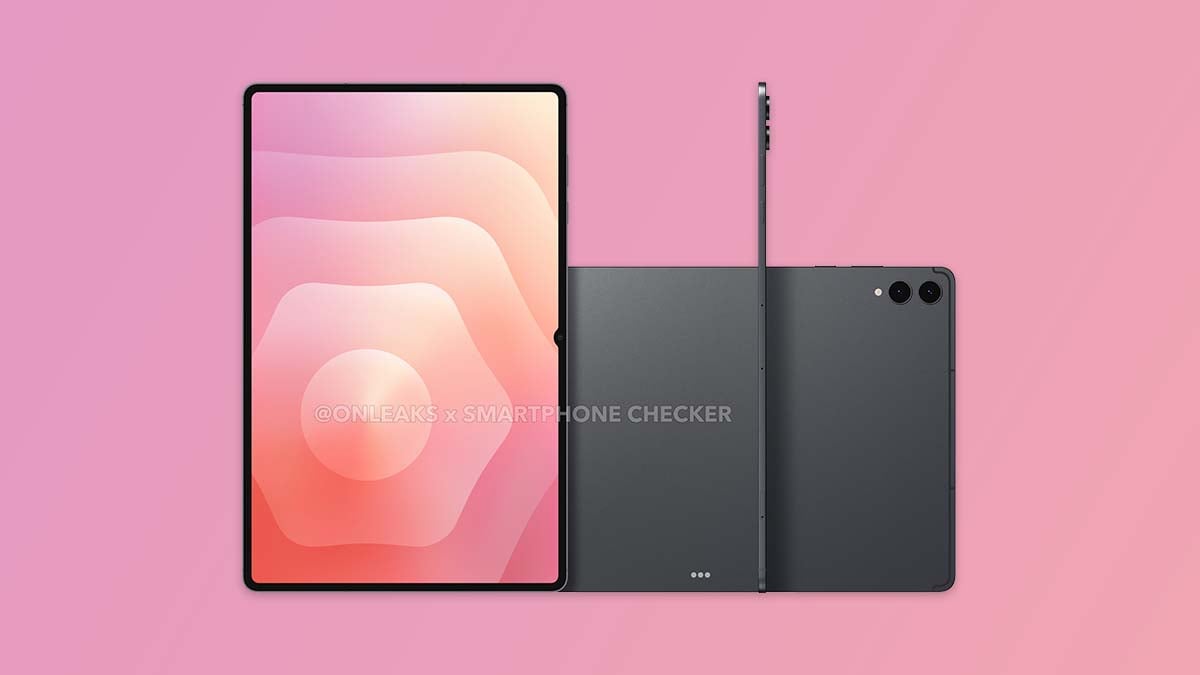
Samsung Galaxy Tab S12 Ultra has just appeared on Geekbench, with the benchmark revealing the upcoming tablet’s MediaTek chip, One UI 9 software, and performance stats.
The company is going to use a MediaTek chip in its flagship tablets for the third time in a row. There will be two models in the lineup, including a Plus and an Ultra.
Galaxy Tab S12 Ultra spotted on Geekbench
The upcoming Galaxy Tab S12 Ultra is already making headlines due to its early benchmark listing, which reveals its MediaTek chip, One UI 9 OS, and performance.
As spotted by @Mohammed_K_2010, the Galaxy Tab S12 Ultra is equipped with MediaTek’s flagship Dimensity 9500 processor. The chip lets the tablet score 2,424 points in single-core and 8,446 points in multi-core tests.
The listing also reveals 12 GB of RAM paired with the chipset. Additionally, it confirms the OS version, which is Android 17, bringing One UI 9.
Due to the ongoing memory crunch and cost pressures, Samsung is highly likely to raise the prices of the Galaxy Tab S12 series, compared to the Galaxy Tab S11 series launched in 2025.

The Korean tech giant will launch two premium tablet devices later this year. The launch window is expected to be the beginning of September. The company also has Galaxy S26 FE and a pair of open-ear earbuds in the pipeline.
At a media briefing after the Q2 2026 earnings call, a top Samsung executive confirmed that the Galaxy S26 FE, Galaxy Tab S12 series, and Galaxy Glasses are coming by the end of the year.

Galaxy Z Flip 8 and Z Fold 8 series go on sale next week, but prominent tech YouTuber Marques Brownlee (MKBHD) just shared his real-world review, featuring the most trending foldable phone of Samsung’s 2026 lineup.
MKBHD is a big name in the tech industry, with his reviews often becoming a decision-maker for many. The review of the Galaxy Z Fold 8 came at a time when people are confused about whether to join the trend or hold off on purchase plans.
Based on Marques Brownlee’s (MKBHD) review of the Galaxy Z Fold 8, here are his key takeaways:
1. Hardware and form factor
The squarer, thinner 5.5-inch outer screen makes standard one-handed use effortless without awkward hand shuffling. The Titanium Flex Hinge significantly reduces the inner screen crease and feels snappy to open and shut.
Opening the phone reveals a mini-notebook shape that is ideal for reading, split-screen multitasking, and watching widescreen videos, which actually play larger than on standard slab phones.
2. Daily usability
Marques notes that not all apps adapt cleanly to the new screen aspect ratios; some display black bars or suffer from broken UI buttons. The updated spring-loaded hinge no longer prop open at a halfway angle for software-assisted hands-free mode.
When opened, both speakers end up on the left side, leading to unbalanced stereo sound during video watching. The shape and lack of built-in magnets make alignment tricky on many vertical and in-car wireless chargers.
3. Performance, battery, and camera
Snapdragon 8 Gen Elite Gen 5 for Galaxy chipset paired with a 4,800 mAh silicon-carbon battery easily offers full-day battery life, backed by faster 45W wired charging.
To achieve such a thin design, Samsung omitted a dedicated telephoto lens entirely, offering only a 50MP main and 50MP ultrawide lens that take “just fine” photos.
You can watch MKBHD’s Galaxy Z Fold 8 review here:
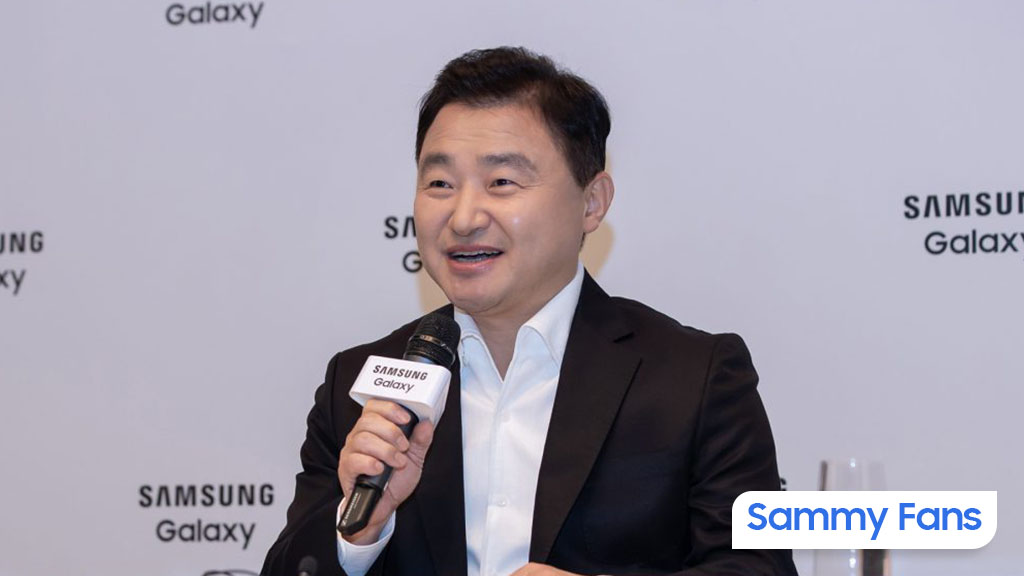
TM Roh, President and CEO of Samsung Electronics’ DX Division, has once again put his money where his confidence is, buying up company shares just before a massive rally rewarded the bet handsomely.
According to TheElec, TM Roh bought 3,045 shares of Samsung at 230,000 won per share on the open market on July 30. The total acquisition came to KRW 700 million ($485k), taking his overall holdings to 124,280 shares.
At the current exchange rate, that works out to roughly $485,000, a meaningful personal bet from one of Samsung’s top executives at a time when the stock had been anything but predictable.
Samsung Electronics’ stock recorded its largest single-day gain since listing the very next session, and the total value of Roh’s holdings jumped by about 6.9 billion won in a single day.
For a company navigating heavy investor scrutiny around its AI chip roadmap and memory pricing, moves like this send a clear signal: leadership is willing to back its own conviction with real money.


South Korea’s HBM and DRAM semiconductor exports continue their meteoric rise, fueled by relentless global demand for AI infrastructure.
According to industry data shared by @SemiconductorsX, Korea’s total HBM and DRAM exports reached $98.89 billion in July, a 62.8 percent year-over-year surge. Semiconductors alone led the charge at $41.01 billion, representing a massive 178.8 percent increase YoY.
A closer look at the product breakdown:
- DRAM (ex-modules): $13.55 billion, up 467% year over year and 21% month over month.
- DRAM (including modules): $21.23 billion, up 394% year over year.
- Flash/NAND: $1.78 billion, up 280% year over year.
- SSD: $4.51 billion, up 500% year over year.
- MCP (HBM): $10.08 billion, up 140% year over year.
Sharp increases in average selling prices (ASPs) are powering these values, with unit prices per kilogram for DRAM excluding modules hitting $91.9k (a 517% YoY jump) and HBM/MCP reaching $98.7k.
Industry giants Samsung Electronics and SK Hynix remain the primary beneficiaries of this tight, high-margin memory landscape, alongside peers like Micron and Kioxia.
While minor month-over-month softening appeared across select categories following prior historic highs, the broader year-over-year trajectory remains exceptionally strong.
With structural shortages in high-bandwidth memory expected to persist into 2027 and 2028, South Korea’s memory leaders continue to maintain unprecedented pricing power.

Market research firm Omdia reports that the global smartphone market declined 6 percent year on year to 272 million units in 2Q 2026. Samsung retained its leadership, even in a shrinking market, shipping over 60 million phones.
Omdia reports that Samsung was the largest smartphone vendor in the second quarter of the year. Samsung shipped sizzling 60.5 million Galaxy phones, securing a 22 percent market share with 5 percent annual growth.
Galaxy S26’s late launch impacted Samsung’s position in the first quarter. However, the delayed launch shifted premium demand into the second quarter, letting Samsung capture additional share in the entry segment.
Apple, on the other hand, ranked second with 55.1 million iPhones shipped and a 20 percent market share in the same period. The iPhone maker’s annual growth was impressive at 23 percent, boosting its sales from 44.8M in 2Q25.
Chinese vendors: Xiaomi, Oppo, and Vivo completed the top 5, with third, fourth, and fifth rank, respectively. Xiaomi sold 31.2 million phones in Q2 2026, Oppo shipped 28.4 million, and Vivo sold 21.5 million devices.
“The current memory cost cycle is driving a structural repricing of the industry, creating a lasting shift in how vendors compete on pricing, profitability, and product positioning,” said Le Xuan Chiew, Research Manager, Omdia.
Despite seasonal demand from flagship launches, holiday promotions and shopping festivals, smartphone shipments are expected to continue declining over the next two quarters amid persistent cost pressures.

-

 One UI21 hours ago
Samsung One UI 9 Watch internally testing on Galaxy Watch 8, 7, 6, and 5 series
-
 One UI3 days ago
One UI 9 is coming, but when will your Samsung phone actually update?
-
 One UI3 days ago
Stable One UI 9.0 adds four useful features Samsung didn’t announce
-
 Apps2 days ago
Samsung One UI 9 brings 4 new AI features for Netflix users