
News
Samsung, SK Hynix benefit as Korea’s HBM and DRAM exports jump 179%


South Korea’s HBM and DRAM semiconductor exports continue their meteoric rise, fueled by relentless global demand for AI infrastructure.
According to industry data shared by @SemiconductorsX, Korea’s total HBM and DRAM exports reached $98.89 billion in July, a 62.8 percent year-over-year surge. Semiconductors alone led the charge at $41.01 billion, representing a massive 178.8 percent increase YoY.
A closer look at the product breakdown:
- DRAM (ex-modules): $13.55 billion, up 467% year over year and 21% month over month.
- DRAM (including modules): $21.23 billion, up 394% year over year.
- Flash/NAND: $1.78 billion, up 280% year over year.
- SSD: $4.51 billion, up 500% year over year.
- MCP (HBM): $10.08 billion, up 140% year over year.
Sharp increases in average selling prices (ASPs) are powering these values, with unit prices per kilogram for DRAM excluding modules hitting $91.9k (a 517% YoY jump) and HBM/MCP reaching $98.7k.
Industry giants Samsung Electronics and SK Hynix remain the primary beneficiaries of this tight, high-margin memory landscape, alongside peers like Micron and Kioxia.
While minor month-over-month softening appeared across select categories following prior historic highs, the broader year-over-year trajectory remains exceptionally strong.
With structural shortages in high-bandwidth memory expected to persist into 2027 and 2028, South Korea’s memory leaders continue to maintain unprecedented pricing power.






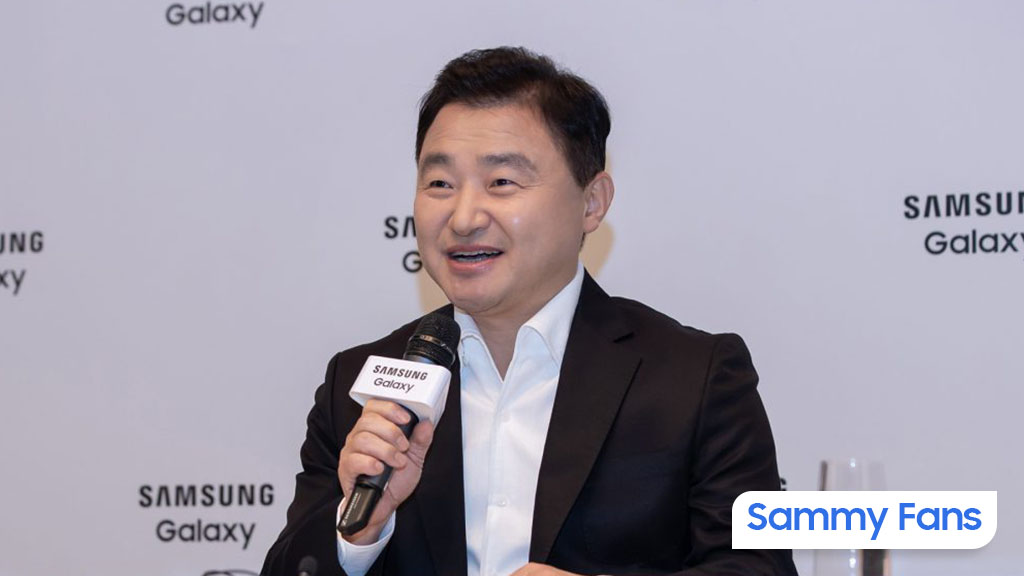
TM Roh, President and CEO of Samsung Electronics’ DX Division, has once again put his money where his confidence is, buying up company shares just before a massive rally rewarded the bet handsomely.
According to TheElec, TM Roh bought 3,045 shares of Samsung at 230,000 won per share on the open market on July 30. The total acquisition came to KRW 700 million ($485k), taking his overall holdings to 124,280 shares.
At the current exchange rate, that works out to roughly $485,000, a meaningful personal bet from one of Samsung’s top executives at a time when the stock had been anything but predictable.
Samsung Electronics’ stock recorded its largest single-day gain since listing the very next session, and the total value of Roh’s holdings jumped by about 6.9 billion won in a single day.
For a company navigating heavy investor scrutiny around its AI chip roadmap and memory pricing, moves like this send a clear signal: leadership is willing to back its own conviction with real money.

Market research firm Omdia reports that the global smartphone market declined 6 percent year on year to 272 million units in 2Q 2026. Samsung retained its leadership, even in a shrinking market, shipping over 60 million phones.
Omdia reports that Samsung was the largest smartphone vendor in the second quarter of the year. Samsung shipped sizzling 60.5 million Galaxy phones, securing a 22 percent market share with 5 percent annual growth.
Galaxy S26’s late launch impacted Samsung’s position in the first quarter. However, the delayed launch shifted premium demand into the second quarter, letting Samsung capture additional share in the entry segment.
Apple, on the other hand, ranked second with 55.1 million iPhones shipped and a 20 percent market share in the same period. The iPhone maker’s annual growth was impressive at 23 percent, boosting its sales from 44.8M in 2Q25.
Chinese vendors: Xiaomi, Oppo, and Vivo completed the top 5, with third, fourth, and fifth rank, respectively. Xiaomi sold 31.2 million phones in Q2 2026, Oppo shipped 28.4 million, and Vivo sold 21.5 million devices.
“The current memory cost cycle is driving a structural repricing of the industry, creating a lasting shift in how vendors compete on pricing, profitability, and product positioning,” said Le Xuan Chiew, Research Manager, Omdia.
Despite seasonal demand from flagship launches, holiday promotions and shopping festivals, smartphone shipments are expected to continue declining over the next two quarters amid persistent cost pressures.


Samsung’s newest foldable is off to a start nobody quite expected. Pre-order stock for the Galaxy Z Fold 8 has sold out across every color and storage tier in Korea, and Samsung is now pushing back the timeline of deliveries to keep up.
According to BusinessPost, sales of the Galaxy Z Fold 8 series have surpassed Samsung’s expectations. The pre-order inventory is running out of stock even before the first batch of shipments begins on August 7.
Samsung delays Galaxy Z Fold 8 deliveries
The Galaxy Z Fold 8 was set to officially release on August 7, but Samsung Korea has confirmed that sequential shipping will now begin on August 28, three weeks later than planned.
The 1TB variant of Galaxy Z Fold 8 Ultra also ships from August 28, while the 512GB model sticks closer to schedule with an August 7 rollout.
Even offline pickup windows have slipped, moving from early September into mid-September.
On the other hand, the company’s new clamshell foldable phone, the Galaxy Z Flip 8, will start reaching buyers on August 11 or August 18, depending on the color chosen.

Samsung hasn’t pinned down the exact cause of the shortage, but an internal source claims that the demand has outpaced what anyone expected in South Korea.
A Samsung Electronics official commented regarding this, saying, “We cannot confirm (the specific cause of the inventory shortage), but shipping dates seem to be delayed because sales have exceeded expectations.”
Two things seem to be fueling the surge in demand:
- Galaxy Z Fold 8 arrives with a genuinely new form factor.
- Samsung’s “Double Storage” pre-order promotion [256 GB to 512 GB]
The MX division just posted its first-ever quarterly operating loss. If Z Fold 8 momentum holds, it could be exactly the boost the MX business needs to turn things around before year-end.

Samsung’s push toward a more private smartphone display has come at a steep price, quite literally. Samsung is spending around 10 percent more on the Galaxy S26 Ultra display due to its privacy screen technology.
Privacy OLED panel fitted on the Galaxy S26 Ultra is over 10 percent costlier to produce than a conventional LTPO OLED panel, making it one of the priciest display components Samsung has ever used on a Galaxy flagship.
Despite the cost, demand isn’t slowing down. Sigmaintell expects (via TheElec) privacy mode enabled shipments to jump from around 1 million units in 2025 to 21 million this year, with 29 million projected by 2027.
Samsung’s spending on Galaxy S Ultra display over the years
- Galaxy S23 Ultra – $84
- Galaxy S24 Ultra – $88
- Galaxy S25 Ultra – $80–$87
- Galaxy S26 Ultra – $88–$96

The added cost stems from the panel’s dual-pixel architecture.
Each pixel houses two separate sets of RGB subpixels, one built for wide viewing angles and used in standard mode, and another narrow-angle set that kicks in during privacy mode.
Samsung surrounds the narrow-angle subpixels with a deep multi-layer Black Matrix that lets front-facing light through while cutting off light at the sides, which is what keeps prying eyes from reading your screen at an angle.
Getting the alignment right between the emitting areas and this Black Matrix is tricky, and any misstep hurts brightness, side-angle blocking, and yield rates.
Samsung is reportedly planning to bring the feature to four models in the Galaxy S27 series, and a foldable variant is also in development, though it’s still far from mass production readiness.

Qualcomm confirmed it’s making Snapdragon chips more expensive. The company has decided to raise prices across its Snapdragon portfolio. The hike is driven by skyrocketing memory prices, which have declined smartphone sales.
Increased prices of Snapdragon chips will lead phone makers to raise prices of their products as well. The chipset is the primary driver in the bill of materials, with memory and display panels following alongside the camera module.
This makes Exynos chips even more important for Samsung. The company owns System LSI, which designs Exynos, and Samsung Foundry, which produces Exynos. The cost burden is way lower than the one from Qualcomm.
Snapdragon chips getting more expensive
Qualcomm will increase prices of Snapdragon chips in double digit percentage. The company hasn’t specified a fixed number for the cost bump. It could be different per product, including mobile, modem, and automotive chips.
Starting September 1, the US chip designer is raising prices on most chips while simultaneously streamlining supply chain efficiency. The company noted that it is currently rolling out double-digit price increases across all product categories.
Samsung may have secured a decent number of chips under its multi-year deal. However, the Galaxy S27 series might not be immuned by this change. The next year’s flagships would indeed cost more to make due to pricier components.
Qualcomm is adopting TSMC’s enhanced 2nm process to make the Snapdragon 8 Elite Gen 6 series. This chipset lineup will power Samsung’s Galaxy S27 series in the US, with the Ultra version carrying it around the world.
Galaxy S26 series is $100 pricier than the Galaxy S25 series. Samsung said it tries hard to optimize the supply chain to absorb cost pressure. However, it may not be able to absorb the full increase, as supply becomes a 4-sided attack.

Qualcomm Q2 2026 Earnings
Qualcomm reported sluggish financial results due to a contraction in the smartphone market triggered by skyrocketing memory semiconductor prices.
For its third fiscal quarter (March 30, 2026 – June 28, 2026), Qualcomm recorded revenue of $9.947 billion and a net income of $2.002 billion. Revenue decreased by 4% and net income dropped by 25% YoY.
Qualcomm’s revenue from smartphone chipsets fell 20% year-over-year to $5.086 billion.
Cristiano Amon, CEO of Qualcomm, stated, “Because cost basis has gone up, prices will go up as well,” adding, “Starting September 1st, we will raise prices on most chips while simultaneously streamlining supply chain efficiency.”
Qualcomm noted that it is currently rolling out double-digit price increases across all product categories.
-

 One UI15 hours ago
Samsung One UI 9 Watch internally testing on Galaxy Watch 8, 7, 6, and 5 series
-
 One UI2 days ago
One UI 9 is coming, but when will your Samsung phone actually update?
-
 Issues3 days ago
Galaxy S24 and S25 battery drain reports now come with overheating complaints
-
 One UI3 days ago
Stable One UI 9.0 adds four useful features Samsung didn’t announce