
News
Samsung Galaxy A21 gets Android 11 One UI 3.1 update in the US

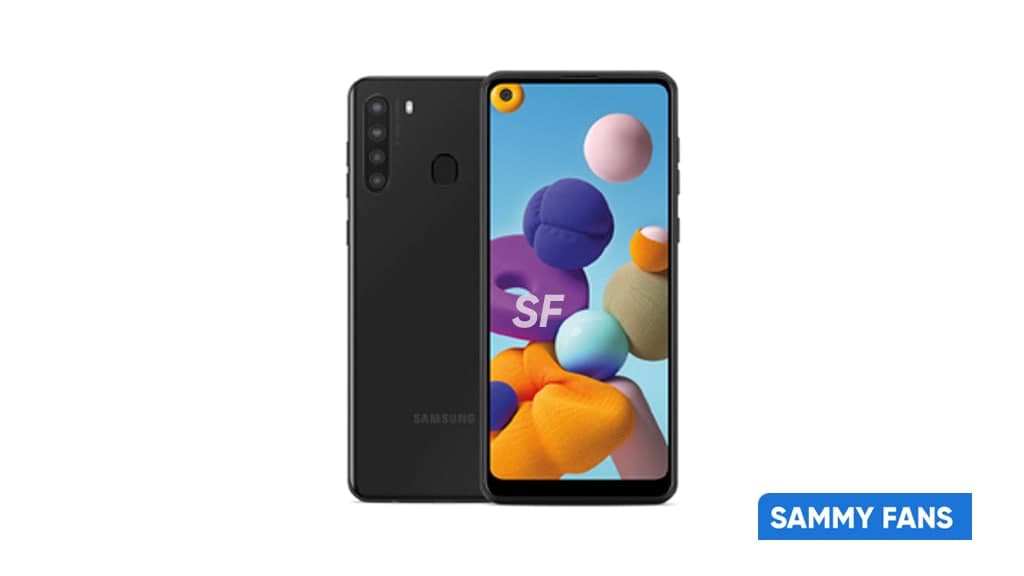
Samsung started releasing a new major software update for the Galaxy A21 smartphone users in the US. The latest update brings the Android 11-based One UI 3.1 version with various new features. At the same time, it installs the newer security patch released in September 2021 for better system stability.
One UI 3.1 was introduced alongside the Galaxy S21 flagship lineup, which is also based on Android 11 operating system. Instead of the One UI 3.0, Samsung has provided the 3.1 version of the One UI to most of the mid-range and budget Galaxy devices along with Android 11 update.
Galaxy A21 Android 11 update – USA
- Software version – A215USQU5BUI4
- Security patch – September 2021
- One UI version – One UI 3.1
Samsung’s One UI 3.1 comes with (via SamMobile) several new features as well as a truly revamped user interface. Along with the entire system software, the One UI 3.1 also refreshes most of the native applications including Samsung Keyboard, Samsung Internet, Samsung Gallery, Samsung Calendar and more.
Join us on Telegram | Twitter | Facebook
To be mentioned, the September 2021 security patch brings better system stability as it fixes a number of CVEs and SVEs from Google and Samsung. However, the update is currently rolling out in batches, it will reach every Galaxy A21 unit in the coming days.
If you want to check for the latest update manually, head to your device Settings tap on Software updates and finally hit the Download and install button.




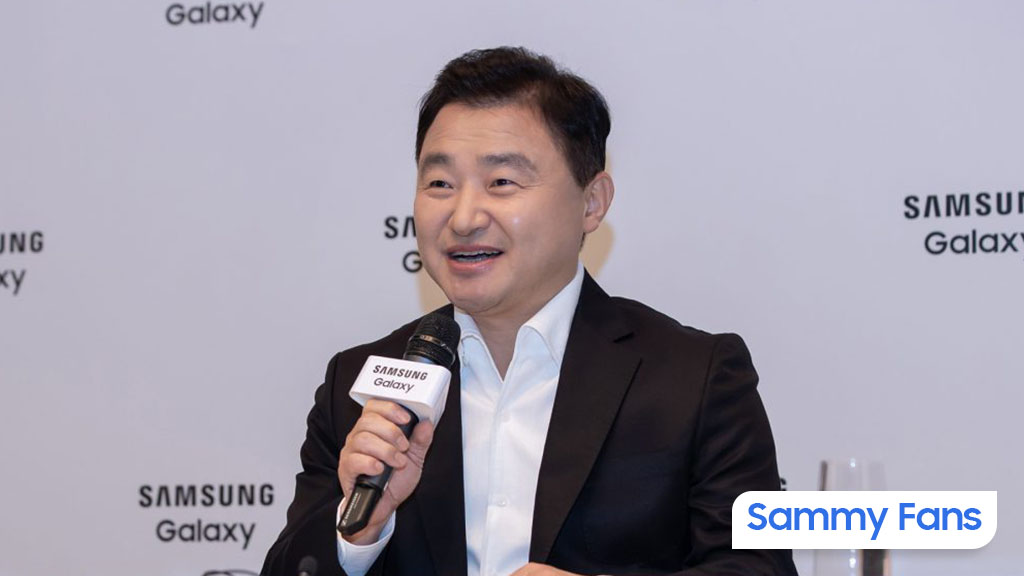
Samsung Mobile business just hit a wall it hasn’t faced before, and the man steering through it is TM Roh. For the first time in its history, the company’s MX (Mobile eXperience) Division slipped into a loss.
Q2 results showed a 700 billion KRW operating loss on 33.2 trillion KRW in revenue, a stark reversal from the 3.1 trillion KRW profit the division posted in the same quarter last year.
That swing effectively pulls MX into the same “deficit division” bracket as Samsung’s struggling Foundry and System LSI units, a label the mobile business has never worn before.
What makes this loss unusual is that it wasn’t caused by sluggish demand. The Galaxy S26 lineup and the budget-friendly A series both sold well. Instead, the damage came from soaring costs for memory chips and mobile processors.
How TM Roh is keeping Samsung’s mobile business steady
MX Business reportedly tried locking in a long-term memory supply deal with Samsung’s own DS Division late last year, but talks collapsed, leaving the mobile unit exposed to open-market price spikes it had no way to hedge against.
Roh is now leaning on the Galaxy Z Flip 8, Z Fold 8 and Z Fold 8 Ultra foldable phones to boost profitability. Early pre-order momentum, especially among young buyers, has Samsung hopeful for record foldable sales.
Meanwhile, aggressive pre-order incentives like the Double Storage upgrade (in South Korea) are eating into whatever gains volume might bring, fueling internal worry that higher sales could mean higher losses.
Qualcomm’s plan to raise mobile application processor prices starting in September 2026 only adds to the squeeze, and analysts expect the pain to stretch well into next year. Despite all this, Roh isn’t budging on pricing.
Speaking to South Korean press in London after Galaxy Unpacked 2026, he said Samsung would keep working to hold prices steady, pointing to supply chain optimization and closer partnerships as the path forward.


Samsung Foundry, the chip-making arm of Samsung Electronics, targets full capacity utilization by the end of 2026. The company’s foundry business revival is happening on the wave of the AI boom and 2nm orders from big clients.
According to Chosun (via SemiconductorsX), Samsung Foundry (chip-making unit) is currently running at an estimated 70-80 percent utilization, with insiders pointing to full capacity by the end of 2026.
HBM4 and Big Tech are doing the heavy lifting
Two forces are pushing utilization upward:
- First, HBM4 base die production tied to Samsung’s memory business is keeping lines busy as the AI memory boom accelerates.
- Second, orders from major US tech giants are filling gaps that used to sit empty.
Together, these are giving Samsung’s foundry the kind of steady demand it hasn’t seen in years.
Samsung’s 2nm process is attracting serious interest, with Qualcomm, AMD, Google, and Tesla reportedly in discussions for future chip production.
That said, yield is still the sticking point; current estimates put 2nm yield around 60%, while the 70% threshold is generally considered necessary before big clients commit to large-scale mass production runs.
If utilization and yield trends hold, Samsung’s foundry arm could turn profitable as early as Q3, or Q4 at the latest, marking a real turning point after a rough couple of years.

Samsung officially launched the Galaxy F70 Pro in India. The new smartphone comes with decent specs and features, while maintaining a mid-range price.
Galaxy F70 Pro design and specs
The Galaxy F70 Pro sticks with a flat rear panel and a pill-shaped camera module, a design language Samsung has been using across its recent F-series phones.
It comes in Alpha Black and Aura Green colorways, both finished with a textured, leather-like back that should help with grip and smudge resistance.
Up front, there’s a 6.7-inch Full HD+ Super AMOLED panel running at a 120Hz refresh rate, with brightness that can climb up to 1400 nits at peak, so outdoor visibility shouldn’t be a major issue. The display is also protected by Gorilla Glass Victus+, and the phone carries an IP64 rating for resistance to dust and light splashes.
Under the hood is Qualcomm’s Snapdragon 6 Gen 3, paired with up to 8GB of LPDDR5X RAM and UFS 3.1 storage, going up to 256GB. It ships with Android 16 layered under One UI 8.5, and Samsung says the phone will receive up to six years of OS and security updates.
A handful of AI features are also on board, including Direct Voicemail and AI-powered voice transcription tools that Samsung has been slowly rolling out across its mid-range devices.
The smartphone carries a 50MP primary sensor with OIS, joined by a 5MP ultra-wide lens and a 2MP macro shooter, while the front camera comes in at 12MP.
Keeping everything running is a 6,000mAh battery with support for 45W wired charging, which Samsung says should comfortably get most users through a full day.
The Galaxy F70 Pro 5G starts at Rs 25,999 for the 6GB+128GB variant, while the 8GB+128GB and 8GB+256GB models are priced at Rs 29,999 and Rs 34,999 respectively.
The phone is available through Flipkart and the Samsung India online store starting today.

OpenAI introduced its next major AI model family, and it’s called Astra. Rather than a traditional product launch, the company revealed the name almost quietly, buried in the third paragraph of a blog post titled “Ten advances in mathematics and theoretical computer science.”
OpenAI Astra AI model cracks 10 decade-old problems
According to OpenAI, an internal version of Astra generated new solutions to ten mathematical and computer science problems that had remained unsolved for at least ten years, some for much longer.
The results span high-dimensional geometry, group theory, quantum complexity, and coding theory. One standout: a construction proving non-sofic groups exist, answering a question mathematician Mikhail Gromov first posed back in 1999.
OpenAI also formalized the underlying logic using the Lean theorem prover and released everything publicly, making the proofs machine-checkable rather than something the world simply has to take on faith.
The cost angle is hard to ignore
Perhaps the most eyebrow-raising detail is the price tag.
OpenAI says the entire token cost of reaching these solutions, if billed at GPT-5.6 Sol’s API rates, came to roughly $2,000. For work that stumped mathematicians for over a decade, that’s a strikingly small number.
OpenAI describes the Astra AI model as a system where multiple agents coordinate over extended stretches, sometimes hours or days, to chip away at hard problems collaboratively.
That’s a meaningful shift from the one-shot response style most people associate with ChatGPT.
OpenAI CEO Sam Altman reportedly spent time in Washington, D.C. recently, demonstrating Astra directly to lawmakers and regulators.
Whether Astra becomes part of the GPT-5 lineup or debuts as GPT-6 remains unconfirmed. OpenAI hasn’t shared a release date, pricing, or ChatGPT availability yet.

The Japanese memory maker ramps up efforts to improve its NAND status. Kioxia is now setting its sights on AI data centers and on-device AI, rolling out PCIe 6.0 and UFS 5.0 solutions this year in a bid to close the gap with Samsung and SK Hynix.
Kioxia has been quietly outpacing expectations on the technology front, especially in the high-performance NAND segment that AI workloads are hungry for.
Last month, Kioxia kicked off mass production of its 10th-generation BiCS 10 3D NAND at its Kitakami Fab in Iwate Prefecture.
The chip packs 332 stacked layers, and while direct generation-to-generation comparisons with Samsung and SK Hynix get messy since layer counts differ by company, crossing the 300-layer mark is still a notable milestone.
Kioxia’s CM10 and the PCIe 6.0
Building on that NAND base, Kioxia has already commercialized the CM10, an enterprise SSD built for data centers with PCIe 6.0 support.
Kioxia claims the CM10 brings a 92 percent jump in sequential read speeds and around 85 percent better random read performance over its predecessor.
UFS 5.0 for on-device AI
Kioxia is also targeting UFS 5.0 mass production by the end of this year, aimed squarely at on-device AI in smartphones and other mobile hardware.
UFS 5.0 roughly doubles data processing speed over UFS 4.1, and Kioxia’s version pairs an in-house controller with its 8th-generation NAND.
Samsung began mass-producing its own PCIe 6.0 eSSD, the PM1763, last month, built on 9th-generation V-NAND with a 4nm controller. Samsung also wrapped up UFS 5.0 development in June, with mass production slated for Q4 2026.
In terms of market share, Kioxia still trails Samsung and SK Hynix. TrendForce data for Q1 2026 puts Samsung at 31.6 percent of the global NAND market and SK Hynix at 17.6 percent, with Kioxia sitting third at 13.9 percent.
-
 Featured14 hours ago
Samsung One UI 9 release date: Here’s when you could get major Android 17 software update
-

 One UI3 days ago
Samsung One UI 9 Watch internally testing on Galaxy Watch 8, 7, 6, and 5 series
-
 One UI3 days ago
SammyFans Poll: One UI 9 is on the horizon; how much are Samsung users excited?
-
 One UI1 day ago
Here’s when One UI 9.0 Beta 5 update could release