
Technology
Satellite Connectivity: What is it and why it is important for your phone

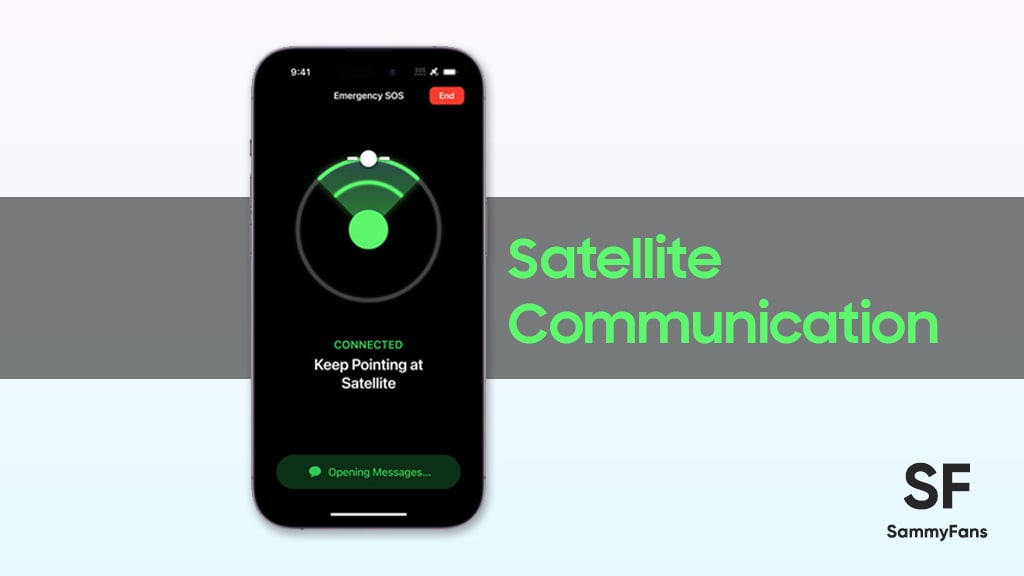
Imagine this: You’re setting out on an adventure into the wilderness, miles away from the nearest cell tower when suddenly things go south. Or you’re in an area hit by a natural disaster where the usual phone networks are down. That’s when your smartphone with satellite connectivity, becomes more than just a phone; it turns into your lifeline, a light in the dark, when everything else fails.
What is Satellite Connectivity?
Satellite connectivity allows your smartphone to communicate directly with satellites in Earth’s orbit when you’re out of the reach of cell networks.
Think of it like this: when you’re too far out for your phone to catch any signal, satellite connectivity kicks in. Your phone turns into a tiny satellite station all on its own. It will send your messages or calls to a satellite way up in space, and that satellite passes it along, keeping you connected when you’re literally off the grid.
How Does It Work?
When you’re in an area with no cellular service, your smartphone can switch to satellite mode. Here’s what happens:
- Direct Connection: Your phone sends a signal directly up to a satellite in the sky. This means you need to have a good view of the sky – no tall buildings or dense forests in the way. That’s why this tech is a real game-changer when you’re out in the wide open, far from civilization.
- Signal Relay: Once your phone’s signal reaches the satellite, it gets bounced back down to a ground station. This station is like a bridge; it links up with the regular phone network or the internet. So, you can send a text or, in some cases, even make calls.
Eligible Devices
As of now, not all smartphones support satellite connectivity. The following smartphones are known to support satellite connectivity:
Apple iPhone Series:
- iPhone 14 and later models (including all variants like Pro and Pro Max). These models support emergency SOS via satellite.
Huawei:
- Huawei Mate 60 Pro, which allows for satellite calls.
Samsung:
- There are no officially confirmed Galaxy devices eligible for this feature. Samsung is currently working on adding satellite connectivity, potentially starting with the Galaxy S25, as per reports.
Google Pixel:
- Google Pixel 9 supports satellite connectivity, known as Satellite SOS. This Pixel 9 series, including the Pixel 9, Pixel 9 Pro, Pixel 9 Pro XL, and Pixel 9 Pro Fold support this.
Android Devices with Specific Chipsets:
- Devices equipped with the Snapdragon 8 Gen 2 processor and possibly later versions were expected to offer two-way satellite messaging.
Features
- Emergency SOS: It allows users to send distress signals or share location with emergency services.
- Text Messaging: Beyond emergencies, some services allow for regular text messaging, though this might come with a subscription or per-message fee after an initial free period.
- Subscription Models: Initially, Apple offers emergency services for free, but for broader use, like messaging or data, there could be charges. The US network carrier, T-Mobile, is looking into how they can mix this satellite magic into their regular plans.
Wider Rollout:
The rollout is in progress, with companies like Apple, Google, and SpaceX’s Starlink working to make this technology more accessible. Starlink’s partnership with T-Mobile hints at a future where even data services could be available, turning remote dead zones into areas of connectivity.
Satellite connectivity in phones isn’t just cool tech; it’s a big step towards making sure everyone can communicate, no matter where they are. As it gets better, expect it to be cheaper, in more phones, and easier to use. Right now, it’s great for emergencies, but soon, you might be able to chat or send messages from anywhere on Earth, even in the most remote places.



Samsung is planning to simplify its TV lineup next year by introducing three main categories: Ultra, Plus, and Basic. The move aims to make it easier for customers to understand the differences between TV models without getting confused by technical names.
According to the latest information, the new TVs will be sold under the names AI TV Ultra, AI TV Plus, and AI TV Basic. However, the entry-level Crystal UHD range is expected to remain separate.
Currently, Samsung uses names such as OLED, Neo QLED, Micro RGB and Mini LED to describe its TV technologies. With the new plan, the company wants to focus more on simple categories that clearly show the price and features of each TV.

Image via Samsung
Samsung is also planning to stop mass production of Quantum Dot (QD) TVs next year. It is expected to focus more on Mini LED and Micro RGB technologies, along with OLED models. Under the new system, Ultra TVs will offer premium features and advanced display technology. Plus models will target mid-range buyers, while Basic models will be more affordable.
The change is also part of Samsung’s plan to earn more money through AI features and subscription services. Instead of depending only on TV sales, the company wants customers to use more services through its smart TV platform.
Samsung is also reportedly aiming to increase its annual TV shipments from around 35 million units this year to more than 40 million next year. Through this new strategy, Samsung hopes to attract more buyers, simplify its product range, and increase revenue from subscription services.

Samsung has launched its new Infinite One-Way Cassette AC in India. The new AC is made for modern homes, offices, hotels and other premium spaces. It offers cooling along with smart features and stylish design.
The main feature is Ambient Edge Lighting. The AC has nine lighting modes that can create different moods. Users can choose Warm, Natural or Cool light. They can also select high or low brightness. The Smart Lighting mode can change the brightness automatically.
The AC uses Samsung’s Wide WindFree Technology. It has thousands of tiny holes that spread cool air gently around the room. This helps prevent the uncomfortable feeling of direct cold air. It can also help reduce noise and save energy.
The AC also comes with a Copper Anti-Bacterial Filter. It helps remove dust and other particles from the air and can reduce certain harmful bacteria. The AC has a strong ASA body that offers better protection from sunlight and helps it last longer.

The new AC has built-in Wi-Fi and can be connected to the Samsung SmartThings app. Users can control the AC from their smartphones. They can also use features such as voice control, energy monitoring and AI Comfort Mode.
With a slim depth of only 13.8 cm, the AC can easily fit into modern interiors. The new range is available in VRF and Commercial Split versions with different cooling capacities.
The starting price is ₹1,60,000, including GST. It is available through Samsung’s commercial AC partners across India.

Samsung has unveiled the new Galaxy SmartTag 3, a small device that helps users find lost or misplaced items. It can be attached to keys, bags, luggage, bicycles and pet collars.
The SmartTag 3 is smaller and lighter than the previous model. Samsung says it is about 35% smaller and 33% lighter, making it easier to carry and use. It also comes with new accessories, including a Silicone Case and a Loop Case.
For the first time, the SmartTag series supports both Galaxy and iOS devices. Users can check and share the tag’s location through Samsung’s SmartThings Find service. The SmartTag 3 can work for up to 550 days with normal use. With Power Saving Mode, the battery can last for up to 790 days.
The device also makes finding lost items easier. Its Compass View feature can show the direction and distance of the tag from up to 60 meters away. As users get closer, UWB technology can provide more accurate directions.

Image via Samsung
If the tag is outside the phone’s Bluetooth range, Samsung’s Galaxy Find Network can help locate it. Samsung says more than 900 million Galaxy devices can help find lost tags around the world.
The SmartTag 3 also offers useful alerts. Place Notification can tell users when a tagged item moves into or out of a selected area. Location History shows where the tag has been, while Movement Detection Alert can notify users when movement is detected.
The SmartTag 3 has an IP67 rating for water and dust resistance. It will launch in Korea on October 7, 2026, followed by the US and other markets in 2027.

Samsung may soon introduce its next smart tracker, the Galaxy SmartTag 3. New leaked images have revealed what the device could look like.
According to the images shared by WinFuture, the biggest change is the design. Unlike the Galaxy SmartTag 2, which has a pill-like shape, the new model appears to have a small square shape with rounded corners. The leaked images also show two color choices, with a large Samsung logo visible on the front.
However, Samsung seems to have made one major change that some users may not like. The new SmartTag 3 does not appear to have a built-in hole for attaching it directly to a keyring, strap, or carabiner. Instead, users may have to use a separate case or accessory.

Image via WinFuture
Samsung is reportedly preparing several cases, including silicone, leather, and bumper options. There could also be an accessory designed to attach the tracker to a pet’s collar. Companies such as Spigen may offer some of these accessories. The tracker is reportedly around 30 x 30mm in size and less than 10mm thick. It will also use a replaceable coin-cell battery.
For connectivity, the SmartTag 3 is expected to support Bluetooth Low Energy and Ultra-Wideband. These features should help users locate their lost belongings more easily.
Samsung could launch the Galaxy SmartTag 3 soon. The expected price is around $30 in the US and €28 in Europe. A four-pack may cost about $100 in the US and €93 in Europe. The SmartTag 3 could be a useful option for tracking keys, bags, pets, and other valuables.
Samsung is reportedly developing its first humanoid robot and may show its prototype at CES 2027 in Las Vegas next January. CES is one of the world’s biggest technology events, where companies display new products and technologies.
The company is preparing the robot through its Robotics (RX) Business Promotion Office. The company is working on both the robot’s body and its AI software. The hardware includes parts such as the joints, hands, and other moving parts. The AI software will help the robot understand things, make decisions and perform tasks.
Jang-Hyun Yoon, Samsung’s Chief Technology Officer and President of the DX Division, is leading both the hardware and AI software teams. This means Samsung can develop the robot’s body and “brain” together, which could help speed up development.
Samsung has also been working on new robot technologies. It has patents related to hip joints, advanced robotic hands and AI systems that control robot movements.
The company is also working with its subsidiary, Rainbow Robotics. Rainbow Robotics is focusing mainly on industrial robots for factories and workplaces. Its RB-Y2 is a two-arm robot designed to carry heavy loads and work over a large area. An improved version may be shown at RoboWorld 2026.
Samsung and Rainbow Robotics are following different paths. Samsung is expected to focus on general-purpose humanoid robots, while Rainbow Robotics will focus on industrial robots. Samsung has not officially confirmed its CES 2027 plans, saying it “cannot confirm” the report.
-
 Updates18 hours ago
Samsung Galaxy Watch 9 and Ultra 2 grab October 2026 update
-

 One UI3 days ago
Samsung now making One UI 9.5 Beta; Galaxy S26 leading the rollout list
-
 One UI3 days ago
Samsung pushes One UI 9 (Android 17) update for Galaxy A34 users
-
 Issues2 days ago
One UI 9 update triggers Wi-Fi and network drops, SIM card issues