
Phones
Samsung has backup plan to avoid Galaxy phones’ OLED display chip shortage


Samsung is quietly lining up a backup plan for one of the most critical parts inside its OLED Galaxy phones: the display driver IC. And the reason is a supply squeeze that has already cost it production volume on a flagship.
Samsung’s backup plan to avoid OLED DDI shortage
According to ZDNet, Samsung is now weighing a dual-sourcing OLED display chip arrangement that would bring GlobalFoundries into the mix alongside UMC.
A DDI is the chip that tells a screen’s pixels what to do, using thin-film transistors to control each one. Right now, OLED Galaxy DDIs are designed in-house by Samsung’s System LSI division and built exclusively by Taiwan’s UMC.
The memory supercycle that kicked off in the second half of last year has pushed demand for legacy-node chips past available supply, and UMC has struggled to keep pace. Samsung felt it directly with the Galaxy Z Fold 8.
After the July launch, demand beat expectations, and Samsung asked UMC for a “super hot run,” an expedited production slot, but UMC said no.
Its 22nm line, which makes the Fold 8’s DDI, was already maxed out, and accommodating Samsung would have meant reshuffling schedules for other customers.
The result was a 10 percent cut to the Galaxy Z Fold 8 component production last month, with that volume pushed into the October forecast. This looks to be a small trim on paper, but a clear sign of how tight things are.
GlobalFoundries would reportedly handle DDI production on its 22nm or 28nm processes, with capable fabs in places like Singapore and Germany.
The first GlobalFoundries-made chips could appear as early as late next year, and likely not in anything high-end. Expect them in select mid-to-low-tier Galaxy A models with OLED panels. GF has reportedly shown strong interest in the work.
My read: if the A-series pilot goes smoothly, I would not be shocked to see GlobalFoundries’ share grow into the premium phones later. That is just speculation, and a 2nd supplier does not fix a market where legacy capacity is scarce for everyone.




Galaxy A38 will launch early next year as Samsung’s 2027 mid-range smartphone offering. Meanwhile, the phone’s development is progressing fast, with the battery cells having surfaced in a key regulatory body’s database.
In a recent development, two Samsung battery cells (EB-BA386EAE and EB-BA386EAY) apparently belonging to the Galaxy A38 5G smartphone have appeared on the Indian BIS certification, via SammyGuru.
The model numbers of the batteries confirm that the cells will be used in the company’s next Galaxy A3x handset in 2027. This would debut alongside the premium Galaxy A58 sometime in March or April next year.
Note that the smartphone itself didn’t show up on the BIS database. It will also emerge once the development is complete and the company starts to prepare the official unveiling of the two smartphones to the market.

Galaxy A38 will be so hot
Buying a Galaxy A38, even though it’s an A Series phone, will feel to your pocket. Prices of the Galaxy A37 and A57 rose significantly due to a memory crunch. The next set of phones will not be able to prevent a price hike in 2027.
Industry reports assume relief from the ongoing memory crisis. Samsung keeps raising prices of the phones and tablets that are already available for purchase.
Well, Samsung is trying to keep prices in check through component adjustments. A Korean media outlet just revealed that the Galaxy A38 may ship with an OLED panel used in the Galaxy A27, rather than the Galaxy A37.


Samsung’s Galaxy Z Fold phones lose their value faster than Galaxy S Ultra models after around two years. Although Fold phones are more expensive when new, their resale prices can become lower than those of Galaxy S Ultra phones over time.
According to UPM, a used smartphone data service provider, the average buyback price of the Galaxy Z Fold 6 (256GB) was 548,640 won in September. In comparison, the Galaxy S24 Ultra (256GB), launched in the same year, had an average buyback price of 568,116 won.
The Galaxy Z Fold 6 was launched at 2,229,700 won, while the Galaxy S24 Ultra cost 1,698,400 won. However, the Fold 6 retained only 24.6% of its original price, compared with 33.5% for the S24 Ultra.
The difference was even greater for older models. The Galaxy Z Fold 5 had an average buyback price of 314,692 won, while the Galaxy S23 Ultra was valued at 401,732 won. However, newer Fold models still have higher resale prices. The Galaxy Z Fold 7 had an average buyback price of 926,295 won, compared with 747,489 won for the Galaxy S25 Ultra.

The main reason is the folding screen and hinge. These parts can wear out over time, and repairs can be expensive. As a result, used-phone dealers offer lower prices to reduce the risk of repair costs.
Newer Fold models also come with improvements in design, weight, screens and hinges, making older models less attractive to buyers. An industry official said that the condition of the screen and hinge plays an important role in deciding a foldable phone’s resale price.
The trend shows that Galaxy Fold phones may offer advanced features, but Galaxy S Ultra models can retain their value better over time.

Samsung is preparing to start production of the Galaxy S27 series flagships in December 2026, suggesting an early launch could happen.
A credible Korean outlet reports that the Galaxy S27, S27+, S27 Pro, and S27 Ultra will enter the production phase in December this year. This is the same timeline as the Galaxy S26 series, but there’s a massive twist.
The smartphone production plan recently shared by Samsung Electronics with its suppliers includes production volumes starting in December for four new flagship projects presumed to be the Galaxy S27 series.
Back in December 2025, Samsung started the production of the Galaxy S26 Ultra, while the standard and Plus variants joined in January 2026. This caused a 4-week delay in the official launch and release of the company’s flagships.
Meanwhile, this year’s lineup is all set to introduce four models. Samsung has added another premium model to the range, dubbed Galaxy S27 Pro. It will join the Galaxy S27 Ultra to offer ultra specs without a phablet size.
A total of four new flagship smartphone projects, labeled “ON1” through “ON4,” were reflected in the production schedule. Production volumes are scheduled to begin in December and continue into January next year and beyond.
Samsung may raise the prices of the Galaxy S27 series due to memory crunch. The base would keep its $899 price tag, while the S27 Ultra may face a $100 price hike, and the S27 Pro could start at $1,299, as per a recent rumor.
An industry insider noted, “The key will be whether the new Pro model can attract buyers from the standard and Plus models to high-end products without cannibalizing existing Ultra demand.”
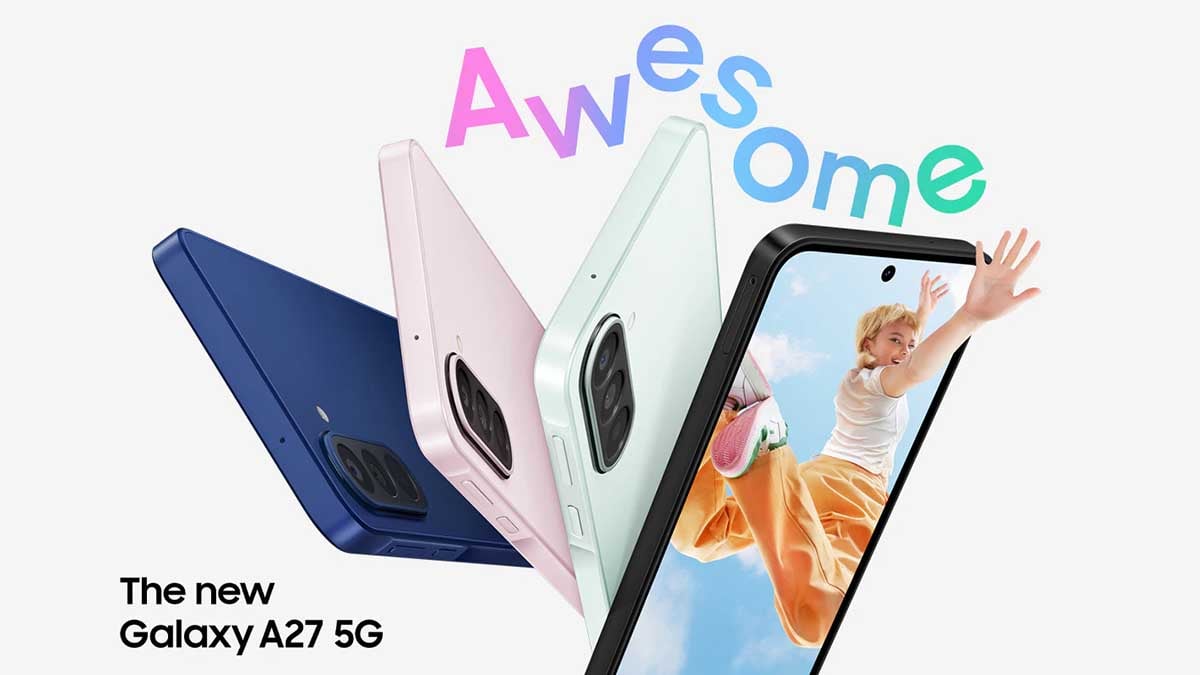
Samsung has increased the prices of the Galaxy A27, Galaxy M47, and Galaxy F70 Pro in India. This comes after a series of price hikes that affected several budget and mid-range Galaxy devices in the Indian smartphone market.
Effective this October, Samsung has raised the prices of Galaxy A27, M47, and F70 Pro in India. The three phones are seeing a steep price hike of Rs 2,000, making the models even more expensive to buy, via Sanju Choudhary.
Here are the revised prices:
Galaxy M47/F70 Pro (Snapdragon 6 Gen 3):
Sharing identical internal specifications and performance metrics, both the Galaxy M47 and F70 Pro have received a uniform Rs 2,000 bump across all variants:
- 6/128GB: Rs 35,999 → Rs 37,999
- 8/128GB: Rs 39,999 → Rs 41,999
- 8/256GB: Rs 44,999 → Rs 46,999
Galaxy A27 (Snapdragon 6 Gen 3):
Samsung’s lifestyle-focused A-series contender has also faced the same upward price revision:
- 6/128GB: Rs 33,999 → Rs 35,999
- 8/128GB: Rs 40,999 → Rs 42,999
- 8/256GB: Rs 45,499 → Rs 47,499

Over the past few weeks, Samsung has quietly bumped prices on several other devices, including entries in the budget and mid-tier Galaxy A and M lineups (such as the Galaxy A17 and M17 series).
Samsung is not alone in this trend; competing brands like OPPO and Vivo have similarly adjusted their device pricing structures upwards to combat rising operational and manufacturing costs.
For consumers eyeing these Snapdragon 6 Gen 3-powered devices, purchasing through online festive sales or leveraging bank offers at retail partners may help offset some of the newly introduced price overheads.

Chinese smartphone makers are pushing OLED display technology toward the BT.2020 color gamut used by today’s flagship phones.
Huawei and BOE are advancing BT.2020-compatible panels, while Oppo has also entered the race with a display covering roughly 95% of the wider color standard.
Launched earlier this month, Huawei’s Mate 90 RS and Mate 90 Pro Max reportedly feature BOE-supplied OLED panels supporting BT.2020. Meanwhile, DCI-P3 remains the mainstream benchmark for premium phones.
Samsung and Apple already offer flagship displays covering more than 99% of DCI-P3, but their coverage of the much wider BT.2020 gamut is considerably lower, at around 70%.
However, Chinese panel makers are exploring tandem OLED structures and green Phosphor Sensitised Fluorescence (PSF) technology to expand color coverage.
Oppo has reportedly introduced a smartphone with a Tianma-made OLED panel covering approximately 95% of BT.2020, giving China’s display industry another contender beyond Huawei and BOE.
Samsung’s flagship displays remain highly competitive in brightness, efficiency, and calibration, but broader color coverage could become another specification Chinese rivals use to distinguish their premium phones.
Source – Samsung Display
Still, a wider gamut alone does not guarantee a better viewing experience. Content support, power consumption, panel lifespan, and color accuracy will determine whether BT.2020 becomes a meaningful upgrade.
For now, China’s consecutive advances suggest that its display suppliers are willing to pursue technically demanding features before production reaches full maturity.
If they can improve yields and maintain consistent quality, Samsung could face greater competition in premium OLED technology, not just smartphone pricing.
-
 One UI2 hours ago
One UI 9.0 official update now rolling out to these Samsung phones
-
 Phones3 days ago
Apple boosts Duo and Pro Max orders while cutting iPhone 18 Pro orders
-

 One UI2 days ago
Galaxy S23 phones should be getting One UI 9.0 update soon
-

 One UI1 day ago
One UI 9.0 (Android 17) arrives for Galaxy S24 phones globally