
Samsung
Give Your Galaxy a Gift: Clear Your Cache

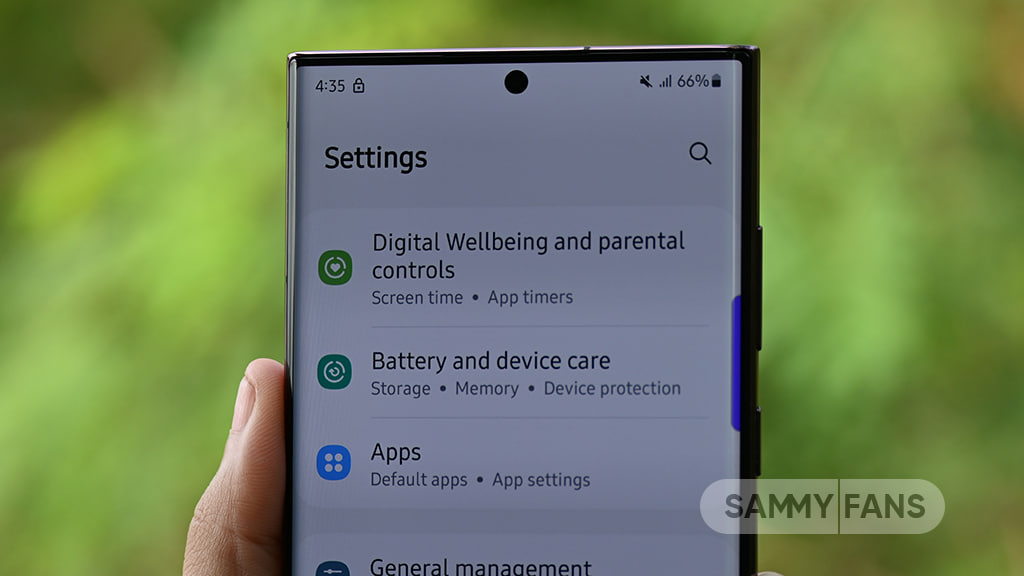
Samsung Galaxy smartphones come with intelligent device and storage management tools. While the tools exist in Galaxy’s Settings, most users don’t make use of them. This Christmas, you can give your Galaxy a gift – clear your cache.
The cached data might load slowly or entirely incorrectly, leading to wonky-looking websites. Whether you use Samsung Internet or Chrome, your cache builds up that digital clutter over time. Clearing your cache gives the browser a new start, which can speed up your web surfing.
Follow our socials → Google News | Telegram | X/Twitter | Facebook | WhatsApp
Website cookies are similar, except they store info about user data, instead of data on the website itself. Clearing your cookies gives you a chance to reset those preferences, which could improve your browsing experience, however, clearing your cache and cookies will log you out of sites.
How to clear app cache:
Open Settings, and then swipe to and tap Apps. Select or search for the app you want to clear. Tap Storage, and then tap Clear cache.
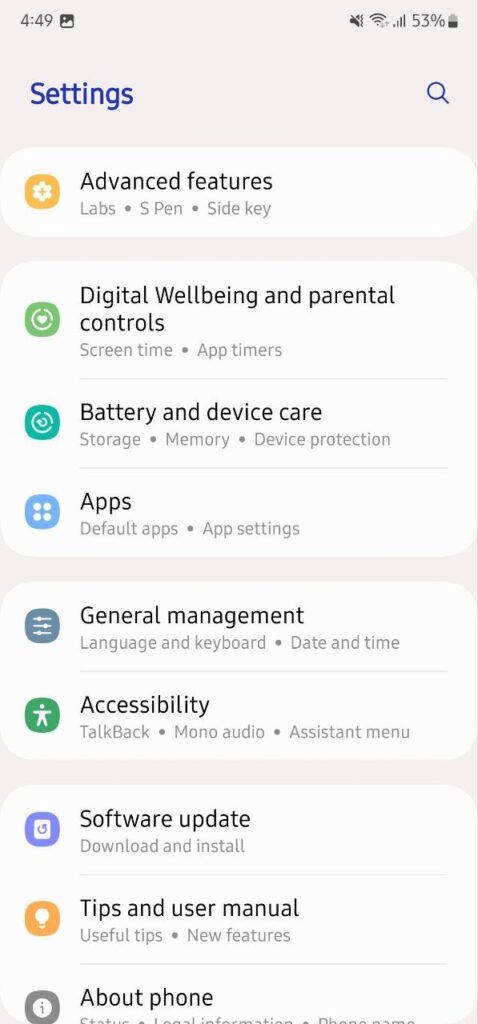

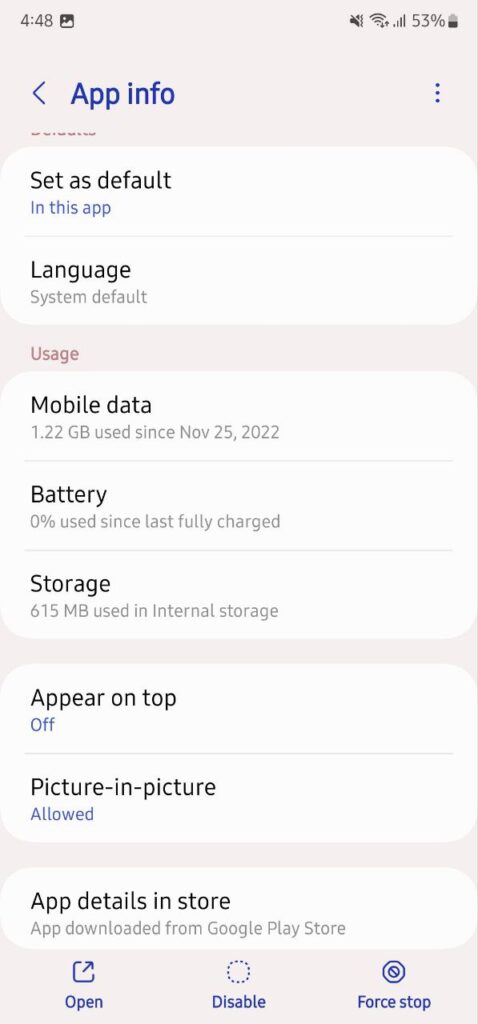
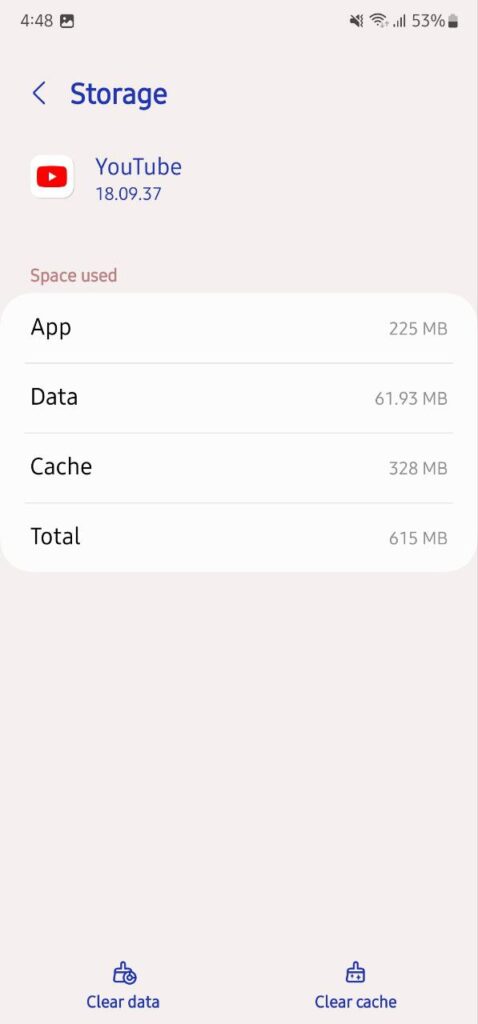
Optimize your Galaxy with Device Care:
If you need some extra help with your phone’s storage, memory, and app usage, you can use Device Care. These features will keep your device from slowing down while improving its overall performance. It will scan your apps for crashes, close down background apps, and look for malware with the tap of a button!


Samsung will introduce two new AI-powered video creation tools with the Galaxy S27 series, which have just been leaked: Gen Video and Shorts.
We know that Samsung is working on a Galaxy Premium app. This platform will offer Galaxy owners paid, subscription-based perks on their devices. It will also include a free trial to boost appeal.
Galaxy S27 series is slated to launch early next year, powered by Android 17-based One UI 9.5. The Korean tech giant is already Beta testing the new version. If you own a Galaxy S26 flagship, you can sign up for the Beta and gain early access.
Gen Video feature
Samsung’s Galaxy S27 series will have a Gen Video feature preinstalled. As the name suggests, it levarages Generative AI to create videos. There are various presets that will save you time and offer effortless video generation.
Leaked screenshots from CipherProject suggest prompt-based customization. You will be able to set Resolution and Aspect ratio through Video options menu. When a Preset is selected, the video length will be as per the preset, rather than customizable.
Presets include:
- Snap cuts
- Collage
- Photobooth
- Retro game
- Doodle deco
- Tiny world
- Good vibes
- Birthday joy
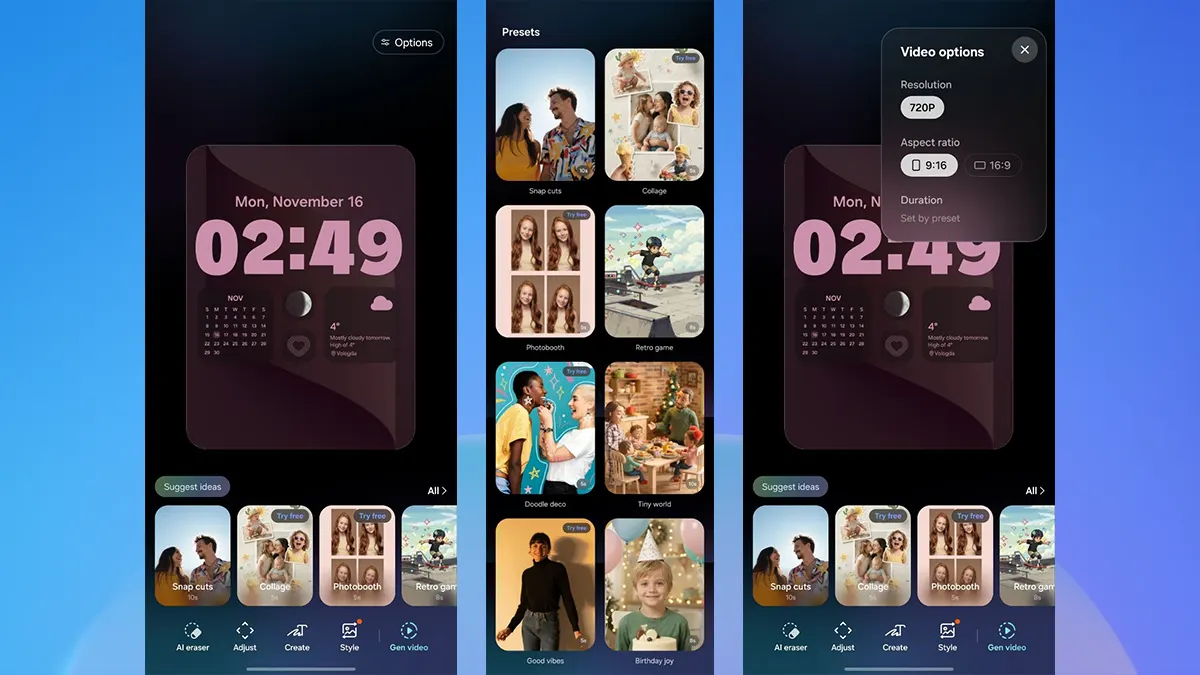
Image: Paid Gen Video | Source: CipherProject
Shorts
Short-length videos are so trending in today’s world. Instagram has its own Reels platform, while Shorts is used by YouTube. Samsung is picking up Google’s naming approach for its feature, showing the growing influence.
Notably, Shorts will be provided as an opt-in feature, which you will need to enable through a toggle. Once done, you can select up to 30 images and tapping the Create button will begin video generation based on the images provided.

Image: Gen Video and Shorts creator features | Source: CipherProject
Additionally, leaked screenshots suggest that Samsung will let Galaxy users generate up to three videos for free. Once the threshold is hit, the system will inform users to either purchase Credits or upgrade to a Pro/Premium plan.
Will you pay for such smart AI features?

Google is expanding its Noto 3D Emoji rollout to more Pixel devices, yet Samsung Galaxy phones and tablets are noticeably absent from the supported hardware list.
In a recent technical update outlining device compatibility, Google pointed directly at Samsung’s software architecture for the omission, even as the search giant’s own baseline hardware requirements look surprisingly heavy-handed for a font update.
The core friction comes down to how Android handles visual assets under the hood. Unlike traditional vector-based 2D emojis that scale cleanly without much overhead, Noto 3D relies on a high-resolution bitmap font format to deliver enhanced depth, contrast, and visual detail.
Because Samsung overrides Android’s native system font with its own proprietary emoji set across One UI, Google’s automated font updates simply bypass Galaxy hardware.
In its documentation, Google noted that Samsung devices sit in the exact same technical bucket as third-party messaging platforms like WhatsApp, which bundle their own custom emoji libraries rather than pulling from the underlying operating system.

This is less a hardware limitation and more a classic Android fragmentation standoff. Google confirmed it is not enforcing mandatory adoption for Noto 3D, leaving the ball entirely in Samsung’s court to rework its font pipeline.
Given how fiercely Samsung guards One UI’s visual identity, the Korean giant seems unlikely to abandon its custom iconography just to appease Google’s aesthetic shift.
To run Noto 3D emojis, a device must run Android 17 or later, maintain active Google Play services updates, pack at least 6GB of RAM, and offer 128GB of total storage with 10GB completely free.
Most modern mid-range and flagship Galaxy devices easily clear those memory and storage hurdles, making the software block feel somewhat arbitrary. Until either company blinks on font standardization, Galaxy users will remain stuck with flat icons while Pixel owners get the dimensional upgrade.

Galaxy S25 Ultra is expected to receive One UI 9.5 in early 2027, but owners will have to wait for Samsung to confirm the rollout schedule. The company has reportedly started testing the next software version for its 2025 flagship, suggesting that development is already underway.
A March 2027 official release is a reasonable estimate based on Samsung’s expected Galaxy S27 launch cycle and its usual software rollout strategy. However, this is an editorial forecast, not an official release date.
November 18 announcement of the One UI 9.5 beta program provides another important milestone. However, the initial public testing phase is limited to the Galaxy S26, S26+ and S26 Ultra in six markets, including India. The Galaxy S25 Ultra is not part of this first wave.
Galaxy S25 Ultra One UI 9.5 release date: March 2027 estimate
Samsung has not revealed when the Galaxy S25 Ultra will receive One UI 9.5. Based on the current development timeline, March 2027 is a reasonable estimate for the stable update, although the rollout could extend into the second quarter.
The expected schedule is tied to Samsung’s next flagship generation. The Galaxy S27 series is anticipated to debut in early 2027, potentially bringing the stable version of One UI 9.5 to market. Older eligible Galaxy devices would then receive the software through a phased rollout.
This does not mean Samsung will release One UI 9.5 for every Galaxy device simultaneously. Rollout timing can differ by model, region and carrier.
| Milestone | Expected timing | Status |
|---|---|---|
| S25 Ultra internal testing | November 2026 | Reported |
| One UI 9.5 S26 beta | November 18, 2026 | Official |
| S25 Ultra public beta | Not announced | Unconfirmed |
| One UI 9.5 stable debut | Early 2027 | Expected |
| S25 Ultra stable update | March 2027 | Estimated |
The most important distinction is between Samsung’s internal development and public availability. An internal firmware build indicates software testing, but it does not guarantee that a public beta will follow immediately.
Samsung is already testing One UI 9.5 for Galaxy S25 Ultra
A firmware build carrying version S938BXXUDEZKG reportedly appeared on Samsung’s internal servers in November. This is encouraging for existing owners because it demonstrates device-specific development rather than relying exclusively on Samsung’s general software-support commitment.
However, the appearance of an internal build does not establish that the firmware is ready for everyday use. It also does not confirm when Samsung will open a public beta program.
Expected One UI 9.5 features for Galaxy S25 Ultra
Samsung’s initial One UI 9.5 Beta introduces several improvements across privacy, camera controls, Samsung Health and accessibility. These features could make their way to the Galaxy S25 Ultra, although Samsung has not confirmed the complete feature list.
The highlights include:
- App Lock

Image: App Lock in Samsung’s One UI 9.5
- Enhanced Pro Video
- Improved Camera controls

Image: New Camera controls in One UI 9.5
- Mindful Note
- Medication tracking

Image: Samsung Health One UI 9.5
- Accessibility improvements
These are features announced for the initial Galaxy S26 Beta, not a confirmed Galaxy S25 Ultra changelog. Their availability may depend on hardware capabilities and regional restrictions.
How to check for One UI 9.5 on Galaxy S25 Ultra
When Samsung releases the update for the device, owners can check its availability through these steps:
- Open Settings on your Galaxy S25 Ultra.
- Select Software update.
- Tap Download and install.
- Follow the instructions if a new firmware version is available.
You can also monitor the Samsung Members app for a public beta registration announcement.
For now, Galaxy S25 Ultra owners should treat March 2027 as an expected stable-release window rather than a confirmed date. The next important milestone will be Samsung’s decision to extend One UI 9.5 public testing beyond the Galaxy S26 series.

As our One UI 9.5 exploration continues, we discovered another design change on the Samsung lock screen, this time linked to the Now Bar.
Samsung dropped One UI 9.5 Beta on November 18, offering early access to Galaxy S26 users in six countries. Beta Program is available through Samsung Members, and anyone interested in eligible countries can sign up for free.
One UI 9.5 makes Now Bar more flat and glassier
Samsung has refined the visual design of the Now Bar on the lock screen in the One UI 9.5 Beta, shifting away from the heavier, frosted aesthetic of One UI 9.0 toward a flatter, more translucent “glassier” appearance.
Now Bar design comparison: One UI 9.0 vs One UI 9.5
Transparency and blur:
In One UI 9.0, the Now Bar uses a denser, heavier frosted blur with higher opacity that masks much of the wallpaper underneath. In One UI 9.5, it features noticeably higher translucency and a lighter live blur, allowing the underlying wallpaper colors and textures to show through.
Surface and depth:
One UI 9.0 shows subtle internal shading and gradient depth, giving the pill a slightly raised or cushioned 3D feel. Meanwhile, the One UI 9.5 redesign adopts a flatter, uniform surface treatment that eliminates heavy internal gradients.

Edge and border:
The older design relies primarily on contrast from the thicker frosted background rather than a sharp edge highlight. On the other hand, One UI 9.5 is defined by a crisp, thin, specular light border around the perimeter of the pill, enhancing the “glass” look.
Icon and text display:
The circular blue Torch icon and white/gray text (“Torch / On”) sit inside a darker, more opaque capsule in One UI 9.0. The new One UI version retains the same icon and typography layout, though the flatter, clearer background creates sharper visual separation.

Image: One UI 9.0 (Left) and One UI 9.5 (Middle and Right)
Key findings in our hands-on
Now Bar in One UI 9.5 integrates more naturally into the lock screen without looking like a heavy floating block. The combination of increased translucency and a fine, luminous outline gives the pill a sleeker, glass-like finish.
Despite the visual overhaul, the overall dimensions, pill curvature, internal padding, and placement between the bottom lock screen shortcuts remain unchanged. Along with this visual polish, One UI 9.5 Beta also introduces expanded sports animation effects for the Now Bar.
You may like:
First hint of One UI 10? Look what Samsung changed in One UI 9.5 lock screen

Samsung is overhauling the chip packaging architecture for its next-generation flagship chip, the Exynos 2700, to improve sustained performance and power efficiency while tackling heat and battery drain in next year’s Galaxy S27 series.
The Korean tech giant has dropped Fan-Out Wafer-Level Packaging (FO-WLP) for the Exynos 2700 in favor of a new Side-by-Side (SbS) packaging structure. The shift marks the return of a dedicated package substrate to Exynos flagship chips after a three-year absence.
In its Q3 2026 report, Samsung Electro-Mechanics confirmed that it developed the new premium AP substrate and began supplying it in the second half of the year.
Samsung first introduced substrate-free FO-WLP with the Exynos 2400 in 2023 to reduce package thickness and improve thermal characteristics. However, combining a brand-new SbS layout with FO-WLP right out of the gate risked unstable manufacturing yields, prompting Samsung to revert to a substrate-based approach for the first generation of this design.
How the Exynos 2700’s Side-by-Side packaging works
SbS architecture places the AP and DRAM horizontally next to each other on a package substrate. A thin Heat Path Block (HPB) is mounted across the top of both components to pull heat away simultaneously.
Eliminating vertical stacking relieves constraints on overall package height, allowing Samsung to use thicker AP and DRAM dies. Thicker silicon is better at absorbing and spreading thermal loads, and it gives more room to optimize power-delivery circuitry.
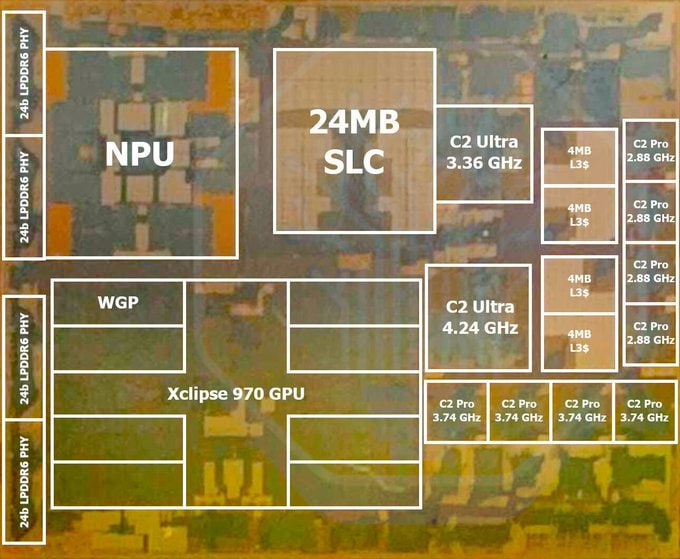
Image via SemiAnalysis
Samsung first introduced HPB cooling on the Exynos 2600 earlier this year, where its upgraded FO-WLP + HPB design reduced thermal resistance by up to 16% compared to prior generations. Extending the HPB directly over both the processor and memory in an SbS layout is designed to take that thermal stability a step further.
A welcome boost for Samsung Electro-Mechanics’ mobile business
The architectural pivot is a win for Samsung Electro-Mechanics. While the affiliate has heavily expanded its Flip-Chip Ball Grid Array (FC-BGA) substrate business for AI accelerators and server CPUs, supplying major clients like Nvidia, AMD, Qualcomm, and AWS, its smaller Flip-Chip Chip Scale Package (FC-CSP) division for mobile processors has accounted for a much smaller share of revenue. Regaining Exynos flagship orders gives its mobile packaging unit a fresh growth driver.
-
 One UI14 hours ago
One UI 9.0 official update now rolling out to these Samsung phones
-

 Android2 days ago
Bad news for Samsung users: Google confirms App Lock won’t come to older Android phones
-

 One UI2 days ago
One UI 9.5 release date for Galaxy S25 Ultra: Here’s what to expect
-

 One UI2 days ago
Hands-on with One UI 9.5: Samsung Now Bar gets new flat and glassier design