
News
Samsung Galaxy A54 and A34 now available in Mexico

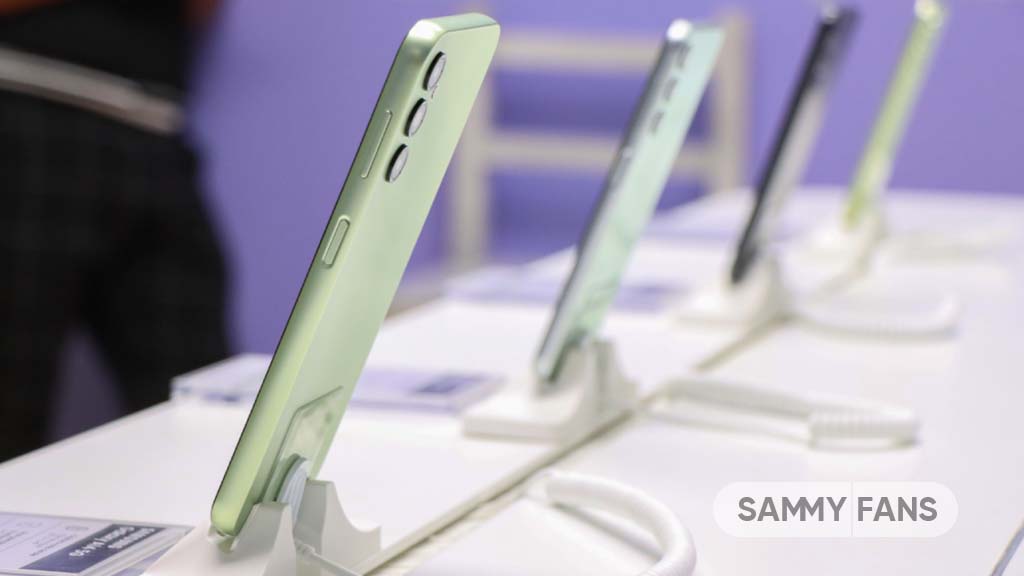
Last month, Samsung announced the Galaxy A54 and Galaxy A34, which are now available for purchase in Mexico. Since its initial unveiling, Samsung is continuously expanding the regional availability of the best mid-range smartphones, adding the Mexican market as the latest.
Price, colors & storage
In Mexico, Samsung listed Galaxy A54 in four colors — White, Graphite, Violet, and Lime at $9,999 MXN for the 126GB version and $11,999 MXN for the 256GB version, at the same time, the A34 is available in four colors —Graphite, Violet, Silver, and Green— at $7,999 MXN.
Promo
While purchasing through Samsung.com/mx or physical Samsung stores, you can take advantage of up to 24 Months Without Interest (24m plan) and save with Galaxy Redemption (trade-in), which not only smartphones but also smartwatch and tablet.
Highlights
Both new mid-range phones beat premium Android flagships when it comes to software updates support. Samsung confirmed that the Galaxy A54 and Galaxy A34 phones will get four generations of OS and five years of regular security patches.
And talking about their pro-grade features, the list mentions an IP67 rating for dust and water resistance, stereo speakers with Dolby Atmos support, Vision Booster, brighter screens, always-on display, faster application processors, pleasant color options, nightography, and more.
More on A54 and A34
- First Galaxy A54 update brings camera improvements
- Galaxy A54 DXOMark camera scores revealed
- The A54 Packs 10 Flagship Camera Features, Check Here
Follow our socials → Google News, Telegram, Twitter, Facebook


Samsung has opened a new exhibition, ‘Foldable Heritage’, at Samsung Gangnam. The exhibition shows how Samsung’s foldable smartphones have developed over the last seven years. It will remain open permanently.
The company launched its first foldable phone, the Galaxy Fold, in 2019. Since then, the company has continued to improve its foldable phones with better designs, stronger screens, improved hinges, and new technology. The latest models include the Galaxy Z Fold 8 Ultra, Galaxy Z Fold 8, and Galaxy Z Flip 8.
The exhibition has three main sections: Galaxy Fold & Flip Story, Design Story, and Tech Story. The Galaxy Fold and Flip Story shows the history of Samsung’s foldable phones. Visitors can see how the phones have changed from the first Galaxy Fold to the latest models. It also shows new technologies, including Galaxy AI and the three-stage Galaxy Z Tri-Fold.

The Tech Story focuses on the technology inside the phones. It explains improvements to the display and hinge. Visitors can also see Flex Titanium technology, which helps make the phones thinner and stronger while reducing screen creases.
The exhibition also has a teardown display of the Galaxy Z Fold 8 Ultra and Fold 8. This allows visitors to see the small and advanced parts inside the phones.
Samsung also has similar displays at its stores in Hongdae and Cheongdam. The latest Galaxy foldable phones have received strong interest, with 1.44 million units sold during domestic pre-orders, setting a new Galaxy smartphone record in Korea.

Samsung Galaxy Watch users could soon see more accurate workout routes. A new Google Play Services update brings an improvement that can make location tracking better on Wear OS smartwatches.
Google has released Google Play Services version 26.31. The update includes a new way of processing location data. Google will process the raw location information from the smartwatch on its servers. This can help make workout routes more accurate.
The feature could be useful for people who use their Galaxy Watch for running, walking, and cycling. After a workout, the route shown in the fitness app could better match the actual path the user followed.
GPS tracking is not always perfect. Sometimes, a smartwatch can show a route that moves away from the road or path. The new update could help reduce these errors and provide a more accurate workout record.

However, there is one thing users should know. Galaxy Watch models without cellular connectivity may need to connect to Wi-Fi or a smartphone before the improved location data can be processed and shown.
The update also brings other changes. Google is adding new features for developers to support account management in Android and Wear OS apps. It also includes bug fixes for developer services and system management features.
Google is also updating the Play Store. On Android tablets and foldable phones, users will be able to open an app’s details page directly from the Top Charts section. For Galaxy Watch users, the improved workout location tracking is the main benefit. It may be a small update, but it could make tracking more accurate and useful.


Samsung Electronics reportedly plans to apply High-NA EUV technology in 1nm chips by 2030. The company is drawing a clear line in the sand for when the next-gen EUV earns its place in the foundry, and that line sits at the 1nm node.
According to reports (via @SemiconductorsX), High-NA EUV, the next-gen Extreme Ultraviolet lithography, is being targeted for mass production on the 1nm (A10) chips, with Samsung expecting commercialization around 2030.
Changmin Park of Samsung’s Foundry Process Development Team noted that the company had initially hoped to bring High-NA into play as early as 2nm or 1.4nm, but the technology simply isn’t mature enough yet.
Instead, Samsung’s 1.4nm process (SF1.4) is set for 2029 using conventional 0.33 NA EUV, with SF1.4+ and the first 1nm node arriving in 2030 under the same approach before High-NA takes over as the primary method afterward.
High-NA tools aren’t cheap, and the ecosystem still needs work. That said, Samsung expects a hybrid approach for a while, blending standard EUV multi-patterning with High-NA single patterning rather than a short switch.
For now, Samsung is co-developing High-NA capabilities with equipment and materials partners, setting the stage for a more efficient 1nm era once the pieces fall into place.

Samsung SDI is developing PrismStack battery technology. The goal involves the development of an advanced product incorporating high energy density and fast-charging technologies, which will be installed in future GM EVs.
As per Yonhap, Samsung SDI announced that it signed an agreement with GM for a joint advanced development project focused on PrismStack, the next-generation prismatic EV battery solutions.
Samsung SDI will also acquire GM’s entire 49.99% stake in SynergyCells, their joint venture. Upon completing the equity acquisition, Samsung SDI will take sole ownership of SynergyCells.
SynergyCells is an EV battery production entity established by Samsung SDI and GM in 2024 with a total investment of $3.5 billion. Construction is currently underway for the plant, which has a planned annual production capacity of 27 GWh.
“The decision is aimed at continuing both companies’ joint efforts to develop future mobility solutions and responding to growing demand for energy storage systems (ESSs) in the U.S. market,” a company official said.
Through this acquisition, Samsung SDI secures its first standalone battery factory in North America. The facility will produce advanced battery products for various applications.
Since last year, Samsung SDI has been expanding its local market presence by signing consecutive large-scale ESS battery supply contracts with major US energy companies.
Samsung PrismStack battery features
- High Space Efficiency: Layering anodes, cathodes, and separators minimizes internal empty space.
- Enhanced Safety: Rigid aluminum shell protects against physical shocks and prevents leaks.
- Superior Thermal Control: Increased surface area contacting cooling plates improves heat dissipation.
- Lower Resistance: Reduced internal component connections optimize fast-charging and high-power output


Sony is teaming up with TSMC in a massive $6.4 billion bet on the future of image sensors, and the timing says a lot about how nervous the camera sensor leader has gotten about Samsung’s growing ambitions.
According to NikkeiAsia, Sony and TSMC plan to set up a joint venture before the end of this year, with Sony holding roughly 60 percent and TSMC taking the remaining 40 percent.
The new venture will produce next-generation image sensors at Sony Semiconductor’s Kumamoto plant, with mass production targeted for 2029. The companies have collaborated before, but always in a divided arrangement.
This time, they are consolidating production under one roof, a shift that should let them react faster to demand swings, especially as AI-driven hardware becomes a bigger part of the sensor business.
Physical AI is the phrase getting thrown around a lot lately, and it basically means robots, self-driving cars, and machines that need to “see” the world around them. Image sensors are the components that make that possible, and demand for them is only going up.
Sony still commands close to half the global CMOS sensor market, but that lead has looked less comfortable since last year, when Samsung’s foundry business landed the image sensor order for Apple’s iPhone. China’s OmniVision has also been pouring money into catching up.
The investment amounts to about four years of Sony Semiconductor’s usual capital spending, all pushed into one deal. Sony is even said to be discussing subsidies with the Japanese government.
It is a clear signal that Sony does not want to just defend its lead; it wants to stretch it further before Samsung and others close the gap for good.
-
 One UI3 days ago
One UI 9.0 (Android 17) testing on these 50 Samsung devices
-
 Samsung2 days ago
A massive wave of Samsung updates is near
-
 One UI15 hours ago
Samsung releases first official One UI 9-based update for Galaxy Z Fold 8 phones in more countries
-
 One UI3 days ago
Galaxy S25 One UI 9 Beta launches soon: Here’s how to download and install