
News
Samsung gets first American battery plant; working on PrismStack tech with 4 big advantages


Samsung SDI is developing PrismStack battery technology. The goal involves the development of an advanced product incorporating high energy density and fast-charging technologies, which will be installed in future GM EVs.
As per Yonhap, Samsung SDI announced that it signed an agreement with GM for a joint advanced development project focused on PrismStack, the next-generation prismatic EV battery solutions.
Samsung SDI will also acquire GM’s entire 49.99% stake in SynergyCells, their joint venture. Upon completing the equity acquisition, Samsung SDI will take sole ownership of SynergyCells.
SynergyCells is an EV battery production entity established by Samsung SDI and GM in 2024 with a total investment of $3.5 billion. Construction is currently underway for the plant, which has a planned annual production capacity of 27 GWh.
“The decision is aimed at continuing both companies’ joint efforts to develop future mobility solutions and responding to growing demand for energy storage systems (ESSs) in the U.S. market,” a company official said.
Through this acquisition, Samsung SDI secures its first standalone battery factory in North America. The facility will produce advanced battery products for various applications.
Since last year, Samsung SDI has been expanding its local market presence by signing consecutive large-scale ESS battery supply contracts with major US energy companies.
Samsung PrismStack battery features
- High Space Efficiency: Layering anodes, cathodes, and separators minimizes internal empty space.
- Enhanced Safety: Rigid aluminum shell protects against physical shocks and prevents leaks.
- Superior Thermal Control: Increased surface area contacting cooling plates improves heat dissipation.
- Lower Resistance: Reduced internal component connections optimize fast-charging and high-power output


Samsung Electronics reportedly plans to apply High-NA EUV technology in 1nm chips by 2030. The company is drawing a clear line in the sand for when the next-gen EUV earns its place in the foundry, and that line sits at the 1nm node.
According to reports (via @SemiconductorsX), High-NA EUV, the next-gen Extreme Ultraviolet lithography, is being targeted for mass production on the 1nm (A10) chips, with Samsung expecting commercialization around 2030.
Changmin Park of Samsung’s Foundry Process Development Team noted that the company had initially hoped to bring High-NA into play as early as 2nm or 1.4nm, but the technology simply isn’t mature enough yet.
Instead, Samsung’s 1.4nm process (SF1.4) is set for 2029 using conventional 0.33 NA EUV, with SF1.4+ and the first 1nm node arriving in 2030 under the same approach before High-NA takes over as the primary method afterward.
High-NA tools aren’t cheap, and the ecosystem still needs work. That said, Samsung expects a hybrid approach for a while, blending standard EUV multi-patterning with High-NA single patterning rather than a short switch.
For now, Samsung is co-developing High-NA capabilities with equipment and materials partners, setting the stage for a more efficient 1nm era once the pieces fall into place.

Sony is teaming up with TSMC in a massive $6.4 billion bet on the future of image sensors, and the timing says a lot about how nervous the camera sensor leader has gotten about Samsung’s growing ambitions.
According to NikkeiAsia, Sony and TSMC plan to set up a joint venture before the end of this year, with Sony holding roughly 60 percent and TSMC taking the remaining 40 percent.
The new venture will produce next-generation image sensors at Sony Semiconductor’s Kumamoto plant, with mass production targeted for 2029. The companies have collaborated before, but always in a divided arrangement.
This time, they are consolidating production under one roof, a shift that should let them react faster to demand swings, especially as AI-driven hardware becomes a bigger part of the sensor business.
Physical AI is the phrase getting thrown around a lot lately, and it basically means robots, self-driving cars, and machines that need to “see” the world around them. Image sensors are the components that make that possible, and demand for them is only going up.
Sony still commands close to half the global CMOS sensor market, but that lead has looked less comfortable since last year, when Samsung’s foundry business landed the image sensor order for Apple’s iPhone. China’s OmniVision has also been pouring money into catching up.
The investment amounts to about four years of Sony Semiconductor’s usual capital spending, all pushed into one deal. Sony is even said to be discussing subsidies with the Japanese government.
It is a clear signal that Sony does not want to just defend its lead; it wants to stretch it further before Samsung and others close the gap for good.


Samsung is heading to Gamescom 2026 with a full lineup aimed squarely at gamers. The company is treating the show as a stage for its “full-stack gaming” pitch, which ties mobile, PC, and console experiences together under a single ecosystem.
The event runs from August 26 to 30 at Koelnmesse in Cologne, Germany, and Samsung’s booth will run under the “#PlaySamsung” banner.
Here’s what Samsung is bringing to gamers at Gamescom 2026
Expect hands-on time with three headline products:
- Odyssey G8, which Samsung calls the world’s first 6K gaming monitor
- 9100 PRO SSD built for next-gen load speeds
- Galaxy Z Fold 8 Ultra, positioned as Samsung’s answer to serious mobile gaming
The Odyssey G8 launched back in May 2026, and its party trick is Dual Mode. It allows players to switch between a crisp 6K resolution at 165Hz or a faster 3K mode at 330Hz.
It’s G-SYNC Compatible and supports AMD FreeSync Premium too, so screen tearing shouldn’t be an issue even in demanding titles. Visitors can also try Pearl Abyss’s Crimson Desert on the G8 with HDR10+ GAMING enabled.
PlayGalaxy Cup and more
Samsung’s booth will host Sonic series matches and a cosplay runway inspired by its products.
The bigger draw might be the #PlayGalaxy Cup World Finals on August 27 and 28, where ten teams from five regions face off in PUBG Mobile, kicking off with a special exhibition match between well-known gaming influencers.

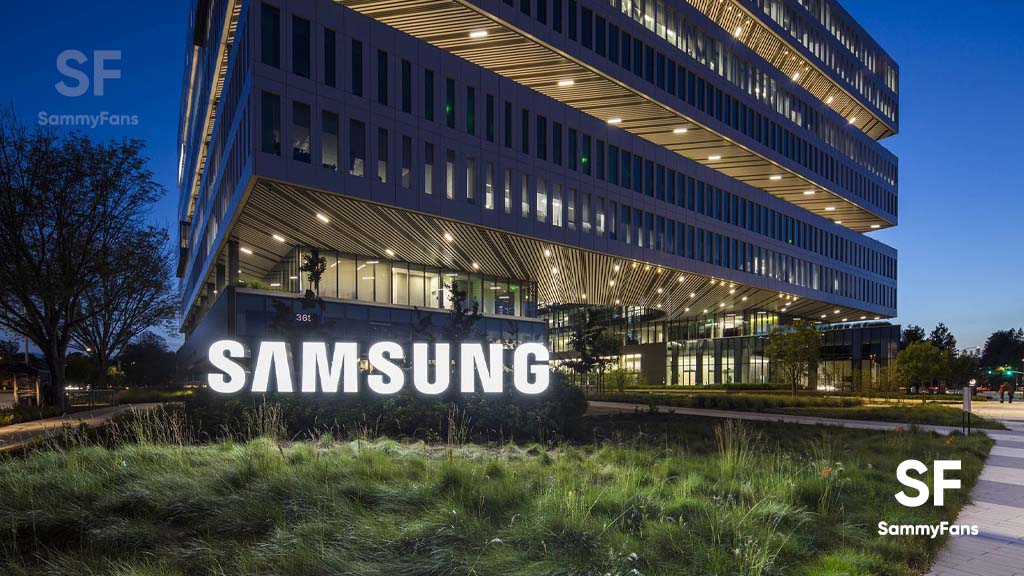
Samsung is facing a patent lawsuit in the United States over technology used to make smartphone chips. Stellar Semiconductor Technologies LLC filed the case on August 7 in a US federal court in Texas. The company has accused Samsung Electronics and its US subsidiary of using its patented technology without permission.
Stellar says six of its patents are involved. These patents cover the way small parts inside a semiconductor chip are connected. They include transistors, metal wires and other parts that help electricity move through the chip.
The patents are related to FinFET technology. In simple terms, FinFET is a type of transistor design that helps control electricity in very small chips. It has been widely used in advanced smartphone processors.
According to Stellar, some processors made by Samsung Foundry use technology covered by its patents. The company has named Qualcomm’s Snapdragon 888 and first-generation Snapdragon 8 processors, along with Samsung’s Exynos 1280 and Exynos 1380 chips.
The lawsuit also includes Samsung Galaxy smartphones and tablets that use these processors. These include Galaxy S-series phones from the S10 to S26, as well as Galaxy Z Fold, Galaxy Z Flip and Galaxy Tab devices. Stellar says it examined the chips using advanced microscopes and other testing methods to support its claims.
The company is seeking financial compensation and legal costs. It also wants the court to find that Samsung knowingly infringed its patents and has asked for damages to be increased by up to three times. The case could be important for Samsung Foundry because it involves technology used to manufacture smartphone processors

Galaxy Z Fold 8 appears to have handed Samsung a favorable production problem, with the company ramping up production by 1 million units.
Credible outlet ETNews reports that Galaxy Z Fold 8 is turning out to be a bigger hit than Samsung anticipated, with strong early demand leading the Galaxy maker to increase production volume further by 1 million units.
It pushes total Fold 8 output into the high 3 million range, up from the 2.8 million units originally planned for the device. This marks the second year in a row Samsung has had to raise production targets mid-cycle.
The Korean tech giant had earlier set annual production targets across the Z8 lineup at roughly 2.8 million for the Galaxy Z Fold 8, 2 million for the Galaxy Z Fold 8 Ultra, and 1.5 million for the Galaxy Z Flip 8.
Galaxy Z8 series pulled in 1.44 million reservations between July 28 and August 4 in South Korea. Nearly 70 percent of that demand was tied specifically to the Fold 8, which explains why Samsung is throwing extra production focus.
That 1.44 million figure is also a 38.5 percent jump over the Galaxy Z7 lineup’s 1.08 million pre-orders, and it even edges past the Galaxy S26 range’s 1.36 million units from earlier this year.
Apple is expected to launch its own first foldable iPhone this September, also built around a 4:3 wide-fold design. With Apple entering the ring soon, Samsung locking in extra Fold 8 supply now looks like a calculated move to stay ahead.

-
 One UI2 days ago
One UI 9.0 (Android 17) testing on these 50 Samsung devices
-
 Samsung23 hours ago
A massive wave of Samsung updates is near
-
 Phones2 days ago
Samsung Galaxy Z Fold 8 passes brutal durability test as an impressive survivor
-
 One UI3 days ago
Samsung One UI 9.0 Beta expansion looks finally near