
News
iPhone Duo launch sends more buyers to Galaxy Z Fold 8


Apple iPhone Duo foldable phone has finally entered the conversation, but its arrival appears to have pushed some South Korean buyers toward the Samsung Galaxy Z Fold 8 instead of pulling them away.
According to Yonhap, Galaxy Z Fold 8 Korea sales increased by around 10% during the week after Apple unveiled the iPhone Duo. Consumers who had postponed their purchase to see Apple’s foldable eventually decided to go with Samsung.
Price is a major factor
The biggest difference for Korean buyers may be the price.
The 256GB iPhone Duo costs 3.29 million won locally, while the 256GB Galaxy Z Fold 8 is priced at 2.2781 million won. That puts Apple’s foldable more than 1 million won above Samsung’s model in the market.
The iPhone Duo’s South Korean launch is expected around late October or early November. Buyers who want a foldable now therefore have little reason to wait.
Once the iPhone Duo is officially released in South Korea, consumers are expected to continue weighing their options by comparing price, portability, and large-screen usability between the two devices.
There is another practical factor: portability. Samsung’s Galaxy Z Fold 8 foldable phone weighs 201 grams and measures 9.7mm when closed.
Samsung also gives the Fold 8 a mature foldable software experience, including support for multiple apps and DeX, alongside its 7.6-inch inner display.
Apple’s entry will still raise the competitive pressure considerably. However, its first-generation foldable is already showing that a familiar logo alone may not be enough to pull every prospective buyer away from Samsung.





Samsung, Apple, and Google are facing a new patent dispute in the US that could potentially affect the sale and import of certain electronic devices with Spatial Audio.
For Samsung, the dispute could involve Galaxy smartphones, tablets, and other products that offer spatial or enhanced audio features.
The US International Trade Commission (ITC) has formally opened an investigation following a complaint from audio technology company BoomCloud 360. The complaint was originally filed on August 14, with a supplemental filing submitted on August 31.
The investigation, identified as 337-TA-1521, concerns three patents that BoomCloud 360 says are being infringed by electronic devices from Samsung, Apple, and Google.
BoomCloud 360 takes Samsung, Apple and Google to court
The disputed technology relates to spatial audio processing, including techniques designed to improve the separation and balance of sound from left and right speakers. These technologies are used to create a more immersive 3D audio experience.
BoomCloud 360 has asked the ITC for a Limited Exclusion Order covering the allegedly infringing products, along with cease-and-desist orders. If such remedies are ultimately granted, affected products could face restrictions on US imports and sales.

Source: US ITC
The ITC’s decision to investigate does not mean Samsung, Apple, or Google have been found to infringe the patents. The commission will now examine the allegations through its Section 337 process.
The ITC investigation comes amid separate patent litigation between BoomCloud 360 and the three technology companies.
Samsung filed a declaratory judgment case against BoomCloud 360 in the US District Court for the Southern District of California on September 3. Apple and Google had filed similar actions in August.


Talus has launched ReadyPoint, a new mobile payment and business solution for merchants. The product is made with Samsung Electronics America and uses secure Tap-to-Pay technology from Ingenico.
ReadyPoint turns a Samsung Galaxy smartphone or tablet into a complete point-of-sale (POS) system. Businesses can use one device to accept payments, check inventory, manage daily work, connect with customers, and see important business information.
The solution is designed to make business easier and more flexible. Employees do not need to stay at a fixed checkout counter. They can take the device to customers and accept payments wherever they are.
ReadyPoint can be used by many types of businesses, including contractors, installers, mobile service companies, car businesses, boutiques, and specialty stores.

The system offers different payment options, including Tap-to-Pay, QR codes, payment links, and manual card entry. Businesses can also scan product barcodes using the device’s camera.
ReadyPoint includes security features such as device sharing and user authentication. It also follows PCI MPoC and Tap-to-Pay security standards. Merchants get dedicated accounts, simple pricing, and 24/7 support from US-based payment experts.
Talus CEO Kim Fitzsimmons said that dedicated merchant accounts and strong customer support are important features of ReadyPoint. Talus also provides quick applications, approvals, onboarding, and activation.
ReadyPoint is now available through Talus’ reseller network. Resellers and sales agents can get training, sales materials, demos, and support. The solution will be presented at the Western States Acquirers Association Annual Conference from September 15–17, 2026, in Palm Springs, California.
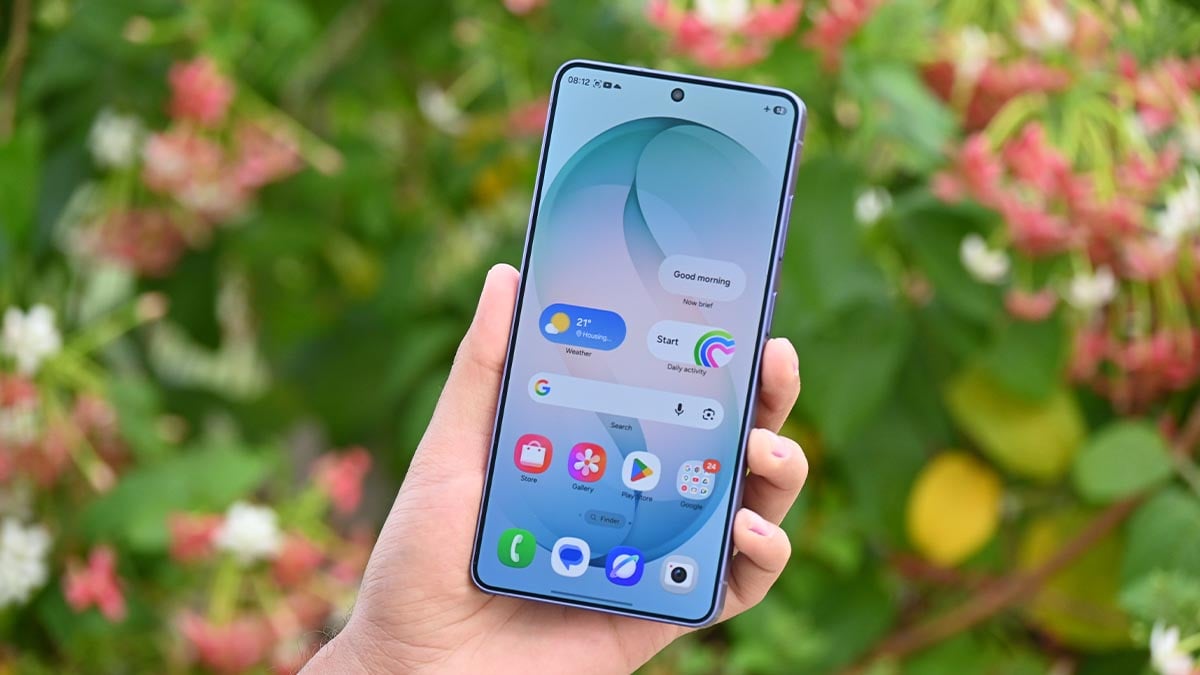
Samsung is reportedly testing Micron 1γ LPDDR5X DRAM on Galaxy S27 series. The company is already preparing to diversify its memory supply chain for the upcoming flagship phones, with Micron could be getting a major role.
Samsung Galaxy S27 may use Micron 1γ LPDDR5X DRAM
Galaxy S27 series will bring four models, including a new Pro variant. DigiTimes reports that “Samsung is evaluating Micron’s advanced 1γ LPDDR5X mobile DRAM for the Galaxy S27 series, balancing performance needs against rising next-gen memory costs.”
Micron 1γ LPDDR5X DRAM is available in binary and non-binary tiers since June 2025 and July 2026, respectively. Available capacities range up to 24 gigabytes, but Samsung would largely adopt 12GB across the lineup.

-
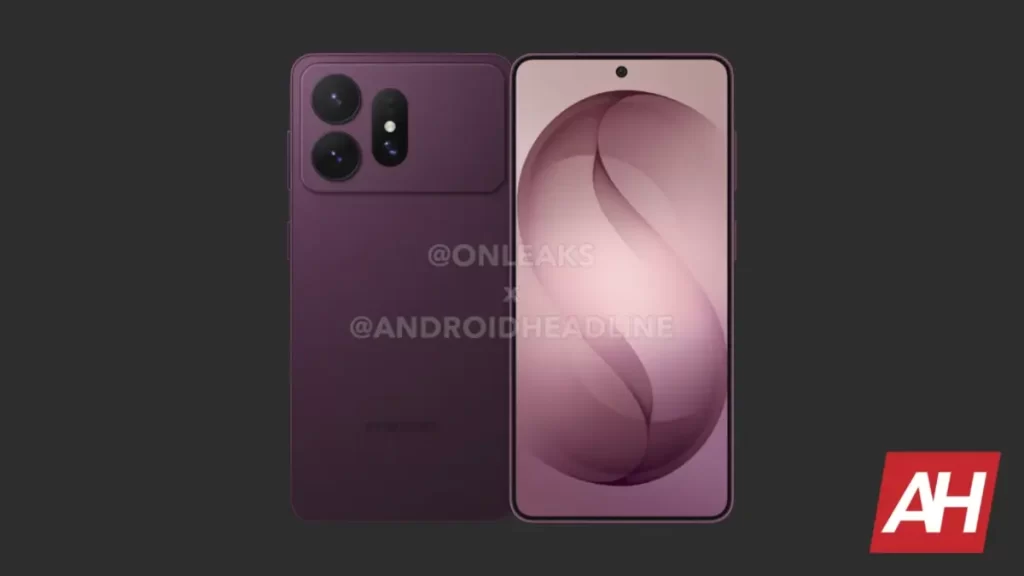
- Image via Android Headlines
Micron’s enhanced RAM offers faster speed and performance over the standard LPDDR5X DRAM. The US memory maker has also optimized power consumption so the device consumes less power for an overall extension in battery life.
Note that Micron will be a part of the supply chain, not an exclusive supplier. Samsung MX will source a large portion of Galaxy S27 DRAM from its own memory business. This is usual business to establish a stable supply chain.
LPDDR6 will appear in select Chinese flagships later this year, but Samsung isn’t making the shift this early. The Korean tech giant may pass another year on the LPDDR5 standard, while adopting enhanced iterations.
Booming AI infrastructure has shortened the memory supply as manufacturers prefer high-profit solutions such as server DRAM and HBM. That said, the industry is facing a continuous surge in the prices of DRAM and NAND memory.

Apple iPhone Duo foldable phone has already found itself under scrutiny, and this time the concern is not about its hinge or crease, but the screen, which appears dark in bright light.
The iPhone Duo’s inner screen appeared unusually dim and washed out during a public appearance, raising questions about how its matte display finish performs under harsh lighting.
Apple iPhone Duo dark screen draws attention at Emmys
Apple CEO John Ternus briefly showed the iPhone Duo while attending the 78th Emmy Awards. Video from the event quickly circulated online, with the unfolded display looking difficult to read under the bright lighting at the venue.
The reaction is particularly interesting because Apple has made the inner display’s nano-texture finish one of the iPhone Duo’s notable design features.
The 7.6-inch flexible screen uses the textured surface to scatter reflections, making the display easier to view in normal conditions while also helping make the central fold less obvious.
Apple CEO John Ternus shows the new iPhone Duo | #Emmys pic.twitter.com/7a6Rp1yMSS
— Deadline (@DEADLINE) September 14, 2026
Is nano-texture responsible?
A nano-textured surface can reduce reflections, but its matte appearance can also make an OLED panel look less punchy when strong ambient light hits the screen. The effect can reduce perceived contrast and make the display appear more grey under intense lighting.
The Emmy footage (via AplWire) therefore raises a legitimate question about the balance Apple has chosen. The company appears to have prioritized reducing reflections and making the crease less noticeable, but that does not automatically mean the display has sacrificed brightness.
There is another important detail: the iPhone Duo’s external screen also appeared relatively dark in the same footage, despite not using the inner display’s nano-texture treatment.
That makes it difficult to blame the matte finish alone. Display brightness, viewing angle, camera exposure and the extremely bright red-carpet lighting could all have contributed.
Real-world testing will tell the story
The controversy is arriving well before the iPhone Duo reaches customers. Apple has scheduled pre-orders for October 16, with sales beginning October 23.
The more interesting question is whether Apple’s unusual approach can deliver the promised low-reflection experience without making the display look dull when the lighting gets difficult.

Samsung has reached the end of a four-year court case surrounding the Galaxy performance throttling, specifically the Game Optimizing Service (GOS) controversy, with the final consumer lawsuit now closed.
According to Newsis, Samsung is now free from the last remaining court case linked to the Galaxy performance throttling controversy. The last remaining case, a class-action lawsuit filed in Israel, ended after the plaintiffs voluntarily withdrew it.
The Jerusalem District Court approved the withdrawal on September 9, bringing all eight GOS-related consumer lawsuits filed across South Korea, the US, and Israel to a close. None resulted in a ruling that held Samsung liable for damages.
How the GOS controversy started
The dispute dates back to early 2022, when Galaxy S22 users discovered that GOS could limit CPU and GPU performance during demanding workloads.
Samsung defended GOS as a mechanism designed to control temperature and power consumption. Following the backlash, the company introduced a software update that gave users greater control over game performance.
The controversy eventually moved into courtrooms. Three cases were filed in South Korea, four in the US, and one in Israel. The US cases ended through voluntary withdrawals around 2023, while the Korean cases were withdrawn earlier this year.
Gaming on Galaxy S24 Ultra (Credit: Sammyfans)
The legal closure does not erase the 2022 controversy, but it removes the remaining consumer litigation from Samsung’s GOS history.
For Samsung, the episode also became a reminder that performance claims, thermal management, and user control can become closely connected in flagship smartphones.
Today, GOS remains part of Samsung’s broader approach to balancing sustained gaming performance with heat and battery management.
-

 News2 days ago
NVIDIA CEO Jensen Huang is using Samsung Galaxy Z Fold 8
-

 Updates3 days ago
Samsung Galaxy Z Fold 8 and Flip 8 get September 2026 security update in the US
-
 News2 days ago
Galaxy Z Fold 8 Ultra tops US Consumer Reports’ foldable phone ratings
-

 One UI2 days ago
Galaxy Z Fold 6, Flip 6 grab One UI 9 Beta 2 with new AI features