
Samsung
Vodafone Romania selects Samsung to provide advanced vRAN solutions

Vodafone selected Samsung Electronics to provide its advanced vRAN and radio solutions for the Open RAN rollout across Romania. To provide multi-spectrum coverage for 2G, 4G, and 5G, enabling increased network capacity, greater flexibility, and a smaller footprint.
It means Samsung will provide its vRAN solutions, supporting multi-RAT, automation solutions and Open RAN-compliant triple-band radios as well as 5G Massive MIMO radios. Notably, the triple-band radio combines 700MHz, 800MHZ, and 900MHz frequency bands into one compact radio.
Moving on, this vRAN solution supports multiple generations of network technologies in a single platform including 2G which is an important spectrum for the Internet of Small Things (IoT), M2M communications, and voice communications for roaming services in Europe.
Consequently, this commercial deployment of Samsung vRAN solutions will cover major urban cities in Romania to deliver high-quality, stable commercial network services to Vodafone customers.
Follow our socials → Google News | Telegram | X/Twitter | Facebook | WhatsApp
President and Head of Networks Business at Samsung Electronics said,
- “As our collaboration with Vodafone continues to make strides across Europe, this rollout in Romania will mark a significant milestone that underscores our dedication to network innovation.”
- “Our pioneering network solutions will propel Vodafone Romania’s transformation journey, providing a flexible and powerful way to realize the full potential of Open RAN. We look forward to combining our diverse experiences together to reshape the future of connectivity.”



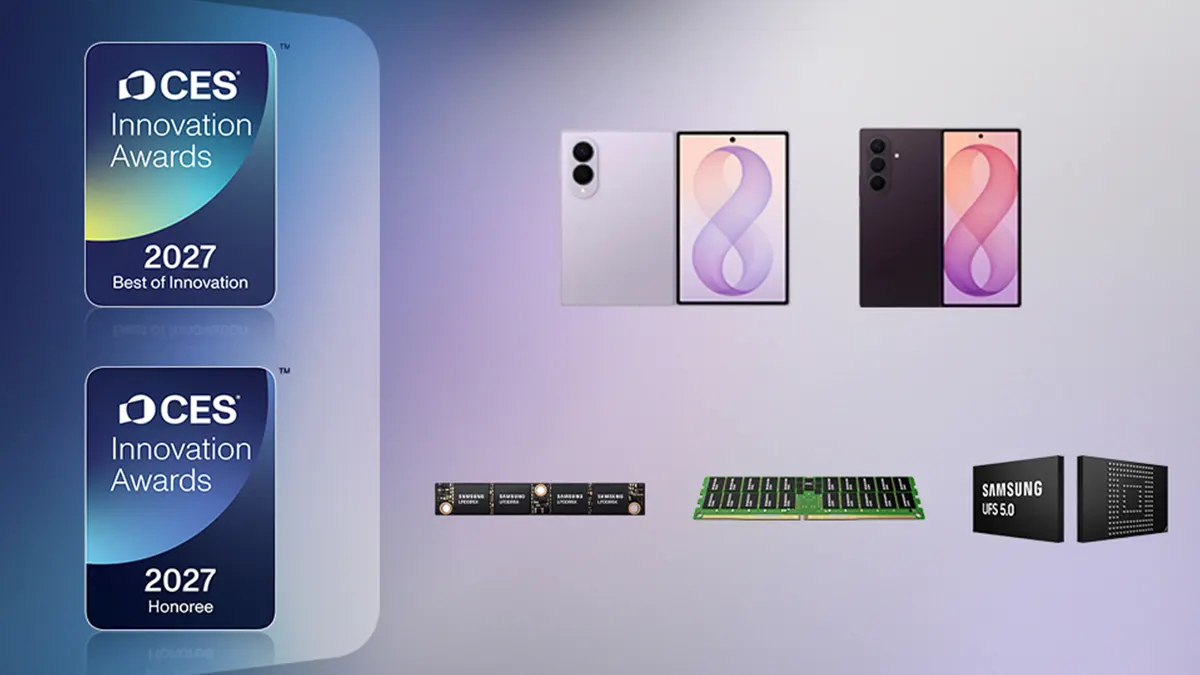
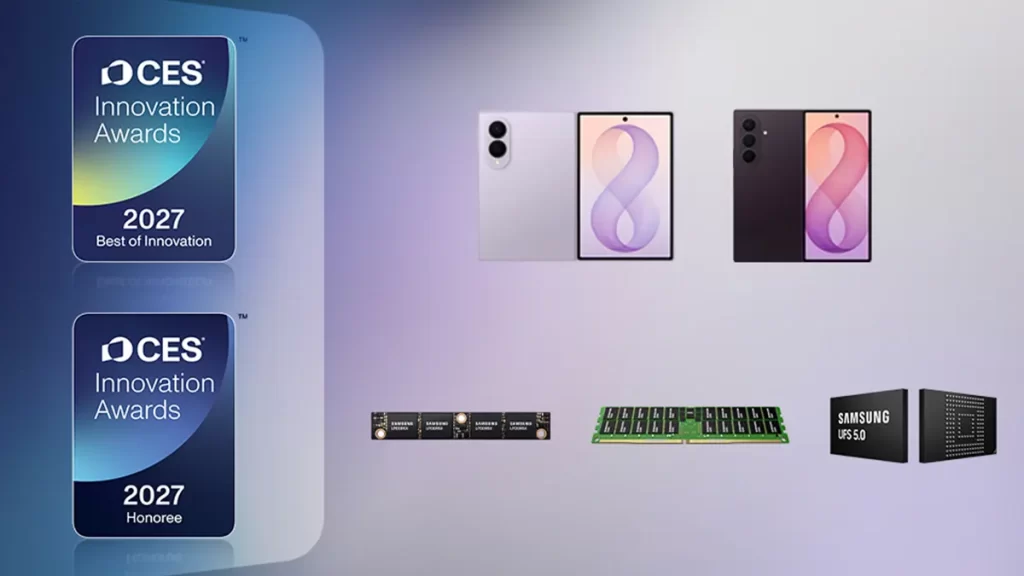
Samsung today announced that its foldables and semiconductor products, including DRAM and UFS 5.0 storage, won CES 2027 Innovation Awards. Consumer Technology Association honored Samsung’s Ultra push and advanced memory products even before CES 2027 kicks off.
Galaxy Z Fold 8 series
Galaxy Z Fold 8 and Galaxy Z Fold 8 Ultra scored CES 2027 honors in the Mobile Devices, Accessories & Apps Category. We reported this development earlier this week when the two foldables were listed on the CES website.
Galaxy Z Fold 8
Galaxy Z Fold 8 is reimagined for users who want a foldable that feels natural in the moments when curiosity turns into deeper discovery.
Galaxy Z Fold 8 Ultra
Ultra represents Galaxy’s highest standard for performance, capability, and innovation. Galaxy Z Fold 8 Ultra merges this standard with Samsung’s most advanced foldable design.

Samsung Semiconductor
Samsung’s cutting-edge semiconductor products have also impressed reviewers at Consumer Technology Association. Its 512GB DDR5 RDIMM, LPDDR5X SOCAMM2 and next-generation UFS 5.0 storage nabbed honors.
DRAM
512GB DDR5 RDIMM (1b 32Gb DRAM-Based):
- It offers 512GB of capacity with a four-layer stacking structure, compared to eight layers in conventional 16Gb DRAM-based modules.
LPDDR5X SOCAMM2:
- It delivers up to 153.6 GBps of bandwidth, 2.6 times that of conventional DDR5 RDIMMs, with over 70% better energy efficiency.
UFS 5.0 Storage
- Samsung’s UFS 5.0 is the industry’s first UFS 5.0 storage solution designed for next-generation on-device AI in smartphones and other mobile devices.
Samsung also announced:
Samsung’s Visual Display (VD) Business earned recognition for its latest innovations in display and audio technologies.
- Two products won CES Innovation Awards Best of Innovation
- A number of products and features were named CES Innovation Awards Honorees.
The Digital Appliances (DA) Business was also recognized for its home appliance innovations that improve everyday convenience, efficiency, and functionality. This includes:
- Enhanced Bespoke AI Laundry Combo – CES Innovation Awards Honoree

Jensen Huang’s departure from NVIDIA does not automatically put Samsung Electronics’ chip deals at risk. It introduces a new question for the semiconductor industry: will NVIDIA maintain the same supplier relationships and long-term technology ambitions without the executive who personally helped establish them?
Samsung Elec’s relationship with NVIDIA now extends beyond memory chips to foundry manufacturing, AI infrastructure and next-generation semiconductor development. Existing commitments provide some protection, but future opportunities could depend on how the new leadership approaches suppliers.
What is locked in: Rubin HBM4 and Groq 3
The immediate risk to Samsung appears limited (via KoreaJoongAngDaily) because several important commitments are already moving beyond the negotiation stage.
Samsung has started (via Yonhap) commercial shipments of HBM4 designed for NVIDIA’s Vera Rubin platform. The company also confirmed that its foundry division manufactures NVIDIA’s Groq 3 LPU, expanding a relationship that previously centered largely on memory components.
Nvidia and Samsung have also discussed longer-term cooperation involving HBM5, HBM4E and next-generation foundry technologies. Samsung’s semiconductor chief Jun Young-hyun confirmed those discussions following a meeting with Huang in June 2026.

File Photo | Source – Yonhap
Samsung’s broader memory business provides another layer of protection.
The Korean tech giant has signed long-term memory supply agreements with 10 major customers and is negotiating with another 10. The company has also said its targeted 2027 HBM supply volume is sold out. It has not identified NVIDIA as one of those customers.
NVIDIA’s board has also stated that customer commitments, operations and its product roadmap are expected to continue without interruption. That is an important signal against assuming an immediate cancellation of existing chip orders.
The projects at risk: AI factories and HBM5
The biggest question concerns projects that still require substantial investment.
Samsung’s AI Megafactory initiative, involving more than 50,000 NVIDIA GPUs, is one example. Future HBM5 development, additional Groq manufacturing, and physical AI initiatives also depend on continued collaboration.

Via – SemiconductorX/X
The Korea Herald reported that projects personally championed by Huang could face a fresh evaluation under new leadership. NVIDIA’s next CEO might maintain the same investment strategy, but a more financially conservative approach could change the pace of expansion.
For now, CFO Colette Kress is serving as interim CEO while NVIDIA considers internal and external candidates for the permanent position. Her first major opportunity to explain the company’s direction comes with its November 17 earnings announcement.

Image: GettyImages
Samsung could gain negotiating power against SK Hynix
Semiconductor industry analysts believe Huang’s departure could weaken preferential relationships established with suppliers, particularly SK Hynix. SemiAnalysis has argued that Huang personally helped secure memory capacity in South Korea and manufacturing capacity in Taiwan.
If NVIDIA adopts a more standardized procurement strategy, Samsung could receive greater opportunities to compete for HBM orders.
This possibility matters because Samsung has been working to strengthen its HBM position against SK hynix. However, there is no evidence yet that NVIDIA has changed its supplier allocation or pricing strategy.

Samsung does not necessarily lose its NVIDIA business without Jensen Huang. But the relationship could become more commercially driven, making future supply agreements, technology partnerships and AI investments less predictable.

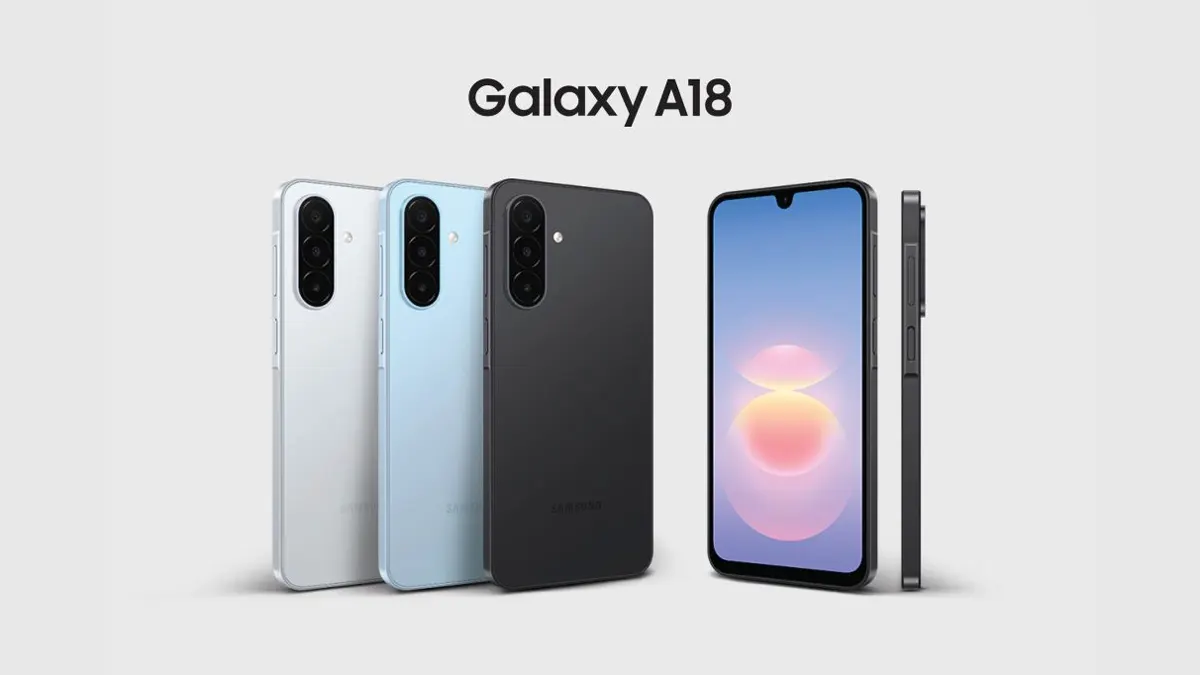
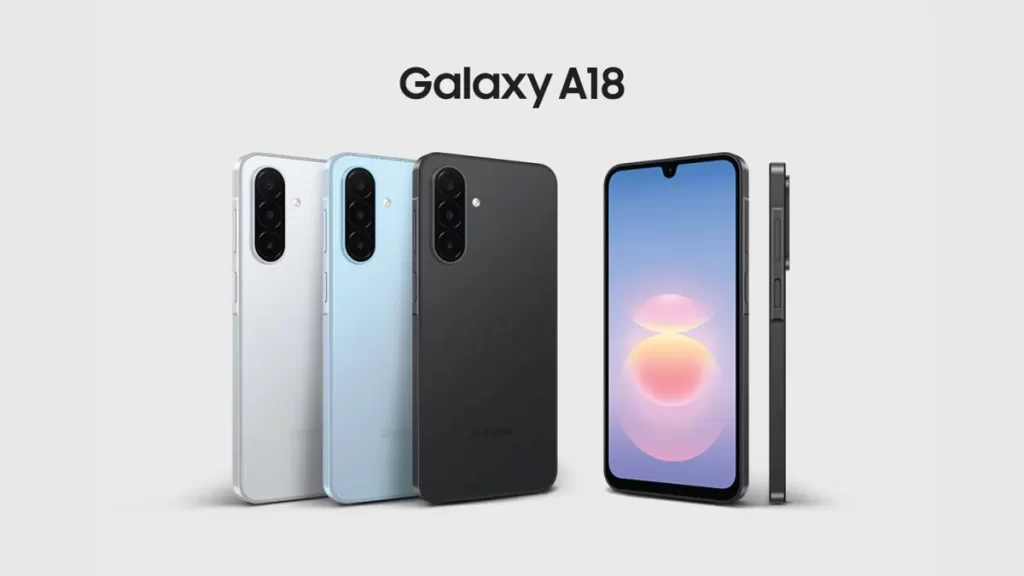
Samsung Electronics has launched its new Galaxy A18 smartphone in Singapore. The latest addition to the Galaxy A Series is designed for users who want good performance, useful features, and a quality camera at an affordable price.
The Galaxy A18 comes with a 6.7-inch FHD+ Super AMOLED display and a 90Hz refresh rate for bright visuals and smooth scrolling. It is powered by the MediaTek Helio G99+ processor and offers 4GB RAM and 128GB storage for everyday use, gaming and multitasking.
For photography, the smartphone features three rear cameras, including a 50MP main camera, a 5MP ultra-wide camera and a 2MP macro camera. It also has a 13MP front camera for selfies and video calls.
The Galaxy A18 includes useful AI features to make daily tasks easier. Circle to Search allows users to find information by simply circling or tapping something on their screen. The new Find the Look feature helps users discover outfits and identify nearby music. Users can also access AI assistants such as Google Gemini and Perplexity.
For better protection, the phone comes with an IP64 rating against dust and water splashes, along with Corning Gorilla Glass 3. Samsung Knox Vault also helps protect personal information. The company promises up to six generations of OS upgrades and six years of security updates.
Available in Light Blue, Black and Silver, the Galaxy A18 is priced at S$328 in Singapore. Sales begin on 13 November 2026. Customers can enjoy an instant S$30 discount and a free 25W power adapter at selected stores. The offers are valid until 8 December 2026.

Samsung has announced the launch of its new AI-powered smart glasses, bringing artificial intelligence and stylish designs together. Developed in partnership with Google, the glasses will come with Gemini AI to help users with everyday tasks without using their hands.
The new smart glasses will be available from December 10, 2026, in the United States and South Korea. Pre-orders have started from November 12 in the US. The collection includes 30 different designs from popular eyewear brands Gentle Monster and Warby Parker.
Weighing around 41 grams, the glasses are designed to be lightweight and comfortable for daily use. With Gemini AI, users can ask questions about things they see, identify famous places, translate restaurant menus and get directions through Google Maps.

Image via Samsung
The glasses can also help users at work. For example, they can take a picture of a meeting whiteboard and ask Gemini to summarize the important points. Users can also make calls, listen to notifications and reply to messages using voice commands.
The device features a 12MP camera, two open-ear speakers and four microphones. It is powered by Qualcomm’s Snapdragon AR1 Gen 1 processor and offers up to nine hours of battery life on a single charge. With the charging case, battery life can extend up to 72 hours.
Samsung has also included privacy features, such as an LED light that indicates when the camera is recording. In the US, prices start at $395 for Warby Parker models and $449 for Gentle Monster models.

Samsung’s upcoming Exynos 2700 (codename Ulysses) could become much more important than another processor powering the Galaxy S27. The chipset is expected to serve as the first major flagship test of Samsung Foundry’s second-generation 2nm manufacturing process, known as SF2P, at a time when the company is trying to rebuild confidence among external semiconductor customers.
Samsung reportedly began full-scale front-end production of the Exynos 2700 in October 2026. The development is significant because the company needs more than a working flagship processor to convince major chip designers to consider its manufacturing technology. It must demonstrate consistent yields, competitive performance per watt and reliable mass production.
The commercial opportunity is substantial. Kiwoom Securities estimates Samsung Electronics’ non-memory semiconductor businesses could generate 1.8 trillion won in operating profit in 2027, reversing an estimated 3.6 trillion won loss in 2026. That forecast includes Samsung Foundry and System LSI, rather than the foundry business alone.
Inside SF2P: Samsung’s second-gen 2nm chip tech
SF2P represents the next stage of Samsung Foundry’s Gate-All-Around (GAA) manufacturing development. Compared with its first-generation SF2 process, the second-generation technology reportedly targets 12% higher performance, 25% lower power consumption and an 8% reduction in chip area.
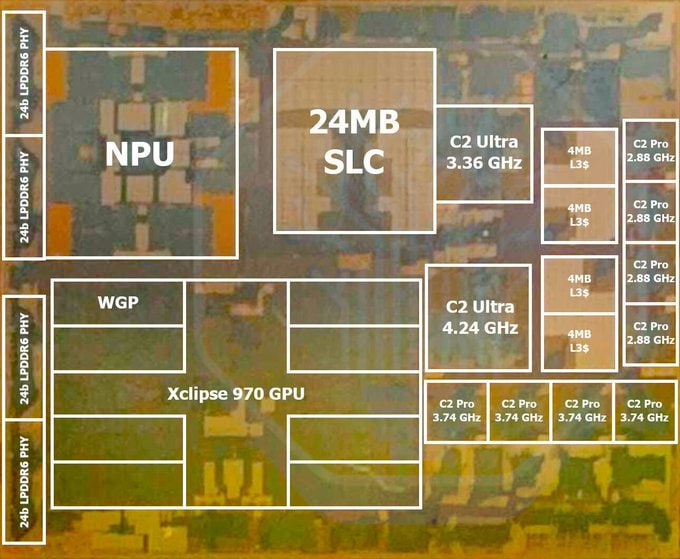
Image via
These are important improvements, particularly for high-performance computing processors and mobile devices, where performance and energy consumption increasingly determine commercial competitiveness.
There is another important distinction regarding production yields. ChosunBiz reported in September that Samsung’s first-generation SF2 yield had approached 60%. That figure should not be mistaken for the Exynos 2700’s SF2P yield, which remains undisclosed.
Samsung’s October 29 earnings announcement provides a more concrete indication of its manufacturing plans. The company said its Foundry business would begin mass production of new mobile products using its second-generation 2nm process in the fourth quarter of 2026.
Why supply-chain reports remain divided
Samsung’s history with flagship Exynos processors explains why the Exynos 2700’s production progress deserves attention.
The Exynos 2300 never reached the Galaxy S23 lineup, which instead used Qualcomm processors globally. The more clearly documented setback came with the Exynos 2500. Reports in 2024 and early 2025 described extremely low 3nm yields that prevented Samsung from supplying enough processors for the Galaxy S25 series. Samsung eventually introduced the chipset in the Galaxy Z Flip7 in July 2025.
The Elec’s October report indicated that Samsung had planned Exynos 2700 production for the S27, S27+ and S27 Pro. However, subsequent database reporting has pointed toward Snapdragon processors for the Pro and Ultra models in certain markets.
Winning back external foundry customers
The Exynos 2700 could provide Samsung Foundry with something valuable: a high-volume internal customer that helps validate its 2nm manufacturing technology.
For external fabless companies, choosing a foundry involves manufacturing yields, defect rates, power consumption, wafer costs, production capacity, packaging capabilities and delivery reliability.
A successful Exynos 2700 production ramp would give Samsung another opportunity to demonstrate that its advanced process technology can support demanding commercial products.
Kiwoom Securities’ 1.8 trillion won operating-profit projection (via FNNews) reflects the potential recovery of Samsung Foundry. The brokerage expects 2027 revenue of 36.4 trillion won for this business group, compared with 30.1 trillion won in 2026. These are analyst forecasts, not company guidance.
On November 3, ChosunBiz reported that Taiwan-based Faraday had secured a design project for a US cloud customer’s AI chip, with Samsung expected to handle wafer manufacturing using its 2nm GAA technology.
Separately, Samsung confirmed continued 2nm project wins involving major cloud service providers and AI/HPC customers during its Q3 earnings disclosures.
How packaging compromises could impact real-world efficiency
Manufacturing technology is only one part of the Exynos 2700’s efficiency equation. Packaging could also influence how well the processor performs inside a Galaxy smartphone.
Supply-chain reports have raised questions about whether Samsung will retain Fan-Out Wafer-Level Packaging (FOWLP) or move toward a simpler side-by-side arrangement involving the processor, memory and Heat Path Block (HPB).

That said, the Exynos 2700 represents a manufacturing credibility test for Samsung. Its success could strengthen the case for SF2P among external chip designers, while disappointing yields or inconsistent power efficiency could undermine that opportunity.
Big Tech has reason to watch the Galaxy S27 chip rollout closely because Samsung needs to prove that its 2nm technology works reliably beyond its own Galaxy ecosystem.
-
 One UI2 days ago
One UI 9.0 official update now rolling out to these Samsung phones
-
 One UI2 days ago
One UI 9.5 Eligible Devices: These Samsung devices could receive the next major update
-

 Updates3 days ago
Samsung Galaxy Z Fold 7 and Z Flip 7 grabbing November 2026 security update
-
 One UI3 days ago
Samsung Galaxy S25 joins the One UI 9.5 development party