
Semiconductor
Faraday inks landmark 2nm deal with Samsung to power next-gen cloud AI chips


Faraday Technology has secured its largest contract to date, landing a multi-million-dollar deal with an undisclosed US customer to design a custom cloud AI processor using Samsung Foundry’s 2nm Gate-All-Around (GAA) node.
Samsung Electronics takes on 2nm wafer fabrication, while Faraday functions as the primary integration hub, managing supply chain logistics across memory suppliers and packaging partners like United Microelectronics Corporation (UMC).
For Samsung Foundry, the win validates its SF2 GAA process yield improvements at a moment when hyperscalers are seeking alternatives to TSMC’s constrained capacity. Silicon design complexity at sub-2nm nodes requires specialized packaging and IP integration, areas where turnkey design service providers are becoming indispensable bridge builders.
The deal lands alongside strong third-quarter financials for Faraday. Consolidated revenue reached $112.8 million, up 13% year-over-year, backed by record mass production revenue of $89.7 million and expanding ASIC shipments for high-performance computing.
During its Q3 earnings call, Samsung also revealed that it is negotiating a 2nm process with several clients. While the company didn’t disclose names at that time, Faraday seems to be one of the firms in talks with Samsung Electronics.


Samsung has reported a sharp rise in sales of its latest HBM4 memory chips. Sales more than tripled in the third quarter compared with the previous quarter. HBM4 made up around 60% of Samsung’s total HBM sales, making it an important product for the company.
The growth is mainly driven by rising demand for memory chips used in AI systems. NVIDIA’s upcoming Vera Rubin platform is also expected to increase demand for HBM4. This is helping Samsung compete more closely with SK Hynix in the growing AI memory market.
Samsung reported revenue of 195 trillion won and an operating profit of 107.4 trillion won in the third quarter. The company said it had achieved its HBM market share target earlier than expected. It also confirmed that its planned HBM supply for next year has already been fully booked, while customers are asking for more supply.

Samsung expects its global HBM market share to reach nearly 40% in the fourth quarter. The company is also working to attract more customers and expand its business in the AI chip market.
Samsung plans to begin mass production of its next-generation HBM4E chips in the first half of next year and increase production in the second half.
The company expects memory supply to remain tight until 2028 due to strong AI demand and limited production capacity. This could create further growth opportunities for Samsung and increase competition with SK Hynix and Micron.
Semiconductor
Samsung expands long-term memory agreements to 20 clients, seeks to lock in up to 70% of output through 2030


Samsung has locked in long-term memory supply agreements with ten major enterprise customers while actively hammering out terms with another ten. If current contract momentum holds, up to seventy percent of the company’s total memory output could be tethered to multi-year commitments through the end of the decade.
Samsung Electronics is shifting its memory strategy to mitigate market volatility, confirming it has signed long-term supply agreements (LTAs) with 10 major enterprise clients and is actively negotiating terms with 10 more.
Speaking alongside the release of its Q3 2026 earnings (via Jukan), Samsung also indicated that current contract trends could lock in 60% to 70% of its total memory production capacity under multi-year commitments through 2030.
Samsung reported a consolidated revenue of KRW 195.3 trillion for the third quarter of 2026, alongside an operating profit of KRW 107.4 trillion.
With quarterly operating profit surging past one hundred trillion won on the back of relentless HBM4 and server SSD demand, Samsung has the liquidity to dictate terms.
If seventy percent of the factory floor is legally spoken for by 2030, smaller device manufacturers and independent hardware vendors are going to find themselves scraping the bottom of a very dry barrel. Samsung is safeguarding its own balance sheet, but the rest of the industry is about to learn what it feels like to be priced out of the foundation.
South Korean prosecutors have indicted an academic researcher for allegedly exfiltrating next-gen EUV process data from Samsung, underscoring persistent vulnerabilities in semiconductor industry-academic research partnerships.
According to filings from the Seoul Central District Prosecutors’ Office reported by SemiconductorsX, researcher “A” from a leading university was charged without detention for violating the Industrial Technology Protection Act.
Prosecutors state the researcher leveraged temporary employee access privileges during a joint project to upload unreleased sub-nanometer manufacturing parameters to a personal cloud account.
Researcher A is accused of unauthorized leakage of semiconductor process data to a personal cloud while working at Samsung Electronics and using it during the industry-academic cooperation process.
A is also known to have exploited the fact that, while acting as an industry-academic cooperation researcher, they had access to internal company technical information with the status of a Samsung Electronics employee for a certain period.
The compromised files contained precise EUV lithography specifications, including photoresist formulations, thermal processing thresholds, and solvent compositions critical to pattern density scaling on next-generation silicon.
EUV technology remains the linchpin of sub-3nm foundry yields and advanced DRAM fabrication, making process recipes highly sensitive intellectual property.
The Seoul Central District Court dismissed an arrest warrant citing the defendant’s cooperation with investigators, though legal observers note that pre-commercialization leakage carries severe commercial risks regardless of external distribution. The incident is expected to push global chipmakers toward stricter zero-trust access controls for joint academic ventures.

Samsung is eating fast the worldwide HBM market dominance of SK Hynix driven by its early introduction of HBM4 semiconductors. New estimates suggest a changing landscape in the HBM market, driven by NVIDIA Vera Rubin orders.
According to Bernstein (via EDaily), Samsung has already surpassed SK Hynix in revenue in the third quarter. The company is expected to hit a major milestone of 40 percent market share in the fourth quarter of the year.
Samsung beats SK Hynix in Q3 HBM revenue
U.S. investment bank Bernstein projects that Samsung generated an estimated $8.7 billion in HBM revenue during the third quarter of 2026, marking a 33 percent increase from the preceding quarter.
That performance effectively edges out SK Hynix, which posted an expected $7.6 billion for the same period, up 11 percent quarter-on-quarter.
HBM landscape to change in Q4 2026
With analysts projecting Samsung’s market share to nudge near 40 percent in the fourth quarter, the duopoly is entering a far more volatile phase.
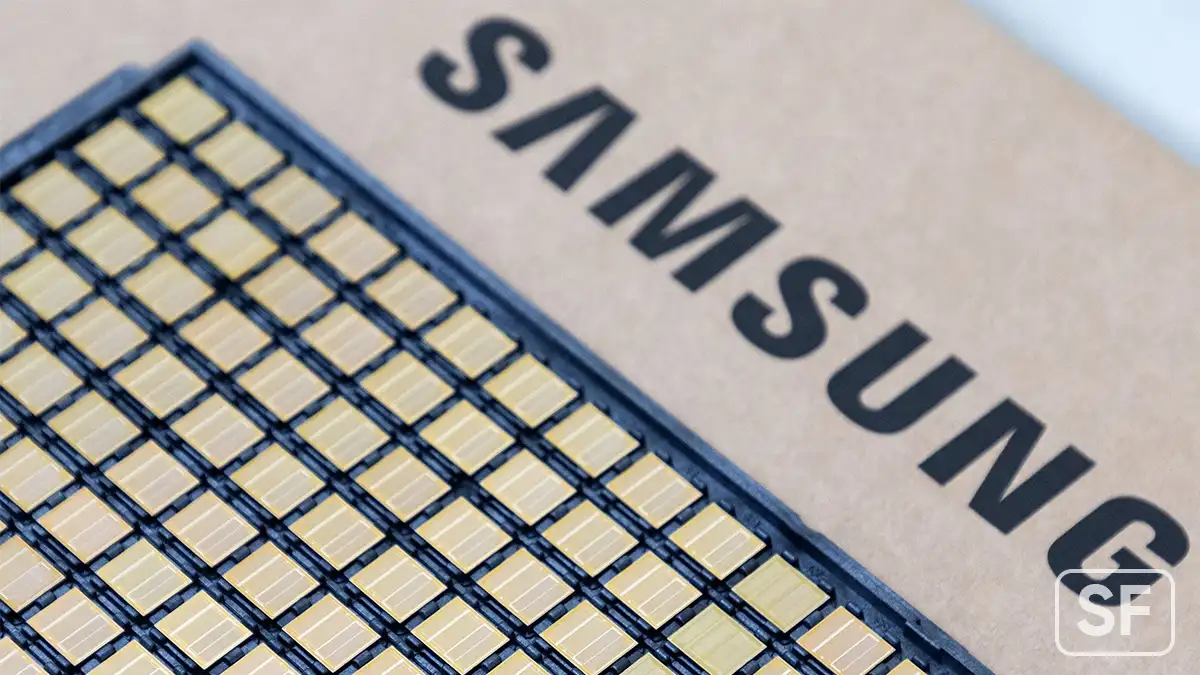
Furthermore, market estimates suggest that next year’s HBM4 production capacity across major suppliers is already heavily booked through advance supply contracts.
Kim Dong-won, head of research at KB Securities, stated, “Samsung, which recorded a 33% HBM market share in the second quarter of this year, is expected to approach 40% in the fourth quarter.”
Counterpoint Research reported the Q2 2026 HBM market, handing a record 50% share to SK Hynix, followed by Samsung at 33% and Micron at 18%. Q3 market analysis is expected to arrive early next month as we enter the fourth quarter.

South Korea’s exports of HBM crossed 50 trillion won for the first time in the third quarter of this year. The growth was driven by rising demand for AI chips and higher sales of advanced memory products.
According to the Korea International Trade Association, exports of multi-chip packages (MCPs), which are used to track HBM export trends, reached $37.33 billion between July and September. This was a 166% increase compared with the same period last year.
Exports rose from $20.2 billion in the first quarter to $30.5 billion in the second quarter and $37.3 billion in the third quarter. HBM is a special type of memory that helps AI chips process large amounts of data quickly. As global technology companies spend more on AI data centres, demand for this memory is increasing.
Source – Samsung
South Korean companies lead the global HBM market. According to Counterpoint Research, SK Hynix held a 50% market share in the second quarter, while Samsung Electronics had 33%.
The launch of next-generation HBM4 memory has also boosted exports. HBM4 offers better performance than earlier versions and is expected to be used in NVIDIA’s upcoming Rubin AI processors. It also sells at a higher price.
The growth is expected to continue in 2027. Research firm TrendForce predicts that average HBM prices could rise by 121% next year due to limited supply and growing demand.
With AI investment increasing worldwide, South Korea’s memory chip makers are expected to benefit from higher demand, rising prices, and stronger export growth.
-

 Updates20 hours ago
Samsung offers Galaxy S26 users a brand-new One UI 9 update in Europe, India
-
 Samsung3 days ago
Samsung Galaxy S27 Release Date: A 5-year trend analysis
-
 Phones3 days ago
Samsung W27 Red Edition leaks ahead of China launch
-

 One UI2 days ago
Samsung soft-launched One UI 9 Watch (Wear OS 7) release date