
News
Galaxy Note 20 Ultra: How to enable 120Hz refresh rate

The refresh rate is the number of times the screen is refreshed every second, so the higher the refresh rate, the faster the screen responds. Samsung Galaxy Note 10 only supports a fixed rate of 60Hz refresh rate but the Galaxy Note 20 Ultra supports a maximum of 120Hz refresh rate to provide smoothness on the screen.
The improved display refresh rate allows for clearer and smoother video quality when playing games with fast action and watching videos. The comparison of 60Hz and 120Hz is as follows.

The screen will be refreshed more times when you watch super high-quality animations and will be refreshed fewer times when you read articles that do not require a high refresh rate.
Users of Samsung Galaxy Note 20 Ultra can switch between adaptive 120Hz and the standard 60Hz from the settings. If you choose to stay on the standard refresh rate, it’ll save you extra battery life. Also, read the complete instructions given below.
JOIN OUR SAMSUNG CHANNEL ON TELEGRAM
HOW TO ENABLE 120HZ REFRESH RATE:
- Open Settings
- Tap Display
- Select smoothness
- Choose your desired option.
- Apply
Note: Higher refresh rate consumes extra battery than the regular 60Hz
Read More: Samsung One UI 3.0 FAQ 2: What are the eligible Galaxy phones for One UI 3.0/Android 11 beta?





Samsung has reduced its smartphone shipment target for 2027 as rising memory chip prices continue to increase production costs. The company is now planning to ship around 210 million smartphones next year, compared to its target of approximately 232 million units in 2026. This represents a decline of around 9.5%.
According to the report (via Jukan), Samsung is among several major smartphone makers that have lowered their shipment expectations for 2027. Other companies, including Xiaomi, Apple, OPPO, vivo, and Huawei, have also reduced their targets.
The main reason behind these cuts is the sharp rise in memory chip prices. Growing demand for memory chips from AI data centres and servers has reduced the available supply for other industries. This has made memory chips more expensive, increasing the cost of making smartphones.
The rising costs could create challenges for Samsung and other smartphone makers. Companies may have to increase smartphone prices or reduce certain features to keep production costs under control. This could also affect customer demand, especially in the budget and mid-range smartphone segments.
According to Goldman Sachs, the global DRAM supply shortage could reach 5.1% in 2027. This means memory supply may remain tight, keeping prices high.
However, the situation could improve in 2028 as new memory factories are expected to increase production. Goldman Sachs expects the gap between memory supply and demand to become smaller during that year, which could help bring prices down.
For Samsung, reducing its 2027 shipment target reflects the growing pressure on the smartphone industry. The company may need to carefully manage production costs and smartphone prices while dealing with the ongoing memory chip shortage.

Samsung is facing a massive legal hurdle in the US as a case linked to a woman’s Galaxy S21 catching fire has reportedly become a $200,000 lawsuit.
Korea’s The Biz reports that Samsung and T-Mobile USA are fighting to move a product liability lawsuit into federal court after a Florida woman rejected an $800 settlement offer for a Galaxy S21 5G that allegedly caught fire and left her with permanent scars.
Plaintiff Jennifer Kravchuck originally sued the companies in state court on September 20. Samsung and T-Mobile petitioned to transfer the case to federal jurisdiction on November 23, 2026, though a federal judge has ordered both companies to first prove that jurisdictional requirements are met.

Kravchuck purchased the Galaxy S21 5G, which houses a 4,000mAh lithium-ion cell, at a DeLand, Florida carrier store in March 2022. Almost exactly two years later, on March 21, 2024, the handset reportedly suffered acute thermal runaway during normal, unmodified use. The resulting fire inflicted burns along Kravchuck’s left side, requiring emergency hospital treatment and leaving permanent scarring.
When Samsung America contacted Kravchuck in November 2024 to investigate, the company instructed her not to factory-reset the phone and shipped specialized hazardous-materials packaging so its Plano, Texas engineering facility could analyze the failure.
A month later, Samsung offered $800 as a device refund, contingent on Kravchuck signing a broad legal waiver. She declined, having previously demanded $200,000 in pre-suit damages, and requested her phone back because it contained personal medical records.
Samsung’s refusal to return or account for the hardware creates a far larger vulnerability than a single aging battery. Lithium-ion degradation after 24 months of thermal cycling is an industry-wide reality, and isolated cell failures rarely threaten a manufacturer’s bottom line on their own.
However, by retaining the physical evidence for two years without disclosing its status, Samsung risks spoliation arguments in court, potentially shifting the legal focus from standard component wear to alleged failures in the Galaxy S21’s battery management system and internal thermal cutoffs.
If Samsung cannot establish federal jurisdiction, defending an unreturned, burned device in front of a local Florida jury could prove significantly costlier than settling early.

Update: Jensen Huang returns as Nvidia CEO
Nvidia founder and former CEO of the company has been reinstated as CEO merely 10 days after his resignation over an extramarital affair with a Chinese spy.
Original story, published on November 12, as follows:
NVIDIA has announced a major leadership change as its CEO, Jensen Huang, has resigned from his positions as President, CEO and Board member, effective immediately. Following his resignation, the company’s Board of Directors has appointed Colette Kress, NVIDIA’s current Chief Financial Officer, as Interim CEO.
Colette Kress will continue to handle her CFO responsibilities until the company finds a permanent replacement. NVIDIA has started searching for a new CEO and will consider both internal and external candidates.
Back in September 2013, Colette Kress joined NVIDIA. She has played an important role in managing the company’s finances and supporting its growth. Before joining NVIDIA, she worked for nearly 25 years at major technology companies, including Cisco and Microsoft.
Image: GettyImages
In another major decision, NVIDIA has appointed Harvey C. Jones as its first-ever Chair of the Board. He has more than 30 years of experience in technology, business and investment. He previously served as CEO and Executive Chairman of Synopsys.
The board has expressed full confidence in Kress and the existing leadership team. It also expects the leadership change to have no impact on company operations, customer services or upcoming product plans.
Kress said she would continue building on the strong foundation created by Huang over the past 33 years. Meanwhile, NVIDIA will announce its third-quarter fiscal 2027 financial results on November 17, followed by an earnings call. The move marks an important new chapter in NVIDIA’s leadership and future growth.

Samsung has announced that it will stream a live concert by the popular South Korean hip-hop group Dynamic Duo for free on its Samsung TV Plus platform.
The concert, titled “Let’s See Each Other Occasionally for a Long Time,” will take place at 5 p.m. on November 29 at Olympic Hall in Olympic Park, Seoul. Samsung TV Plus will show the final concert of the three-day event, which will run from November 27 to 29.
Fans can watch the concert for free without buying tickets or paying for a subscription. The live show will be available on the STN channel (No. 504) on Samsung TV Plus. Users of Samsung TV models released in 2017 and 2018 can also watch it by selecting the concert banner on the platform’s home screen.
Samsung is adding more live music shows to its free streaming service to reach a wider audience. The company has already worked with popular music artists and groups to bring their concerts to viewers.
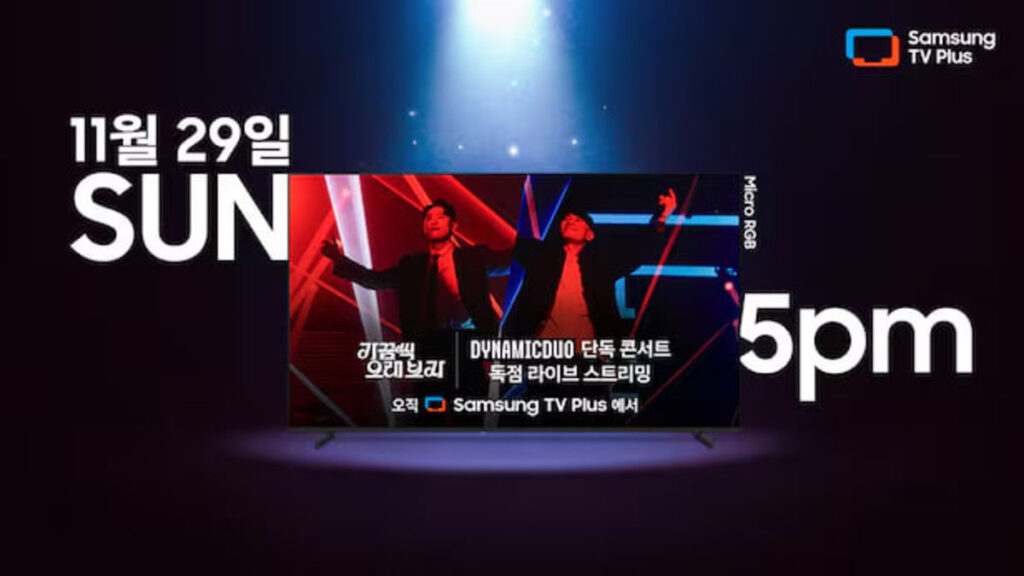
Image via Samsung
Last year, Samsung partnered with SM Entertainment to launch the SMTown channel and stream an SMTown Live concert. It also showed five concerts from the American rock band the Jonas Brothers’ 20th anniversary tour. The shows were streamed in 17 countries, including South Korea.
Samsung TV Plus also offers features to make watching concerts more enjoyable. Its Multi View feature allows viewers to watch multiple screens at the same time. Eclipsa Audio provides a better sound experience by bringing out the music and sounds of the live audience.
With the Dynamic Duo concert, Samsung aims to make live music more accessible by allowing fans to enjoy popular performances from their homes without paying extra.
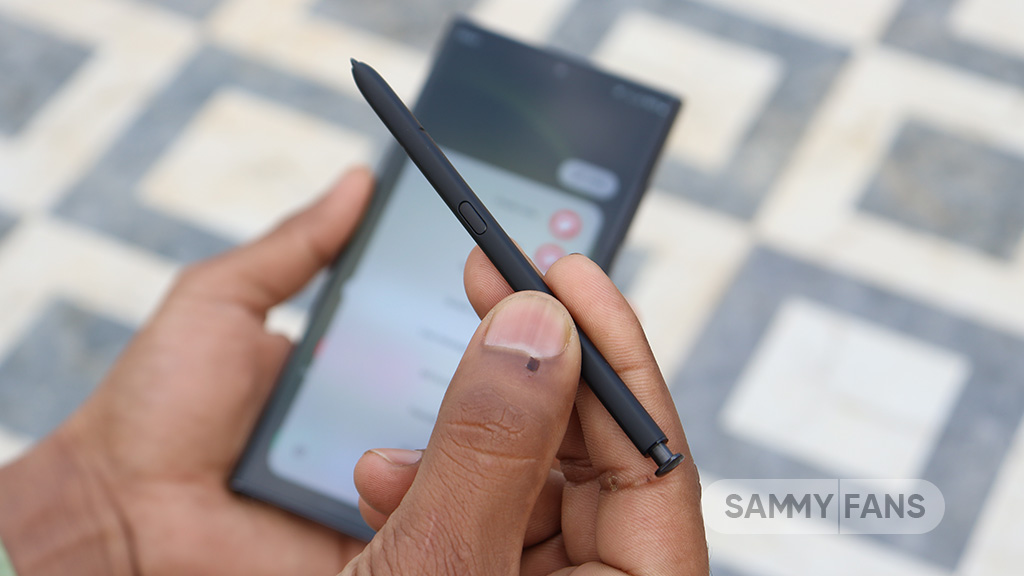
Samsung will reportedly continue to hold its position as the second-largest shareholder in Japanese digital pen maker Wacom, even after South Korean investment firm MBK Partners acquires the company for around 136.6 billion yen (approximately 1.16 trillion won).
According to a filing with the Tokyo Stock Exchange on November 22, MBK Partners has agreed to acquire Wacom through a tender offer at 1,030 yen per share. The offer price is 49.9% higher than the company’s closing share price of 687 yen on November 19.
Samsung currently owns a 6.32% stake in Wacom through its Singapore subsidiary, Samsung Electronics Singapore (SESP). As part of the deal, Samsung will sell its existing shares through the tender offer and reinvest to maintain around the same 6.3% stake after the acquisition.
This means Samsung will continue its close business relationship with Wacom even after the Japanese company becomes privately owned.

Wacom is an important technology partner for Samsung as it supplies key digital pen technology used in the S Pen featured in Samsung’s Galaxy smartphones and tablets. The two companies have worked together on digital pen technology development and product supply since signing a partnership agreement in 2013.
MBK Partners plans to begin the tender offer in mid-February 2027, subject to regulatory approvals, and complete it by the end of March. It aims to take Wacom private by June 2027.
Wacom CEO Nobutaka Ide is expected to continue leading the company after the acquisition. Samsung’s decision to maintain its investment highlights the importance of Wacom’s technology to its Galaxy device business and its long-term partnership with the Japanese company.
-

 News2 days ago
[Update: Jensen Huang returns] Nvidia appoints Colette Kress interim CEO
-

 Updates3 days ago
Battery life should improve on Galaxy S24 Ultra as its November update arrives globally
-

 One UI2 days ago
Samsung One UI 9.5: 10 new features worth trying
-
 Phones3 days ago
Three Galaxy S27 models spot-checked on India’s BIS amid S27 Pro chip decision