
Semiconductor
Samsung Electro-Mechanics partners with NVIDIA to support AI chip production


Samsung Electro-Mechanics has announced a strategic partnership with NVIDIA to support the growing demand for AI technology. Under this agreement, Samsung Electro-Mechanics will supply ABF package substrates. Deliveries are expected to begin in 2026.
To meet NVIDIA’s demand, Samsung Electro-Mechanics will expand its production facilities in Sejong and Busan, South Korea. The substrates will be used in NVIDIA’s AI processors and high-speed networking switches, which help transfer data quickly inside data centers.
The companies expect supplies to grow at a double-digit annual rate from 2026. By 2028, production for NVIDIA is expected to account for a significant share of Samsung Electro-Mechanics’ total substrate production capacity.
ABF substrates help connect different parts of a semiconductor chip and support efficient performance. As AI chips become more powerful, they require advanced substrates that can handle higher performance and power demands.
Samsung Electro-Mechanics will use its expertise in substrate manufacturing and capacitor technology to meet these needs. The company’s CEO, Duck-Hyun Chang, said the partnership would help deliver high-quality components for NVIDIA’s AI platforms. NVIDIA executive Debora Shoquist said the agreement would expand its supplier network and increase production capacity.
The partnership is expected to enhance Samsung Electro-Mechanics’ position in the AI semiconductor market while helping NVIDIA meet the rising demand for AI computing infrastructure.





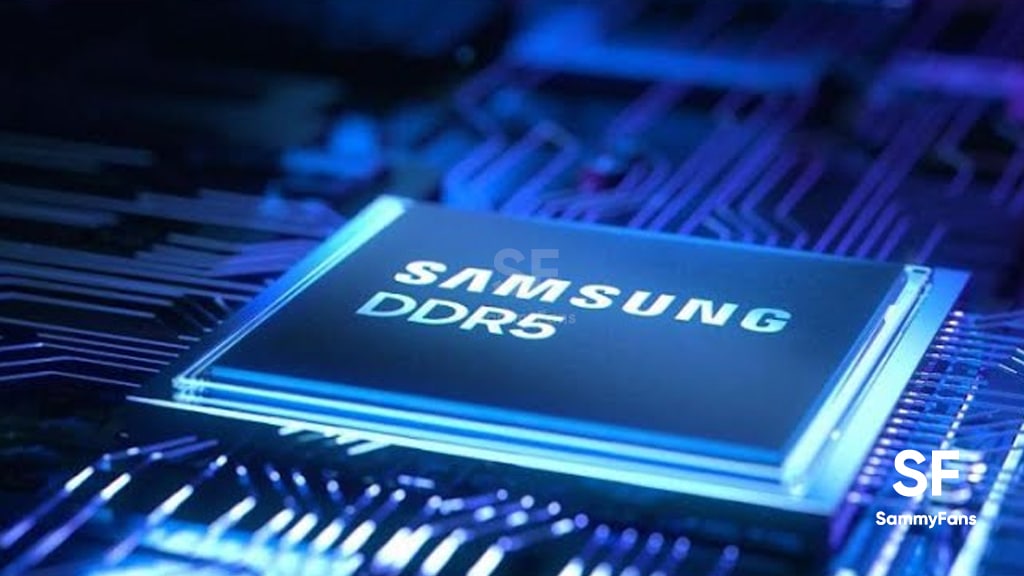
Chinese smartphone makers are turning to recycled DRAM chips as a global memory shortage pushes up prices and makes new chips harder to find. This is helping companies increase production, but it has also raised concerns about smartphone quality and reliability.
According to the information, Chinese smartphone makers cut their production targets in the second quarter because of rising memory prices and supply problems. However, production targets started increasing again toward the end of the third quarter, mainly because companies began using recycled memory chips.
Recycled DRAM means memory chips removed from old smartphones, computers, and servers. These chips are checked and fitted into new devices, helping manufacturers save money and maintain production. The recycled supply may also include DDR4 memory taken from old servers in large US data centers.
However, using old memory chips can create problems. Some chips that have already been used for five to six years may be reused for another five to six years. As memory chips age, they may become less reliable, increasing the risk of data errors and affecting device performance.
Some Chinese companies are even considering using only recycled DRAM in certain budget smartphones to deal with the shortage.
The supply problem is expected to continue into next year, mainly for low-power DRAM (LPDDR), which is widely used in smartphones. Meanwhile, major memory makers such as Samsung Electronics and SK Hynix are focusing on memory for AI servers.
Counterpoint Research says recycled DRAM may offer short-term relief, but it is not a lasting solution. Its growing use highlights the seriousness of the global memory shortage.


Samsung is reorganizing its next-gen DRAM and NAND flash memory research efforts under a dedicated “Core Team,” combining technology development and process design while improving performance-based rewards for key researchers.
Samsung forms ‘Core Team’ R&D unit for DRAM, NAND
According to the info, the new Samsung Core Team will bring together personnel working on new DRAM and NAND products, allowing manufacturing-process researchers to coordinate more closely with teams responsible for product design and mass production.
The move aims to speed up DRAM and NAND development as Chinese competitors, particularly CXMT, continue narrowing the technology gap.
The new structure formalizes an existing collaboration between Samsung’s Semiconductor Research Center and its Memory Business division.
The research center, which operates under Device Solutions CTO Song Jae-hyuk, employs around 2,000 people and focuses on advanced semiconductor technologies.
Formalizing this arrangement could reduce coordination gaps and help Samsung move promising technologies toward commercial products more efficiently.
Compensation is another major part
Core Team members are expected to qualify for performance bonuses under the Memory Business division’s standards when they meet development targets.
This could make advanced memory research more attractive to engineers whose work directly contributes to commercially successful products.
The restructuring comes as Samsung faces mounting pressure to maintain its lead in memory technology. China’s CXMT is investing heavily in DRAM, making talent retention and faster development cycles increasingly important.
Samsung’s Core Team is not simply a new organizational label. It signals a push to align engineering incentives with product development goals.


Samsung is once again prioritizing 4nm and 5nm processes for profitability as its cutting-edge 2nm semiconductor node faces unexpected delays from Big Tech companies.
With the 2nm timeline stretching longer than initially anticipated, Samsung is leaning heavily on its mature 4nm and 5nm nodes to safeguard short-term foundry revenues and boost operational efficiency.
Chosun reports that Samsung’s 4nm lines have effectively reached peak capacity following a recent surge in customer orders across application processors, edge AI units, and specialized high-performance computing hardware.
The Korean tech titan is aggressively pitching its established 5nm node as a reliable, cost-effective alternative. Unlike 2nm node, the 4nm and 5nm nodes hit a sweet spot, offering strong power efficiency without the punishing financial overhead.
Securing tier-one clients for 2nm remains essential for Samsung’s long-term ambition. The next-gen node relies on an evolved Gate-All-Around transistor architecture to deliver significant density and thermal gains.
Until those high-margin 2nm contracts materialize, keeping 4nm and 5nm lines running at maximum throughput provides the steady commercial support Samsung needs to finance its semiconductor ambitions.


Samsung semiconductor manufacturing business has spent the last few cycles playing defense, but the tide appears to be turning as wafer production for the second-generation 2nm-based Exynos 2700 kicks into gear.
Built on Samsung Foundry’s second-generation 2nm process (SF2P), the new Exynos 2700 application processor isn’t just another incremental upgrade; it is a high-stakes play to rescue the company’s non-memory margins.
Samsung bets big on 2nm Exynos 2700
Industry reports via Chosun indicate wafer start volumes for the Exynos 2700 are slated to climb over 10% compared to the Exynos 2600. This is the same as what we heard earlier this month through Korea’s trusted outlet TheElec.
For System LSI, it represents a direct expansion of in-house IP. For the Foundry Division, securing an internal client on the SF2P process provides the operational scale and yield validation required to attract external customers.
Exynos 2700 to lift semiconductor business
The timing couldn’t be better for Samsung’s Mobile Experience (MX) business. With LPDDR5X memory prices surging roughly 80% over recent quarters, mobile bill-of-materials (BOM) costs are under severe strain.
Relying exclusively on Qualcomm’s expensive flagship silicon for every device isn’t sustainable. Adopting the Exynos 2700 into the Galaxy S27 base, Plus, and potentially new Pro variants gives Samsung crucial leverage.
While internal testing whispers point to impressive multi-core gains, real-world execution will dictate the outcome. SF2P promises a 12% boost in operational performance alongside a 25% drop in power consumption on paper.
If Samsung’s chip making arm can achieve stable mass-production yields on SF2P without running into the thermal issues that plagued earlier generations, the Exynos 2700 could mark the turning point for its dual-chip strategy.
When PC titans Lenovo, HP, and Dell lock down long-term supply agreements (LTAs) for DRAM and NAND flash, it isn’t just a victory for the personal computing space, but a direct warning shot across the bow for smartphone makers.
While PC giants are insulating themselves against the ongoing memory crunch by pledging consistent enterprise B2B volumes, smartphone brands are left exposed.
Korean outlet ETNews reports that PC titans including Lenovo, HP, and Dell have secured memory (DRAM and NAND) LTAs for 2027.
Memory foundries like Samsung Electronics and SK Hynix have been aggressively pivoting wafer production toward high-margin High Bandwidth Memory (HBM) and enterprise SSDs to feed the relentless AI data center boom.
Now that Tier-1 PC makers have guaranteed themselves priority allocation through LTAs, the uncommitted wafer capacity available for the smartphone sector will shrink even further heading into next year.
Unlike PC vendors, who can lean on steady corporate hardware refresh cycles to absorb a 10% to 20% bump in overall bill-of-materials costs, mobile brands are staring down a deeply price-sensitive B2C consumer base.
Mid-range and entry-level smartphones under $200 are particularly vulnerable. Operating margins in that segment are already razor-thin, and absorbing double-digit price hikes on RAM and storage modules simply isn’t feasible.
Mobile OEMs will likely be forced to make tough compromises. Expect budget devices to ship with capped RAM configurations, or see brands pass the bill straight to buyers through higher retail prices.
If smartphone makers fail to secure similar long-term supply contracts soon, they will end up subsidizing the PC market’s stability with their own squeezed margins.
-
 One UI24 hours ago
One UI 9.0 official update now rolling out to these Samsung phones
-
 Updates2 days ago
October 2026 Google Play system update: Here’s what’s new
-
 One UI3 days ago
Stable One UI 9.0 update rolling out to the Galaxy A27 phone
-

 One UI18 hours ago
Samsung Galaxy S23 family’s One UI 9.0 official update expanding globally: Europe, India