
News
Samsung Wallet adds paperless Korail train tickets

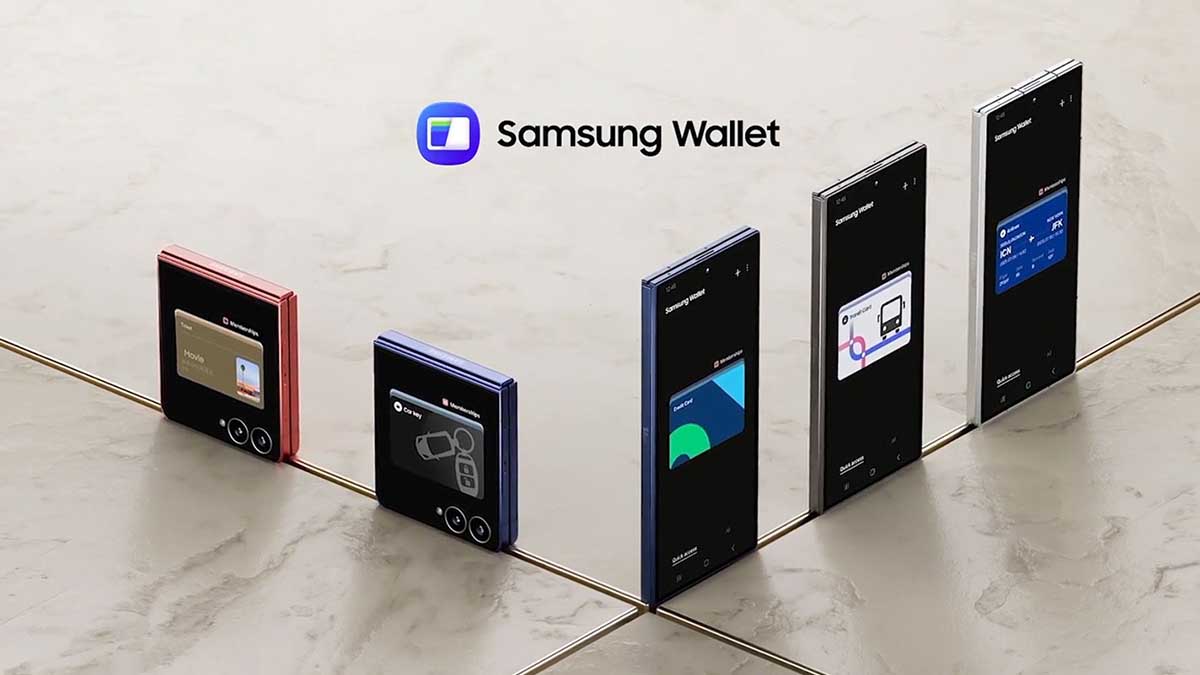
Samsung Electronics has teamed up with Korail (Korea Railroad Corporation) to roll out a “Paperless Ticket” service starting August 10, letting users store and use mobile train tickets directly in Samsung Wallet.
What makes this rollout notable is that it’s the first service of its kind in the country to support mobile boarding passes for train travel. Users need to give one-time prior consent inside Samsung Wallet, and from then on, things run pretty much automatically.
Once that consent is in place, buying a ticket at any Korail station counter using Samsung Wallet means the mobile ticket lands straight in the app, no extra steps required.
Tickets booked through Korail+, the newly unified app that merges Korail and SR under one roof, can also be pulled into Samsung Wallet with a simple “Add to Wallet” tap.
With high-speed rail services consolidating, SRT will move under the KTX-Sancheon banner from September 1, and tickets booked for travel from that point onward will be Samsung Wallet-ready as well.

Samsung has also made sure the experience doesn’t stop at booking. Refunds for mobile tickets can be processed right inside Samsung Wallet, so there’s no need to visit a counter to cancel a trip.
The tickets also tie into Galaxy features like Calendar and Now Brief, giving users timely nudges about departure times so travel plans stay on track without much manual effort.
Chae Won-cheol, Executive Vice President and Head of the Digital Wallet Team in the MX Business at Samsung Electronics, said, “We are pleased to successfully implement the ‘Paperless Ticket’ service through our partnership with Korail. We will continue to deliver innovative convenience to our customers’ daily lives while actively leading the realization of Samsung Wallet’s core values, including promoting a paperless lifestyle and environmental protection.”


Samsung Electronics’ HBM4 yield has climbed into the 80 percent range, a milestone reached roughly six months after mass production kicked off, and it’s shaking up a memory market SK Hynix has controlled for years.
What’s driving this jump is Samsung’s integrated approach.
Instead of memory, Foundry, and packaging teams working separately, they collaborated from the design phase itself, and that synergy appears to be paying dividends faster than expected.
SEDaily suggests Samsung also cracked one of its toughest technical hurdles, the Thermal Compression Non-Conductive Film process, managing to balance speed, power efficiency, and heat control all at once.
To be fair, SK Hynix hasn’t been sitting idle. Industry estimates suggest its own HBM4 yield has also touched the 80 percent mark, and the company continues to lean on its mass-production track record.
SK Hynix executives have stressed that real competitiveness comes from combining stable yields with consistent quality at scale, not just hitting a yield number once.
Samsung HBM4E
Samsung’s next-gen HBM4E has reportedly crossed 70 percent yield. The company is expanding capacity at its Hwaseong and Pyeongtaek facilities to meet demand from Nvidia, AMD, and other major AI customers.
Samsung Electronics achieved an 80 percent yield rate just six months into mass-producing its 6th-generation High Bandwidth Memory (HBM4), pushing the HBM market, previously dominated by SK Hynix, into a new phase.

Bluetooth SIG confirms official names of Samsung’s next devices, including the Galaxy S26 FE, Galaxy Tab S12+, and Galaxy Tab S12 Ultra. These listings give the products an official naming confirmation before their launch.
We have had early looks at the designs of the upcoming devices. Leaks have already shaped a pretty clear picture of the specifications sheet. What we anticipate is a balanced price approach, as memory crunch isn’t leaving anyone.
Bluetooth SIG listed various model numbers
The Bluetooth SIG (via SammyGuru) doesn’t reveal anything new about the next devices. However, the model numbers confirm a broader availability of the S26 FE and Tab S12 series.
Galaxy S26 FE
- SM-S741N
- SM-S741U
- SM-S741U1
- SM-S741W
- SM-S741B/DS
- SM-S741B
Galaxy Tab S12
- SM-X840
- SM-X848U
- SM-X846N
- SM-X846B
- SM-X846E
Galaxy Tab S12 Ultra
- SM-X940
- SM-X946B
- SM-X946N
In the model numbers, N refers to Korean, U refers to US (carrier-locked), U1 refers to US (carrier-unlocked), W refers to Canadian, and B refers to Global/European variants.
Not all models, such as Galaxy Tab S12 Ultra’s US variant, have appeared on Bluetooth SIG. This doesn’t mean the product doesn’t exist, but it will also be there over time.
Here’s when to expect the launch:
Last week, an X leaker revealed the possible launch dates for the upcoming FE phone and premium tablets. Those dates were reported for Singapore, which may be sharing the same timeline with the Global announcement.
- Galaxy S26 FE – September 4
- Galaxy Tab S12+ and Tab S12 Ultra – October 7

After seven years, Samsung finally found a new pre-order champion with the Galaxy Z Flip 8, Z Fold 8, and Z Fold 8 Ultra. The latest foldable phones did what the company’s premium Galaxy S flagships couldn’t in 2026.
On August 7, Samsung officially launched the new Fold 8 lineup and Galaxy Watch 9 (plus Ultra 2). The company plans to roll them out across 106 countries worldwide, backed by AI subscriptions, accessories, and region-specific offers.
The Galaxy Z Fold 8 Ultra, Fold 8, and Flip 8 have crossed 1.44 million units in Korean pre-orders, surpassing the pre-sale record set by the Galaxy Note 10 back in 2019.
The Galaxy Z8 series outclassed the Galaxy S26 series’ 1.35 million pre-orders, and more than doubled last year’s Z Fold 7 and Z Flip 7 combined tally of 1.04 million.
For a company that has spent the better part of a decade trying to push foldables from niche gadget to mainstream choice, this is the clearest signal yet that the strategy is finally paying off.
Related post:
Of the total pre-order volume, roughly 70 percent went to the standard Galaxy Z Fold 8, making it the clear favorite over its Ultra sibling and the Flip 8.
Half of all Samsung.com pre-order customers fell in the teens-to-30s age range, and female buyers in that bracket more than doubled compared to the previous generation for the Galaxy Z Fold 8 Ultra and Z Fold 8 combined.

Samsung’s redesigned form factor and a cover screen tuned for content consumption seem to be winning over a crowd that foldables historically struggled to reach.
Purchase incentives
One in two unlocked buyers on Samsung.com signed up for the new Galaxy AI Subscription Club, while the double storage upgrade and a trade-in program promising up to 50 percent residual value proved to be major draws.

Samsung North America chief thinks the foldable phone has finally grown up and the experiment phase is over. This suggests the company spent eight years learning what people actually want from foldable phones.
Yoonie Joung, President and CEO of Samsung Electronics North America, made the case that foldable phones have moved past their experimental phase.
Samsung says the foldable phone experiment is over
With the Galaxy Z Fold 8, Z Fold 8 Ultra, and Z Flip 8 now official, Joung told tech columnist Marc Saltzman (via USAToday) that this could be the year foldables cross over into the mainstream, especially as rival brands prepare to launch their first folding device.
As per Joung, Samsung found that foldable buyers weren’t a single, uniform group. Some wanted the Fold’s productivity chops, others leaned into the Flip’s compact form, and a growing segment wanted a phone built for watching and scrolling.
That third insight is reportedly what pushed Samsung toward the new Fold 8 form factor this year, aimed squarely at media consumption rather than multitasking alone.

Interestingly, Joung didn’t frame Samsung’s US strategy purely around unit sales. She said the real objective is becoming the most trusted brand in the country, not just the top seller.
That means leaning on services like Samsung Care Plus, Samsung Health, and Samsung Wallet to keep users inside the ecosystem well after the purchase, along with faster repair and support turnaround.
Wearables won’t replace phones anytime soon
Asked where mobile tech heads over the next decade, Joung was candid that no single wearable, not the Galaxy Watch, Buds, or even the newly announced Intelligent Eyewear, is close to replacing the smartphone.
She sees eyewear as having the most long-term potential, given its built-in camera and display, but stopped short of predicting a full handoff away from phones.

NVIDIA’s next flagship AI chip might not arrive with the memory muscle Jensen Huang promised on stage. NVIDIA is reportedly weighing a significant reduction in the HBM capacity of its upcoming Rubin Ultra GPU, and the numbers being tested are far below what was originally announced.
When Huang unveiled Rubin Ultra at last year’s developer conference, he talked up 1TB of HBM4E memory spread across 16 stacks per GPU.
Sources familiar with ongoing testing say NVIDIA has now run at least three different Rubin Ultra variants over the past few weeks, and some of these samples have dramatically less HBM memory, ranging from 192GB to 256GB.
A few configurations reportedly even fall back to HBM4 instead of the newer HBM4E, and use fewer memory stacks than originally planned.
Why this is happening
Memory makers appear unable to produce enough HBM4E fast enough to meet Rubin Ultra’s original timeline, and NVIDIA is now exploring lower specifications purely to keep production on schedule.
This mirrors other memory adjustments happening across the industry lately, including reduced RDIMM capacities and a similar cutback to SOCAMM modules on NVIDIA’s Vera Rubin Superchip.
For a company as large as NVIDIA to redesign its flagship chip around memory availability says a lot about the memory shortage. It also gives SK Hynix and Samsung unusual leverage and suggests that elevated HBM pricing isn’t going away anytime soon.
-
 One UI19 hours ago
One UI 9.0 (Android 17) testing on these 50 Samsung devices
-
 One UI3 days ago
One UI 9 Watch is here but what about older Samsung Galaxy Watch users?
-
 One UI2 days ago
Official Samsung One UI 9.0 and One UI 9 Watch release in the market starting today
-

 News2 days ago
The foldable phone experiment is over, Samsung says