
News
Samsung Elec joins Samsung Display for glass interposer AI invention


Samsung Electronics and Samsung Display are jointly developing a next-generation glass interposer for AI semiconductors, with prototype production targeted for later this year.
According to TheElec (via SemiconductorsX), Samsung Display has already formed a dedicated R&D team focused on Redistribution Layer (RDL), while Samsung Electronics is working with external partners on manufacturing.
The initiative is intended to improve foundry competitiveness, reduce packaging costs, and build a stronger alternative to TSMC’s advanced packaging ecosystem.
Rather than manufacturing display panels, Samsung Display will focus on one of the most demanding parts of glass interposer production: forming high-precision Redistribution Layers through photolithography.
Samsung Display still has technical hurdles to overcome.
One of the biggest is the “SeWaRe” phenomenon, an interlayer delamination issue caused by differences in thermal expansion between glass and organic materials during the Redistribution Layer process.
Samsung Electronics reportedly plans to manufacture glass interposer prototypes before the end of the year. The company could outsource processes such as Through Glass Via formation and copper filling to specialized partners, including Soulbrain, Chemtronics, and Jungwoo M-Tech.
The South Korean tech giant is attempting to build an integrated platform that combines its foundry services with advanced packaging capabilities, creating a more complete manufacturing solution for AI chip customers.


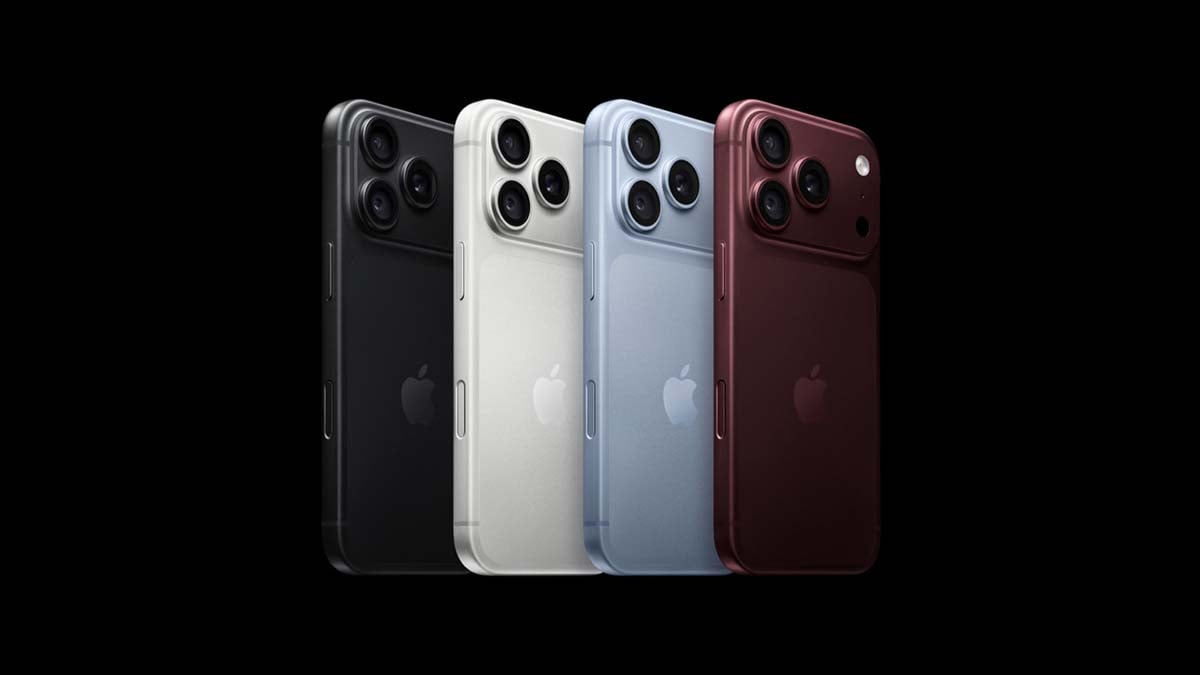
Apple has reportedly reduced orders for parts used in the iPhone 18 Pro and iPhone 18 Pro Max by at least 15% in October. The main reason is believed to be higher prices, which may be stopping some customers from buying the new phones.
According to the latest information, Apple had asked some suppliers to reduce orders for the two premium models. One industry source said the cuts were between 15% and 20% compared with Apple’s original plans.
However, the size of the cuts differs from one supplier to another. It is also unclear whether Apple will reduce orders further from November.
The reported cuts come after Apple launched its premium iPhone models in September. The higher prices may be making customers think twice before buying the new devices.

The main reason for the price increase is the rising cost of memory chips. Demand for these chips has grown because of the rapid development of AI, making them more expensive. Higher component costs can increase the price of smartphones and make it harder for companies to attract buyers.
Apple launched its premium models and the Duo in September. The standard iPhone 18 and an updated iPhone Air are expected to arrive in early 2027. This launch schedule may also affect the number of components Apple needs in the coming months.
The order cuts do not affect all suppliers equally. It is still unclear whether they show a lasting drop in demand or a temporary change caused by higher prices and launch timing. Apple’s future orders will provide a clearer idea of demand. Stay tuned.
Samsung has reportedly secured long-term agreements (LTAs) with big tech companies for its 2027 memory supplies. LTAs have become the new normal in the semiconductor industry, driven by the rapid surge in AI infrastructure.
According to SemiconductorsX, Samsung is filling 75 to 80 percent of 2027 memory supply, HBM included, with long-term agreements (LTAs).
NVIDIA, Google, and Microsoft are said to be among the big tech names that have already signed off on most of those contracts.
Memory has long been a market of quarterly pricing and spot deals, where a customer’s leverage rose and fell with the cycle. Locking in volume a year ahead flips that logic, with buyers paying for certainty, and suppliers getting visibility.
Samsung is not alone, as SK Hynix and Micron are reportedly racing to sign their own large agreements with key clients, which suggests the whole sector now treats supply as the scarce thing, not demand.
Additionally, Korean media reports that Samsung Electro-Mechanics is close to a roughly KRW 700 billion MLCC deal with Taiwan’s Delta Electronics.
Pay attention: none of the contract terms are public. Pricing, volume splits and penalty clauses remain unknown, and the report relies on industry sources rather than an official statement.
This helps Samsung more than a good quarter would. Steadier revenue gives it room to plan HBM capacity without second-guessing every price swing. That said, AI buyers want their components guaranteed, and Samsung is happy to sell certainty.

Samsung could surrender its smartphone market lead to Apple in 2026 as the company revised its shipment forecast, making a cut. The impact will be negative in terms of shipments, helping Apple to march toward the number 1 position.
Korean media broke news yesterday that Samsung has squeezed the production target by up to 30 percent for the year. Now, a new report suggests that Samsung has revised its annual shipment forecast to the low 230 million units range.
Samsung Electronics has lowered its smartphone shipment target for this year from 240 million units to the low 230 million units range.
Apple’s iPhone 18 Pro and Pro Max are selling crazy. Samsung has no flagship launch left for the present quarter ending on December 31. Meanwhile, Apple’s first foldable product, the iPhone Duo, goes on sale later this month.
The iPhone maker has postponed the base iPhone 18 model to early 2027. That could impact the company’s Q3 and Q4 shipment chart. However, Samsung cutting its shipment target still favors Apple’s bid to grab the top position.
Samsung recently notified component partners of a downward revision to its fourth-quarter smartphone component order forecasts.
Memory prices have skyrocketed, and there’s no sign of a pause. Other crucial components, such as displays and application processors, are also facing the crunch, leading the overall bill of materials to climb significantly.
An industry official stated, “Samsung recently notified partners of fourth-quarter component orders corresponding to an annual smartphone shipment target in the low 230 million units.”

South Korea’s FTC will hold a plenary meeting on October 14 to decide whether Samsung misled buyers of the Galaxy S21, S22, and Tab S8, with investigators recommending a fine of up to $45 million over Galaxy GOS throttling.
If you’ve followed this one since 2022, the backstory is familiar.
Game Optimization Service (GOS) blew up when Samsung blocked the workarounds users had been using to bypass it on the Galaxy S22 series flagships. Performance, it turned out, was being restricted whether owners liked it or not.
Samsung faces $45 million fine over GOS throttling
The FTC investigators’ case is built on advertising. Samsung promoted “highest-ever performance” on its website and in press materials, they argue, while leaving out that GOS could cut performance by more than half in heavy games.
Their Genshin Impact test reportedly held the CPU to 46.8% and the GPU to 42.8% of maximum output. Because processor speed is a key factor when people choose a phone, they see the omission as deceptive.
They put the relevant revenue at around 4 trillion won in Korean sales, classed the violation as serious, and estimated a penalty between 32.2 and 64.4 billion won.
Samsung’s defense is that GOS is a safety feature meant to keep temperatures in check and gaming smooth over long sessions. It also says users of the affected high-end games make up less than 5% of its user base.
My read is that the 5% figure may not carry as much weight as Samsung hopes.
Regulators tend to focus on what an ad promises rather than how many people ever test the limits, and “highest-ever performance” is a bold claim to print next to a hidden cap.
We’ll update this story once the plenary meeting concludes.
Source – Samsung Mobile Press

Samsung has launched The Frame hospitality model in the US for luxury hotels and premium hospitality spaces. The new hotel TV is available in 55-, 65-, and 75-inch sizes. It combines television entertainment with artwork, hotel services, and smart features.
The Frame is designed to look like part of the hotel room’s décor. When guests are not watching TV, it can display artwork, photos and other visuals through the Collection Hub. Hotels can choose images that match their style, brand or location. Optional magnetic bezels and a slim wall mount give the TV a clean, picture-frame-like appearance.
The TV also includes AI-powered features. Generative Wallpaper can create unique images for guests based on their preferences. Live Translate provides subtitles in supported languages, making it easier for international guests to understand local content. Guests can also use Google Cast and Apple AirPlay to stream compatible content from their smartphones and other devices.

Samsung’s LYNK Cloud turns the TV into a digital concierge. Guests can use it to find hotel information, order room service and book hotel services. Hotel staff can also manage content and understand how guests use the TV, helping them provide better offers and services.
Security is another important feature. The Frame uses the Tizen Enterprise Platform and Samsung Knox Security to help protect the TV and connected systems.
With its combination of design, entertainment, AI and hotel services, Samsung’s The Frame aims to make the hotel room experience more modern, personal and convenient.
-
 One UI2 days ago
One UI 9.0 official update now rolling out to these Samsung phones
-

 One UI2 days ago
Galaxy Watch 7 and Watch 6 receive One UI 9 Beta 3 update fixes
-
 News3 days ago
Samsung updates One UI software rollout roadmap – October 2026
-

 One UI2 days ago
Samsung Galaxy A54 receives One UI 9 Beta 2 with October 2026 patch