
News
Snapdragon Reality Elite: Top 5 features of Qualcomm’s new XR processor


Qualcomm officially introduced the Snapdragon Reality Elite processor for the Android XR ecosystem. The latest XR platform has plenty of major upgrades, among them, five stand out given their scope of influence on the user experience.
The Snapdragon Reality Elite landed at Augmented World Expo. What Qualcomm is holding is a purpose-built XR (extended reality) processor designed to push mixed reality past the awkward phase it’s been stuck in for years.
Snapdragon Reality Elite: Top 5 features
1. Powerful on-device AI with 48 TOPS
Snapdragon Reality Elite delivers up to 48 TOPS of AI performance, allowing large language models (LLMs) and large vision models (LVMs) to run directly on XR devices.
2. Major performance boost across CPU, GPU, and NPU
Qualcomm claims significant generational gains:
- Up to 60% faster GPU performance
- Up to 30% faster CPU performance
- Up to 160% higher NPU performance
These improvements should translate into richer graphics, smoother interactions, and more advanced mixed reality applications.
3. Sharper 4.4k-per-eye visuals
The platform supports displays up to 4.4K resolution per eye at 90fps, enabling sharper imagery, smoother motion, and better color reproduction. This is one of the key upgrades for premium XR headsets and smart glasses.
4. Longer battery life and cooler operation
Qualcomm says the new platform offers:
- Up to 20% longer battery life
- Up to 12°C lower chipset temperatures under load
Better efficiency can lead to lighter and more comfortable XR devices that users can wear for extended periods.

5. Enhanced tracking and Android XR support
Snapdragon Reality Elite is optimized for the latest Android XR ecosystem, bringing improved hand tracking, head tracking, and optical see-through experiences.
It will debut in devices such as XREAL Project Aura, helping deliver more natural interactions between digital content and the real world.

News
Samsung may become a bigger AI chip partner as Google, Tesla, AMD and BYD seek TSMC alternatives

Google, Tesla, AMD, BYD, and others are in talks with Samsung Foundry about shifting advanced chip production away from TSMC, according to sources familiar with the matter.
According to NikkesiAsia (via Jukan), Samsung Foundry is in talks with several global giants for contract production of AI chips.
- Google is weighing whether to have Samsung build its Axion processors, due around 2028, and potentially a portion of its TPUs for AI workloads.
- Tesla’s upcoming AI6 chip will be made by Samsung in Texas.
- AMD is in conversations about future CPUs, also from 2028.
- BYD, China’s electric vehicle titan, is discussing next-generation autonomous driving chips with Samsung.
TSMC has locked up its leading-edge nodes with NVIDIA, Apple, Broadcom, and a roster of others. That’s left smaller-volume customers, particularly Chinese chip designers, scrambling, with several turning to Samsung.
A Chinese auto chip executive reportedly stated that TSMC’s advanced production is full, and Samsung’s availability has made it an increasingly attractive option, even if its yields still trail the Taiwanese chip maker’s.
US clients want production spread across multiple foundries to balance the supply chain and avoid geopolitical concerns. Qualcomm has used both TSMC and Samsung for years; Google is now building out a similar dual-foundry approach.

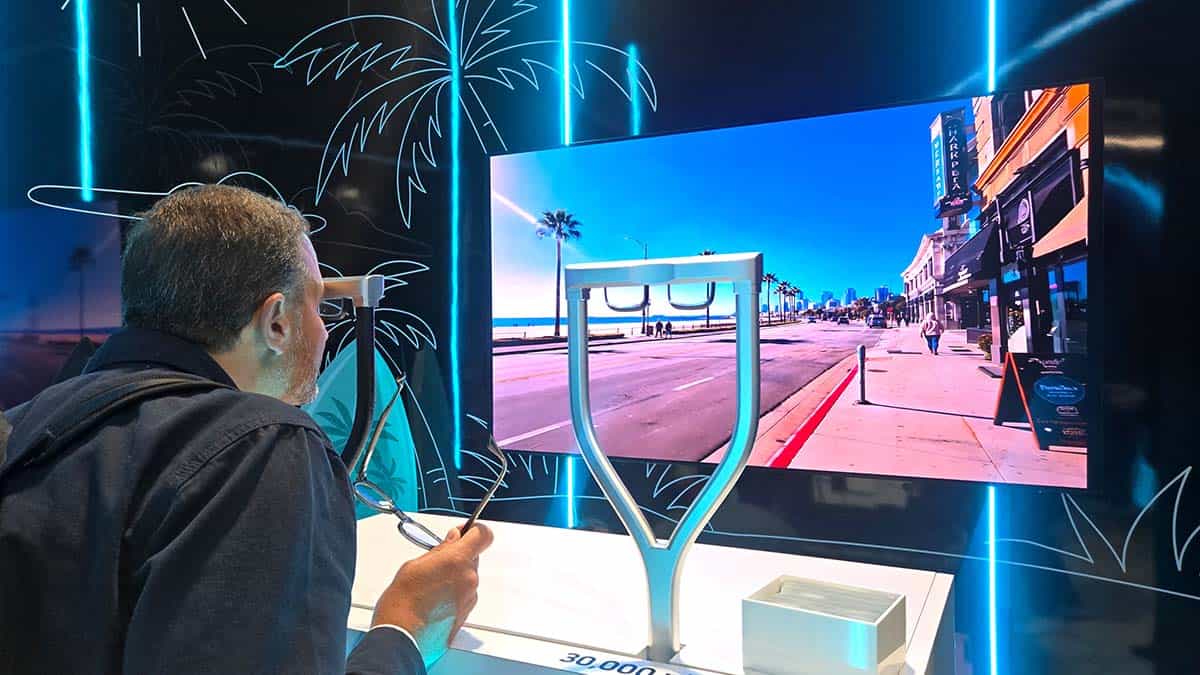
At AWE USA 2026, Samsung Display showcased its next-gen AR Smart Glasses prototype with advanced technologies, including 40000-nit screens.
The company’s RGB OLEDoS on Silicon technology hit that number on a 1.3-inch panel, demonstrated inside an installation called “The Big Dipper.” Seven panels and two of them push that 40,000-nit figure.
The AR glasses prototype is the more interesting play here. A 0.62-inch RGB OLEDoS panel sits inside the frames, driving real-time translation, navigation, and weather data overlaid against a projected Long Beach coastline.
There’s also an MR headset demo running K-pop concert footage and rhythm game “Synth Riders.” RGB OLEDoS is structurally simpler than white OLEDoS because it skips the color filter.
Simpler structure, better light efficiency, longer lifespan, lower production costs; “less complex than other technologies” is how one company official put it.
Samsung Display also prepared Light Field Display (LFD), which creates three-dimensional visuals that appear to exist in physical space without requiring glasses or a headset. The LFD at the booth shows a 3D-like image of Dabotap, a historic stone pagoda located at Bulguksa Temple, allowing visitors to view the structure from different angles and observe how the image shifts with changes in viewing position and perspective.
The side exhibit includes a stretchable display that physically changes shape and a Light Field Display producing glasses-free 3D images. Both are concept territory for now, but the AR glasses are real hardware.


Paris gets a lot of tech theater, VivaTech 2026 is no different, but Samsung showed up with something harder to dismiss than a concept video and a press release.
The company is running a full exhibition at Paris Expo Porte de Versailles through June 20, built around a connected care vision. The theme is “Open Invitation to a Healthier Tomorrow,” and what’s underneath it is more interesting.
The centerpiece is the Xealth integration
Samsung acquired the US digital health platform last year, and for the first time it’s showing what that purchase actually means in practice.
Galaxy devices feed health data into a clinical platform where doctors can monitor patients, prescribe digital health tools, and track progress outside a hospital setting.
The Samsung Health app is doing heavier lifting, too. The new 7.0 update surfaced features like Heart Health Score, Vitals tracking, and Daily Cardio Load.
One of those partners is Lifet, a pet health app that uses AI to scan photos of your animal for signs of dental problems, joint issues, or cataracts.
The booth breaks into three zones: a media facade, a connected care ecosystem area, and an Open Care Lab spotlighting partner projects.
June 19 brings a panel featuring Samsung’s Hon Pak alongside Xealth CEO Mike McSherry and founders from Generation Lab and SiPhox Health.

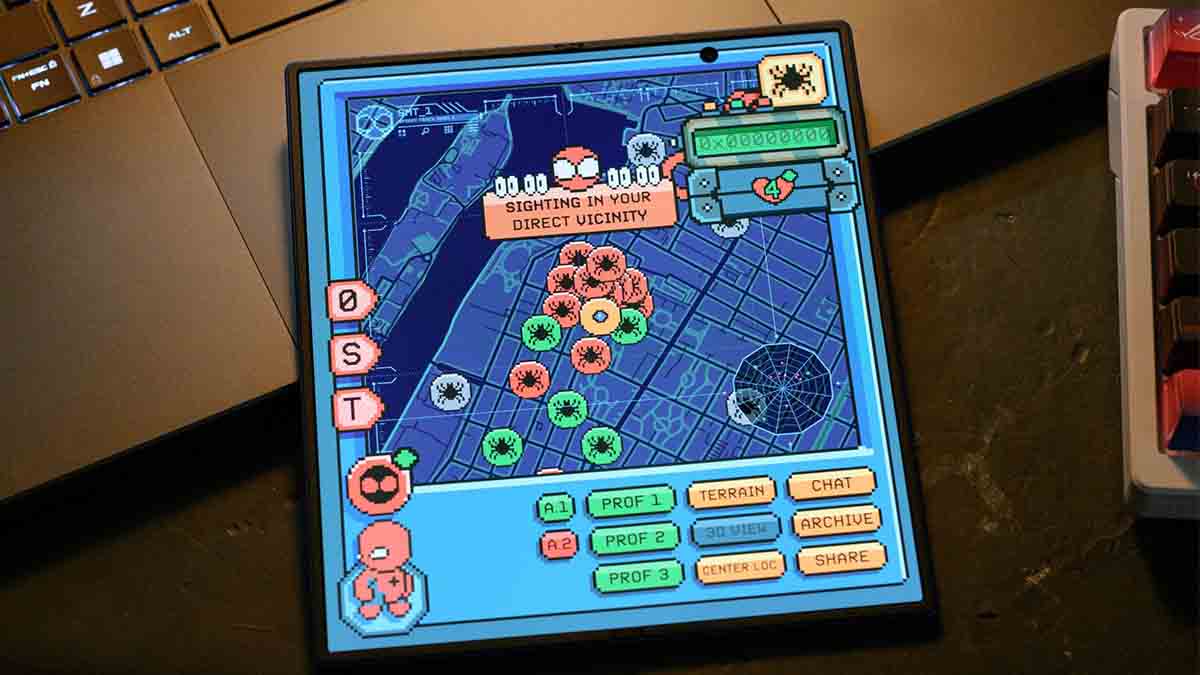
Samsung has launched a Spidey Tracker to track Spider-Man’s whereabouts and immerse fans in the world of the Spider-Man: Brand New Day movie premiering on July 31.
This tool is developed by the character Ned Leeds, who uses the Galaxy Z Fold device to track Spider-Man as he moves throughout the movie. What’s interesting is that the tracker is no longer exclusive to the movie; it is now available for Spider-Man fans across the globe.
This new interactive Spidey Tracker provides fans a way to experience real world campaing that includes cast appearances and interviews, spotlighting live activations, content drops, hidden easter eggs, and fan-submitted sightings.
Fans follow Spider-Man sightings and interact with the story in real-time while sharing the same experience with the community.
Samsung has also announced that the latest Galaxy Z Fold and Flip smartphones will be featured inside the movie, along with the Galaxy Watch, to showcase their multitasking and spider-man tracking skills.
“Unfolding online and in real-world spaces throughout the summer, see Spidey pop up on the map, at live events and venues, popular creator videos, and maybe even a Samsung Experience Store — keep your eyes peeled!” wrote Samsung.
How to access the Samsung Spidey tracker?
You can go to SpidyTracker.com to interact with this tool. Samsung has confirmed that the tool is available in 35 countries.

Samsung has reportedly built a data-sharing ecosystem called DSEP, the Data Sharing Eco Platform, and it’s now pulling in more than 60 chip equipment and materials partners.
The newly formed Data Sharing Eco Platform reportedly is the operational spine of Samsung’s push to run fully unmanned semiconductor fabs by the end of the decade, 2030.
Here’s what DSPE stands for
For years, Samsung kept that data locked inside its own walls. Security protocols made it nearly impossible to export error codes or processing times outside the factory.
DSEP opens a controlled slice of that process data to partners in real time, feeding it into AI models that can flag irregularities and predict failures without anyone boarding a flight.
This helps everyone (via SemiconductorsX):
- Find defects quicker
- Reduce bad chips (higher yield)
- Improve machines and materials using real factory info
- Use AI to predict problems before they happen
Samsung’s HPC Center inside its Device Solutions division already handles the infrastructure side. DSEP sits on top, connecting the partner ecosystem to that compute backbone.
Partners bring deep knowledge of their own equipment’s failure signatures. Samsung shares production-line data, partners sharpen their AI, and the whole system gets smarter.
-

 One UI7 hours ago
These Samsung Galaxy devices received One UI 8.5 official update
-

 Updates1 day ago
11 Samsung Galaxy Watch models getting new Wear OS update with security improvements
-
 Updates2 days ago
Samsung releases June 2026 security enhancements for more Galaxy S26, S25 (Edge/FE), Fold 7, Flip 7 and TriFold
-
 Phones1 day ago
Samsung Galaxy Z Flip 8, Fold 8 and Fold 8 Ultra clearing hurdles before launch