
News
Snapdragon 8 Elite Gen 5 and 8 Elite: Specs Comparison


Qualcomm has released Snapdragon 8 Elite Gen 5, its flagship mobile system-on-a-chip with immense performance upgrade and new agentic capabilities, that surpasses the Elite chipset from last year. Samsung will feature this new chip for the Galaxy S26 series and here are some of the newest upgrades.
Processing Node
Both chipsets are processed with TSMC’s 3-nanometer (nm) technology.
CPU
Snapdragon 8 Elite comes with Oryon CPU (64-bit architecture) including 2 prime cores, clocked at up to 4.32 GHz and 5 performance cores up to 3.53 GHz. The successor has 3rd-gen Oryon CPU (64-bit architecture), its 2 prime cores are clocked up to 4.6GHz and 6 performance core goes up to 3.62GHz.
The new chip delivers 20% single-core improvement, 17% multi-core and 32% responsiveness improvement over the previous generation. The 3rd gen Oryon CPU boosts 35% CPU power efficinecy, 20% GPU and 16% overall SoC power savings.
With increased performance, the chip enables quick app launches, better multi-tasking and unhinged gameplays.

Image: Qualcomm Snapdragon 8 Elite Gen 5 Features
GPU
Snapdrdagon 8 Elite Gen 5 brings a new Adreno GPU that offers 23% performance improvements, 25% ray tracing improvment and 1.2GHz clock speeds. On top of that, Qualcomm has introduced 18MP of dedicated memory upgrading from 12MP in the previous version. The memory heap improves Adreno RAM’s effect and optimizes memory usages as well as bandwidth while reducing power consumption up to 20% over 8 Elite.
NPU
Qualcomm brought the Snapdragon 8 Elite at the dawn of on-device generative AI but the next-gen chip will power on-device agentic AI. This new form of AI focuses on autonomous actions and getting the end result via reasoning and tools on a specific objectives with minimal human interventions. These agents can help the system to perform fast real-time translations or auto apply filters. However, these are just two example, on-device agentic AI application is wide enough to spread throughout the OS.
The redesigned Hexagon NPU that powers the new AI features is now 37% faster and 16% power efficient per watt.
The NPU supports 64-bit memory virtualization and up to 220 tokens per seconds and upto 32k context window support. This compares to Snapdragon 8 Elite’s 70+ tokens/second and up to 4k context window. Its architecture includes 12 scaler + 8 vector + 1 tensor core configuration over 8 scalar + 6 vector cores in the previous generation.
This architectural push is a key reason behind Snapdragon 8 Elite Gen 5’s increased AI capabilities.

Snapdragon 8 Elite features (Credit – Qualcomm)
Camera
One of the major change in this new chip is the Advanced Professional Video (APV) codec support, which will allow users to create professional-level videos right from their smartphones. Adding this functionality to the Galaxy S26 Ultra would be a major camera upgrade. Other than these, the SD Elite Gen 5 is also expected to support better AI noise reduction, reflection removal and night mode photography with 20-bit ISP and 4 time larger dynamic range.
Storage
For those who may have not noticed, Qualcomm has listed the new chipset with UFS 4.1 storage support, upgrading from 4.0 in the predecessor. UFS storage has a potential to speed app experience and improve fast file transfers but not limited to these two aspects.
Network
The X85 5G Modem boosts up to 12.5Gbps download and up to 3.7Gbps upload speed with 50% lower gaming latency with AI-enhanced Wi-Fi, while providing 30% faster AI inference for better 5G performance. These improvements toppls 10Gbps download and up to 3.5 Gbps upload speed on the Snapdragon 8 Elite.
Conclusion
Given the performance upgrade with the Snapdragon 8 Elite, Qualcomm seems to have cracked the code to make better chipsets with each iteration and Snapdragon 8 Elite Gen 5 is a perfect example of this evolution.


Samsung is reportedly evaluating higher-than-planned launch prices for its upcoming Galaxy S27 series next year, driven by a relentless surge in mobile memory procurement costs that has eroded smartphone profitability throughout 2026.
According to ceoscoredaily, Samsung may not be able to avoid raising prices on its Galaxy S27 series due to component costs. That said, the company is reportedly considering a new pricing strategy that exceeds the previously planned prices.
Samsung’s MX and Networks divisions posted a combined Q3 operating loss of 600 billion won on 37.3 trillion won in revenue. This happened despite raising factory prices across the Galaxy S26 lineup, Z8 foldables, and mid-range devices.
Notably, the Korean phone giant’s cumulative average purchase price for mobile memory between January and September jumped 263% compared to last year’s annual average.
External mobile memory purchases reached 7.6993 trillion won over those nine months, accounting for 12.3% of total raw material expenditures within its DX division. Mobile processor costs rose 8% over the same period, compounding the bill-of-materials squeeze.
CAD renders: Android Headlines x Onleaks
Heavy capital allocation toward AI server infrastructure continues to tighten DRAM and NAND wafer supply, keeping mobile memory elevated.
Counterpoint Research projects a brief Q4 plateau before mobile memory prices spike again in Q1 2027, precisely when Galaxy S27 mass production peaks.
During last month’s Q3 earnings call, Samsung executives acknowledged that cost pressures will persist into 2027, signaling plans to restructure profitability around flagship tiers.
The company will expand adoption of its in-house Exynos 2700 chipset across the base, Plus, and a rumored new “Pro” variant positioned below the Ultra. Adding a Pro tier without the S Pen gives Samsung a cleaner pricing ladder to push buyers upward.
Samsung also dropped its famous dual-telephoto lens strategy. The Galaxy S27 Ultra will launch with a single telephoto camera with 5x optical zoom. This is a strategic shift, aimed at offering multiple benefits across battery, charging and thermal.
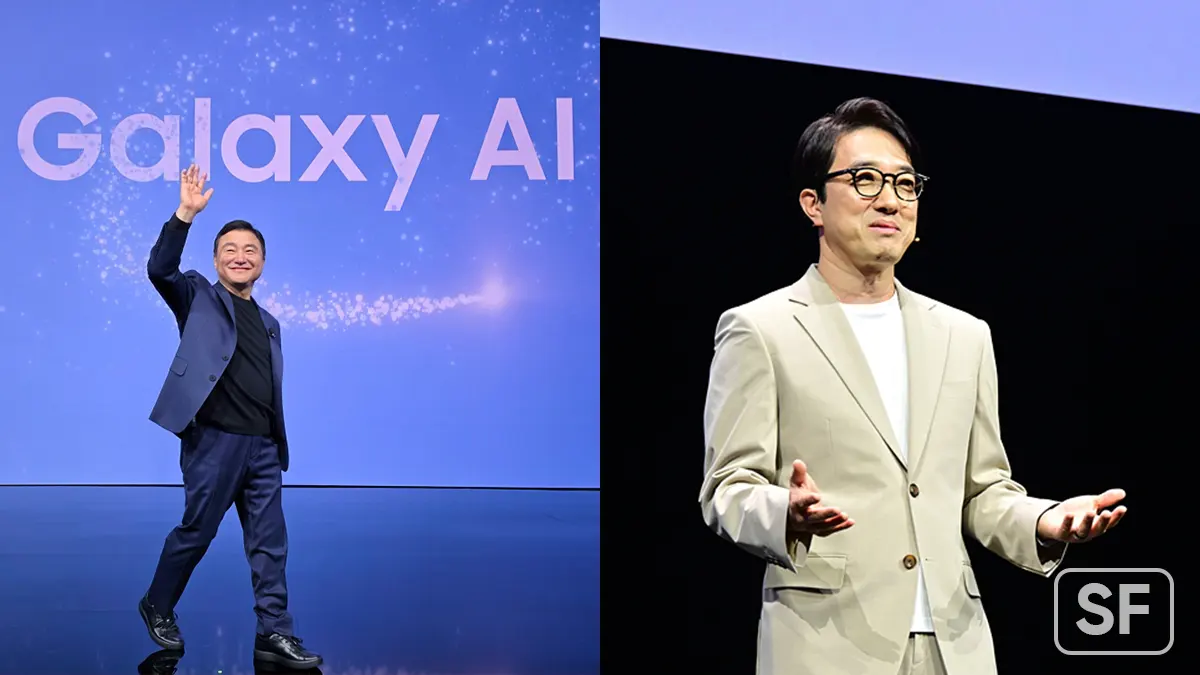
Samsung Electronics has officially handed over the reins of its smartphone business, marking the end of a seven-year era under TM Roh. Following the 2027 Regular Executive Reshuffle, Roh stepped down from his concurrent role as Head of the Mobile eXperience (MX) Business, passing daily operations to former COO and Development Office head Won-Joon Choi.
In an internal memo obtained by Korean outlet iNews24, Roh thanked staff for navigating severe supply chain pressures. “Even during a difficult year marked by surging component prices, we pooled our wisdom and found solutions,” Roh wrote to employees on Friday.
“Through countless challenges, we built the Galaxy of today. Working alongside all of you has been an honour and a source of pride.”
Roh urged the division to rally behind Choi, promising continued executive backing as he shifts his focus entirely to serving as CEO, Head of the broader Device eXperience (DX) Division, and leader of the Robotics eXperience (RX) Business Promotion Office.
TM Roh at Samsung Mobile
Roh’s departure from the mobile division closes a transformative chapter that began in January 2020. Early on, pandemic disruptions pushed launch-year sales of the Galaxy S20 series down into the low 20-million-unit range.
Under his leadership, the flagship lineup rebounded to the high 40-million-unit mark, buoyed by steady year-round demand, refined foldable hardware, and the early rollout of Galaxy AI. Yet the financial picture grew complicated in the final stretch of his tenure.
Surging memory chip costs squeezed hardware margins, pushing Samsung’s combined MX and Networks division into a rare 600 billion won operating loss in the third quarter of 2026, despite pulling in 37.7 trillion won in revenue.
New MX Head Choi inherits a product lineup with strong consumer momentum but acute margin pressure. Given his deep semiconductor and flagship engineering roots, Choi will likely lean harder into supply chain optimization and tighter silicon integration to restore profitability without dulling Samsung’s AI hardware edge.
Image: TM Roh (Left) and Won Joon Choi (Right)

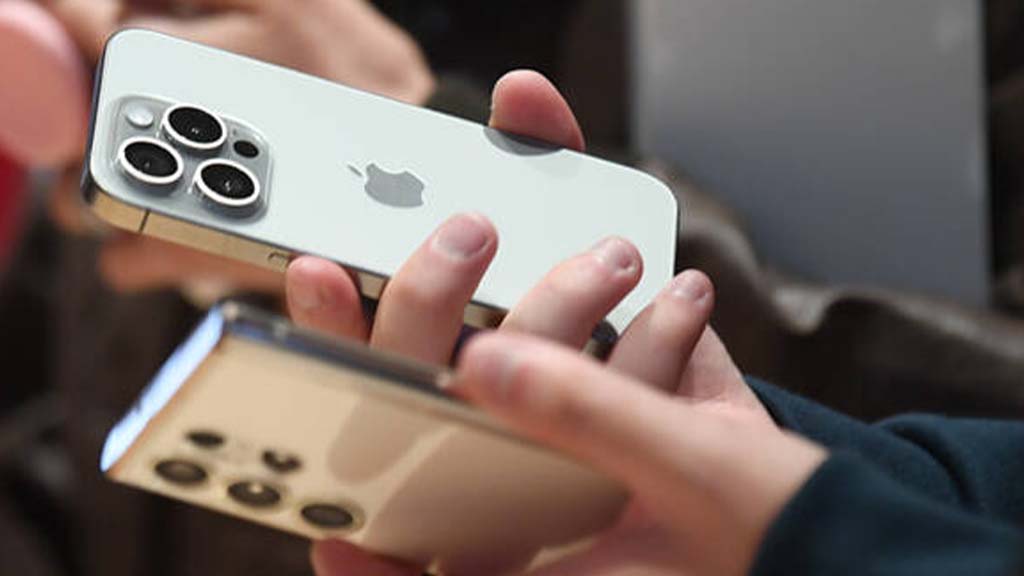
Samsung maintained its second position in the US smartphone market in the third quarter of 2026. According to the latest report from Counterpoint Research, Samsung recorded a 25% market share in Q3 2026, slightly higher than the 24% it held during the same quarter last year.
However, its market share dropped from 30% in Q2 2026. The decline comes as the US smartphone market faces challenges due to a global shortage of memory chips. This has affected Android brands, especially those selling budget smartphones.
Despite these challenges, Samsung managed to perform better than many of its competitors. Counterpoint Research says the company’s strategy of offering both premium flagship phones and affordable Galaxy A-series models helped it reduce the impact of rising memory costs.

Image via Counterpoint
Samsung’s wide range of smartphones allows it to reach customers with different budgets. While its flagship models target premium buyers, the Galaxy A-series attracts customers looking for affordable options.
Apple continued to lead the US smartphone market with a 57% share, up from 50% a year ago. It was also the only major brand that did not see a decline in shipments.
Meanwhile, Motorola’s market share dropped from 12% to 8%, while Google’s share fell from 7% to 6%. Other smartphone brands together held just 3% of the market.
The latest figures show that Samsung is maintaining a strong position despite challenges in the smartphone market. However, the growing gap between Samsung and Apple shows that the South Korean company still has work to do to strengthen its position in the US market.
Samsung is planning major changes to improve its business after facing weak sales and low profits in 2026. The company wants to stop offering huge discounts on its products and focus more on increasing sales and profits in 2027.
Samsung’s Device eXperience (DX) division held a management meeting on November 17 to review this year’s performance and discuss future plans. TM Roh, head of the division, admitted that the company’s performance was disappointing. He asked teams to check business data daily and fix problems quickly. He also stressed the need to improve sales, marketing and operations.
Samsung’s smartphone business is also facing difficulties. Choi Won-joon, the new head of the Mobile eXperience (MX) division, said the company focused too much on short-term targets. He added that Samsung now needs to work on better products, new ideas and improvements.
The company’s TV and home appliance businesses are also struggling with weak sales and low profits. Samsung executives said the company needs to change its working methods and improve its overall performance.
Samsung CFO Park Soon-chul also warned against selling products at very low prices just to increase sales. He asked teams to manage stock, product quality and costs more carefully.
This move could make big discounts on Samsung Galaxy smartphones, foldable phones and premium TVs harder to find in 2027. However, customers may still get some discounts during holiday sales and special offers.
Samsung Electronics has officially handed the reins of its Mobile eXperience (MX) Business to Won-Joon Choi, concluding the tenure of Dr TM Roh at the helm of the Galaxy smartphone division.
Announced today, November 20, 2026, as part of a sweeping executive reshuffle, the transition elevates Won-Joon Choi from his role as MX Chief Operating Officer to President and Head of the MX Business.
Dr TM Roh is not leaving the company; he remains a co-CEO and Head of the broader Device eXperience (DX) Division, where his mandate shifts toward cultivating new growth engines like robotics.
Won Joon Choi is the new boss of Galaxy
The promotion of Won-Joon Choi comes on the heels of a strong commercial run for Samsung’s mobile unit. Since stepping into the COO position in March 2025, Choi has overseen the development and market rollouts of the Galaxy S26 series and the Galaxy Z Fold 8.
Having previously led the Next-Generation Product Development Team and the MX Development Office, his background is deeply rooted in hardware engineering and product strategy rather than pure operations.
Moving forward, Samsung Electronics expects him to sharpen its competitive edge across foldables, wearables, and on-device AI, areas where market saturation and aggressive rivals have compressed margins.
Image: TM Roh (Left) and Won Joon Choi (Right)
The shakeup extends deep into Samsung’s semiconductor arm, the Device Solutions (DS) Division, signaling a clear generational pivot toward AI-driven hardware.
Sang-joon Hwang, who steered DRAM and High Bandwidth Memory (HBM) development since late 2025, has been promoted to President and Head of the Memory Business.
Sang-yeon Cho takes over as President of the System LSI Business after driving record Americas revenue for the DS Division in 2026.
To anchor long-term fabrication roadmaps, 28-year process veteran Jong-myung Lee becomes President and Chief Technology Officer of the DS Division.
-
 One UI14 hours ago
One UI 9.0 official update now rolling out to these Samsung phones
-

 Android2 days ago
Bad news for Samsung users: Google confirms App Lock won’t come to older Android phones
-

 One UI2 days ago
One UI 9.5 release date for Galaxy S25 Ultra: Here’s what to expect
-

 One UI2 days ago
Hands-on with One UI 9.5: Samsung Now Bar gets new flat and glassier design