
Android
Samsung’s Android 15 update demands double storage than One UI 6


Samsung’s One UI 7, based on Android 15, brings several new features and changes to provide a next-level experience. Now, Android 15 requires almost double the storage compared to One UI 6.
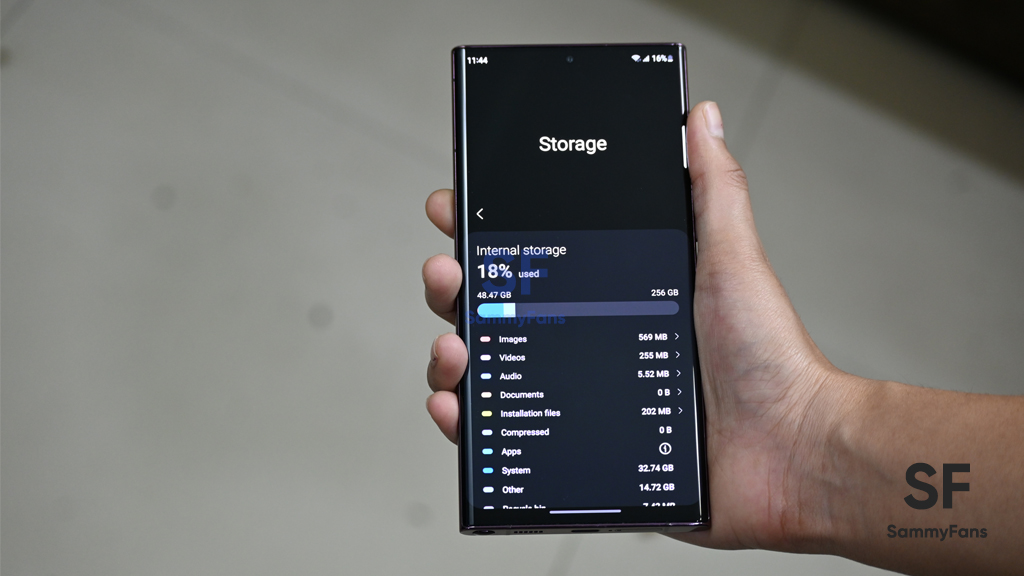
One UI 6 is based on Android 14, which only needed 16GB of storage, while One UI 7 now requires at least 32GB of storage. That’s double the storage compared to the previous version. This is because Google has increased the minimum storage needed to run Android 15.
The reason behind this increase is that Android’s system and apps are becoming larger. With newer features and updates, Android 15 needs more space to run smoothly. Google says (spotted via Mishaal Rahman) that 75% of the 32GB must be set aside for the Android system, apps, and user data.
On phones with only 16GB of storage, users often found themselves running out of space quickly, especially after installing updates and apps. With 32GB, Android 15 provides more room for the operating system and all the apps you use.
Notably, phones that don’t meet this new storage rule can still run Android 15 using the Android Open Source Project (AOSP), but they might not have Google Mobile Services (GMS). Android 15 also requires support for Vulkan 1.3 graphics and ANGLE libraries, unless the phone uses Go Edition.
Moreover, Google also made changes to memory (RAM) rules. Phones with 3GB of RAM or less now need to run on Android Go Edition. Previously, only phones with 2GB RAM or less had to use Go Edition.
This might be a concern for devices with low storage models. Samsung continues to offer higher storage options on newer devices, with many of its budget and mid-range models already shipping with 64GB /128GB of basic storage.
Android 15-based One UI 7 demands more space, but the 32GB standard storage rule means to make Android work better.
Galaxy S25 Ultra vs S24 Ultra – Storage and RAM speed test reveals interesting results





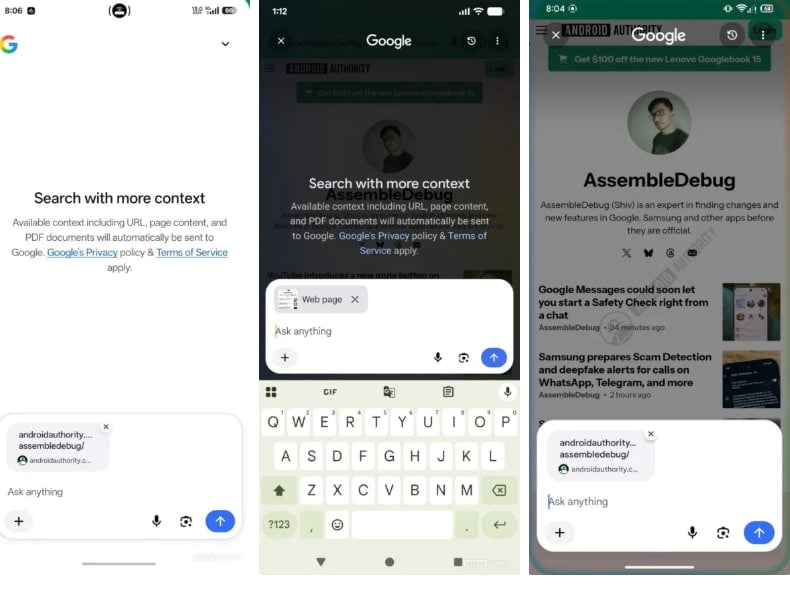
Google is reportedly testing a new design for Circle to Search on Android phones. The company may replace the current floating search bar with a panel that appears at the bottom of the screen.
Circle to Search helps users find information about anything they see on their phone. They can simply select an image, text, or object on the screen to search for it without opening another app.
The new design was spotted in version 17.78.13.sa.arm64 of the Google app. In the updated layout, the search option will appear as a bottom sheet instead of a small floating bar. This means users may no longer be able to move the search bar freely around the display.
Google also seems to be making some changes to how users search their current screen. With the existing design, tapping the search bar can attach a screenshot of the page or app being viewed. However, this process may show extra text along with the screenshot.
Imagr via Android Authority
In the new layout, tapping the search bar reportedly closes the bottom panel and shows the original screen more clearly. This can make the search experience less crowded.
Another interesting change is related to gestures. Users may be able to swipe the bottom panel upward to start a Google Search directly. This could make searching faster and easier.
However, these changes are still being tested. Google has not shared any official information about when the new design will arrive on Android devices. If released, the update could bring a simpler and cleaner experience to Circle to Search users.

Google‘s upcoming 3D emoji update has surprised many Android users because of its high storage and RAM requirements. The company says eligible phones need 6GB of RAM and 10GB of free storage to get the new emoji. However, the actual size of the update is much smaller.
Mishaal Rahman recently shared more details after speaking with the team behind the new Noto 3D emoji. According to him, the complete emoji font takes up less than 220MB of storage. This is larger than the older 2D emoji font, which uses around 3MB, but it is nowhere close to 10GB.
The 10GB free-space limit is designed to prevent problems on phones that are already running low on storage. Similarly, the 6GB RAM requirement helps avoid performance issues on devices with less memory.
There is also no need to worry about the emoji using too much RAM. Android only loads the emoji that are needed on the screen instead of keeping the entire font in memory. Phones that already have the new emoji installed also do not need to download them separately.
However, Google has still not answered an important question. Eligible phones will download the new emoji automatically when connected to Wi-Fi and charging. The company has not confirmed whether users can skip the download or keep using the older designs.


Built-in App Lock is officially coming to Android phones, with Samsung introducing the feature early on the Galaxy S26 series through One UI 9.5 Beta. Meanwhile, an insider just broke news that is going to be pretty disappointing for millions.
Samsung and Google owners have been demanding a built-in App Lock feature for years. The two companies allowed third-party apps through the Play Store, but refrained from deploying such a feature in the core operating system.
Well, 2027 is the year when App Lock will finally be deployed. Google added this tool already in Android 17 QPR Beta builds. And Samsung’s One UI 9.5 Beta announcement specifically highlighted the App Lock function.

Image: Samsung’s App Lock in One UI 9.5
Android 17 is required for App Lock
Galaxy S26 users have got access to App Lock by joining One UI 9.5 Beta. Google also confirmed it will go official early next year on Pixel phones. However, an Android insider has just revealed the minimum requirement for the feature.
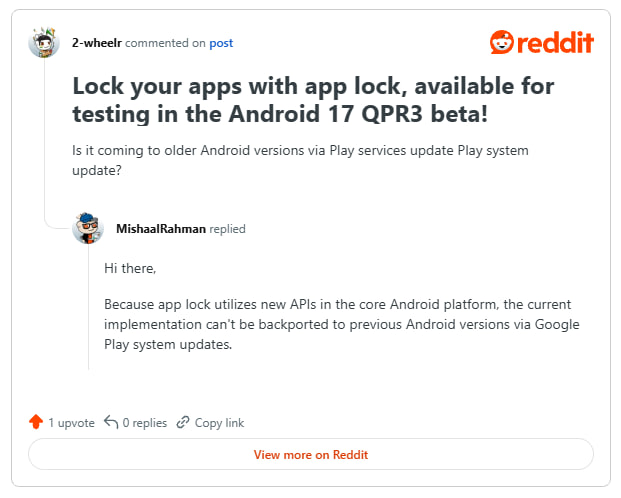
Android expert Mishaal Rahman confirmed on Reddit that the built-in App Lock won’t be rolled out through Google Play services or Google Play system updates. Rather, the deployment will require a full OS upgrade, Android 17 or newer.
Google’s Mishaal Rahman stated:
Because app lock utilizes new APIs in the core Android platform, the current implementation can’t be backported to previous Android versions via Google Play system updates.
Google’s early 2027 launch window suggests Pixel users will gain access to the feature through the first major Pixel Feature Drop. The timeline is also tied closely to Samsung’s Galaxy S27 series, scheduled for the first quarter of 2027.
That said, if your current device isn’t running Android 17 (or eligible for it), you will be missing out on one of the most awaited upgrades. The official Android 17 QPR3 upgrade will bring it to Pixel phones, while Galaxy users will get it through One UI 9.5.

User experience on foldables is all set to improve in 2027. Google officially announced new Play Store guidelines for Android app providers, setting a deadline for unoptimized apps and games for foldables to adapt or get delisted. This is going to be one of the most impactful developments, as first-party and third-party apps will no longer ruin your screen estate.
On November 18, Google Play announced through the Developer blog the deadline to fix unoptimized apps and games on foldables by April 2027.
The foldable smartphone market is growing fast, thanks to Samsung’s Galaxy Z Fold lineup. The long-awaited entry of Apple has also ramped up the competition. Google Play is now cracking down on apps and games that don’t comply with adaptability.
To give users the premium experience they expect and ensure your apps shine across every screen size, Google Play is introducing new adaptive app quality requirements that go into effect in April 2027:
- Meet the baseline (Tier 3) adaptive app quality guidelines.
- Publish foldable device screenshots on your Google Play Store listings.
To give these experiences to players and ensure your games shine across every screen size, Google Play is bringing new large-screen quality requirements for games:
- Meet the baseline (Tier 3) large screen and foldables quality guidelines (effective Aug. 2027).
- Publish foldable screenshots on your Play Store listings (effective Apr. 2027).
Here is a quick refresher on Android’s adaptive app quality tiers:
[Tier 3] Adaptive ready:
Apps must fill the available display area without letterboxing or compatibility modes. Apps must preserve state (scroll position, text input, media playback) during rotation, folding/unfolding, and resizing, while supporting multi-window environments.
[Tier 2] Adaptive optimized:
Evaluates responsive multi-pane layouts, avoiding stretched UI elements, as well as basic support for external keyboard, mouse, trackpad, and stylus input across foldables, tablets, and other large screen devices.
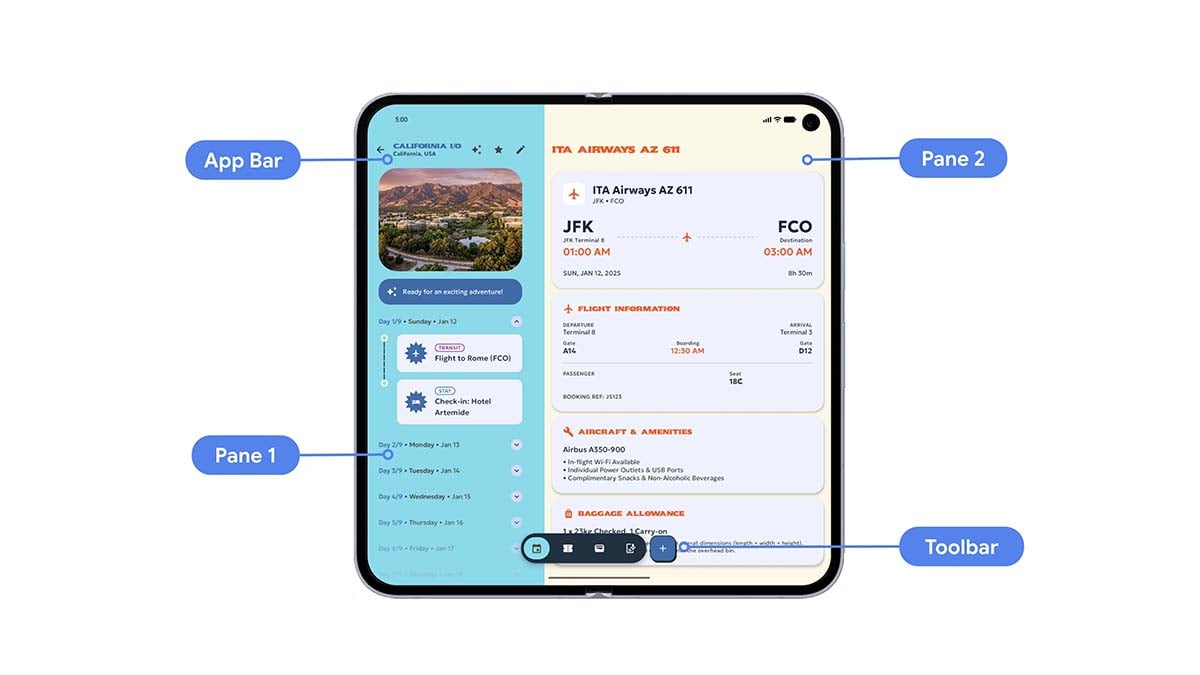
[Tier 1] Adaptive differentiated:
Evaluates tabletop and book postures, camera continuity, interactive picture-in-picture, and multi-instance support for media, video, reading, and multitasking apps.

Similarly, Google revealed exact guidelines for gaming apps. Beginning August 2027, Google Play will require games to meet at minimum the baseline, Tier 3 (Ready), level of support for large screens and foldables.
[Tier 3] Ready:
The baseline required for seamless play on foldables and tablets. Games render full screen in their supported orientation(s) with unobstructed HUD safe areas, cleanly letterbox or pillarbox in-engine when rotated to an unsupported orientation, and preserve state and touch alignment across folding, unfolding, rotation, and multi-window resizing.
[Tier 2] Optimized:
Builds on Tier 3 to deliver an elevated experience across foldables and tablets, featuring high-resolution graphics and proportional HUD scaling, styled visual framing when letterboxing, smooth frame pacing, and full playability with external controllers, keyboards, and mice.
[Tier 1] Differentiated:
Defines flagship showcase experiences tailored to each form factor. On foldables, Tier 1 focuses on sustained high-frame-rate performance (60 FPS, and 120 FPS on supported displays), thermal and battery stability across extended unfolded sessions, efficient modern graphics rendering, and dynamic resolution scaling between inner and cover screens.
That said, Google Play will no longer exempt app and game providers if they avoid foldable-optimized uploads. Guidelines are provided and deadline is set, it’s now necessary for developers to work on adaptability to escape delisting.
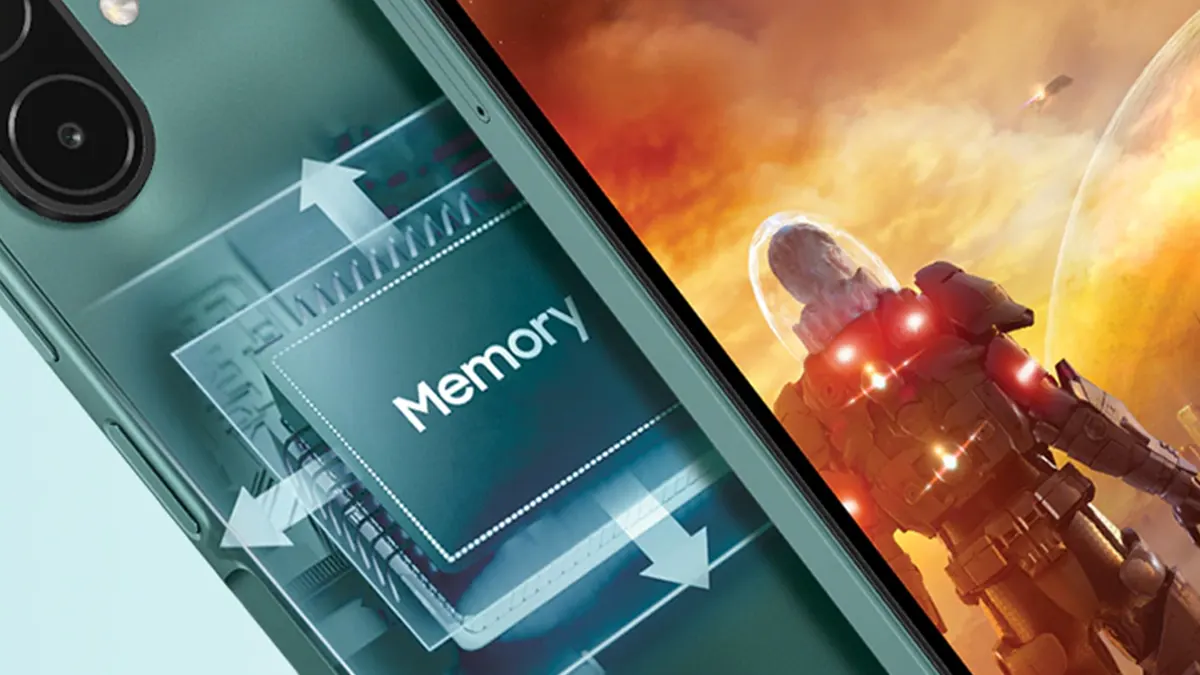
Google has not announced a single Android 18 feature aimed at low-memory phones. But memory prices, shrinking spec sheets and Google’s own policy deadlines are pushing in one direction, and Android 18 is the release that will have to answer them.
What Google has actually confirmed
The groundwork belongs to Android 17. In an August 19 blog post, Google said per-app memory limits began on Pixel phones and will spread to more manufacturers over the coming year, across configurations from 4GB to 16GB and above.
The same post acknowledged that new devices are keeping or reducing physical memory because of price increases, while users still expect a smooth experience. An app that exceeds its limit is pushed into compressed RAM (zRAM) and then killed.
Google Play adds a second lever. From February 2027, apps must meet thresholds for dynamic memory, bitmap memory and code optimization, or risk reduced visibility and publishing capabilities.

Pixel VP Shakil Barkat has also described a “dedicated effort” to cut memory requirements across Android and its app ecosystem so devices can run on less RAM without a worse experience. He gave no Android version or date, via 9to5Google.
Why the RAM pressure is real
Barkat cited Morgan Stanley data putting 1GB of RAM at $12 in 2026, against $2.80 in 2025. TrendForce expects DRAM price increases to accelerate in Q1 2027, and TeamGroup’s chairman reportedly sees no relief before the second half of 2028. IDC has cut its 2026 smartphone shipment forecast to a 16.7% decline.
A Weibo post from Fixed Focus Digital on October 20 described budget phones starting at 4GB and mid-range phones at 8GB, naming no brands or regions. Separately, the leaker @kro_roe says the Galaxy S27 and S27+ may start at 8GB instead of 12GB.
Where the timing gets awkward
Android 18’s stable release is widely expected around June 2027. The Galaxy S27 line may launch as early as January, and most budget phones ship on older Android versions. By the time Android 18 arrives, many of 2027’s lower-memory phones will already be on shelves.
Meanwhile, Android 17’s limiter is also not guaranteed everywhere. Google describes it as applying to some Android devices and not mandatory for every manufacturer, and Samsung has not said when it will adopt it.
The tension with AI
Gemini Intelligence requires at least 12GB, and AI features reserve memory that apps would otherwise use. Industry watchers have argued that 8GB is the baseline for a good experience and that 4GB phones are unlikely to feel smooth. Google’s own policy effectively sets a 6GB floor for full Android.
If phone makers cut RAM while Google asks for more on-device AI, something has to give. The per-app limits and Play thresholds manage the problem, rather than removing it. A phone with 8GB that has to hold an AI model, a dozen apps and a compositor still needs a leaner platform underneath.
Three developments will show whether Android 18 delivers:
- Whether future Canary and beta builds add memory-related changes
- Whether Samsung and other manufacturers commit to the per-app limits
- How Google handles low-end hardware in its Play enforcement after February 2027
Until one of those appears, “Android 18 will run well on less RAM” remains an expectation, not a feature.
-
 One UI2 days ago
One UI 9.5 Eligible Devices: These Samsung devices could receive the next major update
-
 Updates3 days ago
2 more Galaxy A-Series phones getting November 2026 security update
-
 Wearables1 day ago
Samsung confirms Galaxy Watch 9 features for older models, including Watch 4!
-
 Deals2 days ago
Samsung Galaxy S26 Ultra is $350 off for Black Friday