
Samsung
One UI 7 Delay: Samsung’s update trick that made the Galaxy S25 a hit


Samsung users have been talking a lot about the One UI 7. Many believe the One UI 7 rollout delay for older phones like the Galaxy S24, S23 series, and Z Fold and Flip models is to make people buy the new Galaxy S25 series.
Looking at how things played out, it seems like the One UI 7 delay might have been a smart move for Samsung’s Galaxy S25 sales.
Why the delay?
A lot of users think Samsung wanted to make the Galaxy S25 more appealing. If you owned a Galaxy S24 or S23 and wanted One UI 7 with its new look and AI features—you had two choices: wait until April or buy an S25 in January.
For some, buying the new phone was the faster way to get the update. Posts across social media platforms like X and Reddit show people getting frustrated with the wait, and some even said they switched to the S25 because of it.

Did this delay boost S25 sales?
As confirmed by Samsung, in South Korea alone, the Galaxy S25 series hit 1.3 million sales in just 21 days, beating the S24 series’ 1.21 million over a longer period, making it Samsung’s fastest-selling Galaxy S ever in that market.
Per the Hana Securities report, the Galaxy S25 series sold 4.56 million units in its first month after launching on February 7, 2025. That breaks down to 2.55 million S25 Ultra units, 1.17 million standard S25 units, and 840,000 S25 Plus units.

Samsung Galaxy S25 Ultra and Galaxy S24 Ultra (Source – Sammyfans.com)
By comparison, the Galaxy S24 series, which launched on January 31, 2024, sold 1.42 million units in its first month—830,000 S24 Ultra, 320,000 S24, and 270,000 S24 Plus. That’s a decent number for the initial/first month of launch.
Still, not everyone’s happy about this.
Fans argue that Samsung, known for fast updates in recent years, shouldn’t make loyal customers wait so long. But from Samsung’s side, the delay might have been a clever way to get more people excited about the Galaxy S25—and it looks like it paid off.
Connect with me:
Have a hot tip or just want to chat tech? I’d love to hear your feedback or tips—connect with me on X/Twitter @TweetToYash!


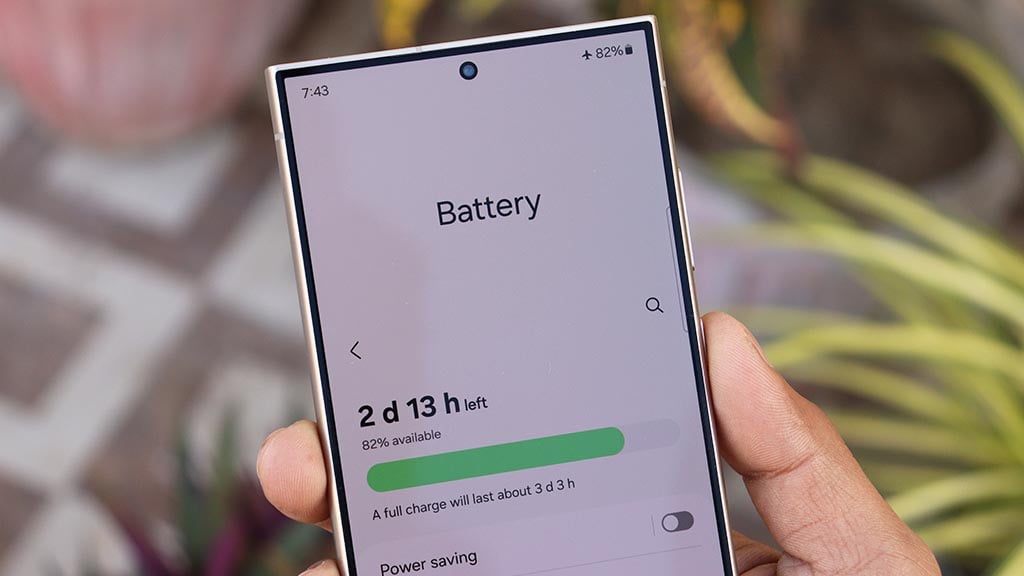
If you just installed the November 2026 security update hoping it would improve your Galaxy S24 Ultra flagship’s battery life, keep your expectations in check. Battery endurance after this latest rollout remains a mixed bag, with the core issues tracing back to October’s One UI 9.0 (Android 17) upgrade rather than this routine monthly patch.
A massive security patch, not a performance overhaul
Rolling out globally since mid-to-late November, this update is strictly a defensive release. Samsung’s changelog targets over 200 security vulnerabilities, bundling critical Google Android fixes alongside Samsung-specific patches.
There is zero mention of power management tweaks or kernel-level optimizations under the hood. While hopeful owners across Reddit’s r/S24Ultra and Samsung Community forums wondered if the first post-One UI 9.0 update might quietly patch the drain, early feedback confirms it does not fix the underlying problem.
Breaking down the One UI 9.0 battery drain mystery
Before One UI 9.0 landed in October 2026, the Galaxy S24 Ultra’s 5,000 mAh cell was an endurance champ, routinely delivering 6 to 8+ hours of screen-on time in mixed daily use. That consistency vanished for a noticeable subset of owners after upgrading to Android 17.
Some users running QHD resolution on LTE/mobile data have seen their charge plummet by 95% in just 5 hours and 20 minutes, yielding a dismal 3 hours and 15 minutes of screen-on time across thirsty social apps like YouTube, Instagram, and Snapchat. Others report severe standby hangovers, losing up to 40% overnight across 11 hours of idle time.
Not everyone is hit equally, though. Many S24 Ultra units stabilized once Adaptive Battery relearned usage habits over one to two weeks, leaving a divided user base between normal all-day performance and frustrating mid-day top-ups.
That 94% battery health drop: Software glitch?
Even more alarming than daily drain is a sudden dip in reported battery health. Several Galaxy S24 and S25 series owners noticed their battery health metric plunging to 94% within roughly a month of installing One UI 9.0.
Is the OS physically degrading cells, or is the reporting gauge miscalculating capacity?
Right now, the evidence points toward a software calibration bug introduced in the Android 17 transition, though extra daily charging cycles from background drain certainly don’t help long-term cell longevity.
Why you have to wait for One UI 9.5
If you are waiting for an over-the-air rescue, you will need patience. Samsung Community moderators have officially acknowledged the One UI 9.0 battery drain and health reporting bugs, confirming that a fix is slated for One UI 9.5.
Because One UI 9.5 is currently in early beta testing on the Galaxy S26 lineup, a stable public rollout isn’t expected until early 2027 alongside the Galaxy S27 debut. Incremental monthly security patches won’t bridge that gap.

Via: Alfaturk
How to stop background drain right now
While waiting for One UI 9.5, you can tame runaway background processes with a few targeted adjustments:
- Update every app: Open both the Google Play Store and Galaxy Store to install Android 17-compatible app updates.
- Wipe the cache partition: Boot into recovery mode to clear old system cache files left over from the One UI 9.0 installation.
- Lock down rogue apps: Check Settings > Battery to spot background hogs, then move them to Deep sleeping apps.
- Toggle Light mode and Battery protection: Switch your performance profile to Light and cap charging at 80-85% under Battery protection.
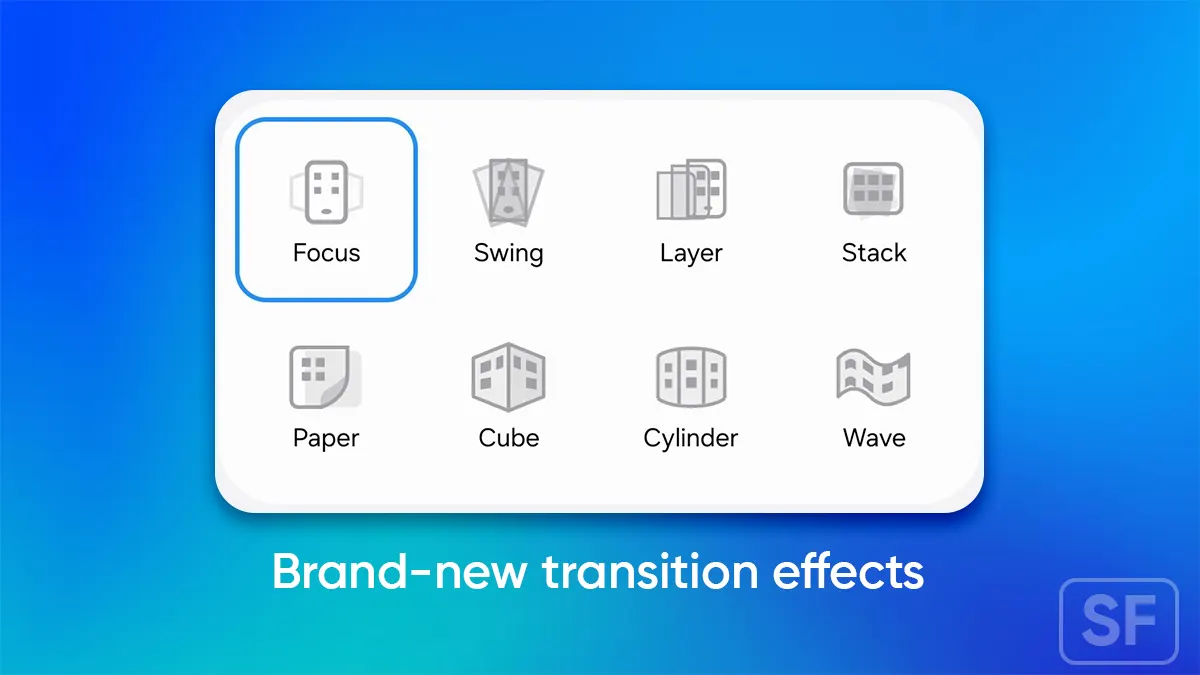
Your Samsung phone will soon have 8 playful page transition effects, and these visual treats will make your Galaxy feel surprisingly playful.
Samsung today released the One UI 9.5 version of Home Up, bringing new features such as Icon settings, Favorites background Blur and Shadow and Page transition effects. Every new tool is worth showing off, as One UI is literally killing it.
New Samsung page transition effects
Upgrading my Galaxy S26 Ultra’s Home Up app to the latest version installed 6 major customization features. Page transition effects are some of the most highlighted additions, which make the boring pagination a lot more playful.
Samsung has a total of eight options for the Page transition effects segment, with each introducing a minimal yet reliable transition. Among the total effects, I personally like the Cube, Wave, and Cylinder as their animations are too nice to ignore.
- Focus
- Swing
- Layer
- Stack
- Paper
- Cube
- Cylinder
- Wave
The new feature’s addition is well crafted and planned before rollout. To reduce unnecessary jumps to the home screen to see the effect, Samsung has slapped a dedicated canvas right above the options so you can see the effect in action.
One UI 9.5 Home Up: Page transition effect
Samsung's new Home Up brings 8 cool effects for page transitions 👇
Which one's your favorite? 👀 pic.twitter.com/E3E6fNOuLZ
— Sammy Fans – Samsung News and One UI Updates (@thesammyfans) November 28, 2026
How to setup Page transition effects?
One UI 9.5 is the primary requirement, followed by the latest versions of Good Lock and Home Up installed. If your phone’s Galaxy Store doesn’t fetch the newer version, you can sideload the app to gain early access to the new features.
Open Home Up, followed by the Home screen menu. Inside, you get a newly added “Page transition effect” tab with a label “New.” Switch the toggle on and tap the title to expand the gallery of effects, where you can apply one.
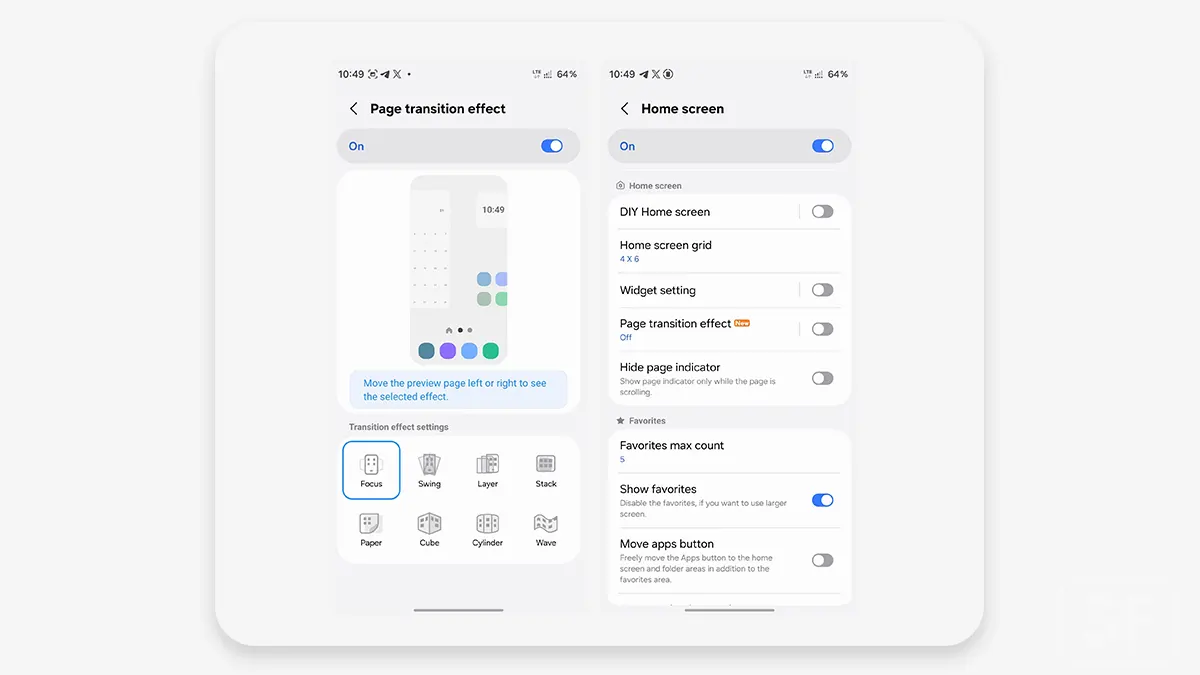
Screenshots: One UI 9.5 Page Transition Effects
Samsung is currently Beta testing One UI 9.5 on the Galaxy S26 series. The software will officially debut on the Galaxy S27 series next year. Sideloading the app doesn’t guarantee you get all the new customization tools functioning on One UI 9.
Samsung
Galaxy S27 Ultra camera might lose two sensors, but Samsung has a massive night-mode upgrade in its sleeve

Samsung is reportedly removing Laser Autofocus sensor and 3x Telephoto from the Galaxy S27 Ultra, but the main camera may introduce a major upgrade in terms of night mode performance and video recording aspect.
Trusted tipster IceUniverse claims Samsung is counterbalancing those cuts with a serious overhaul to the primary camera. According to the leak, the new main sensor delivers noticeably brighter night shots, sharper low-light detail, cleaner shadows, and tighter highlight control. Even better, video recording quality is tipped to see an impressive jump. Pre-release software tuning is still evolving ahead of the early 2027 launch, so final output could shift.
Samsung shifting from hardware to software mastery
Instead of relying on extra glass, Samsung is betting on a smarter primary pipeline, widely tipped to be a new 200MP sensor using in-sensor cropping for intermediate zoom and sensor-level phase detection for focus.
For years, Galaxy flagships trailed Apple’s iPhone Pro lineup in low-light video consistency, grain control, and exposure transitions. Closing that gap matters far more in real life than an extra spec-sheet line item, such as concerts and indoor events, nighttime street clips, and everyday point-and-shoot.
The new main camera of the Galaxy S27 Ultra has significantly improved the brightness and detail in night photography, and the video quality is particularly impressive.
— Ice Universe (@UniverseIce) November 27, 2026
Should you wait for the S27 Ultra or buy the S26 Ultra on discount?
If you rely heavily on crisp optical 3x portraits and want proven hardware right now, grabbing a discounted Galaxy S26 Ultra is the safe play. However, if low-light video stability and cleaner night photos top your wishlist, waiting until early 2027 could pay off.
For a visual breakdown of the rumored rear layout and sensor changes, check out Galaxy S27 Ultra dummies disagree on camera layout, and what that means for the final design, which walks through the simplified triple-camera housing.
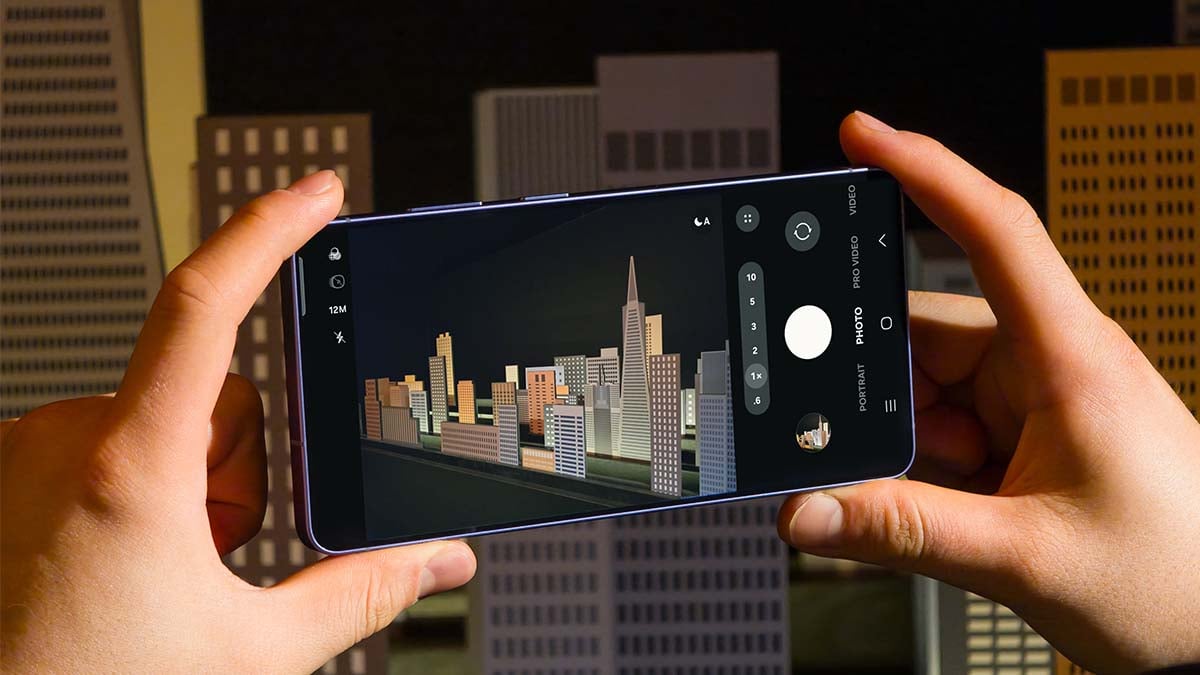
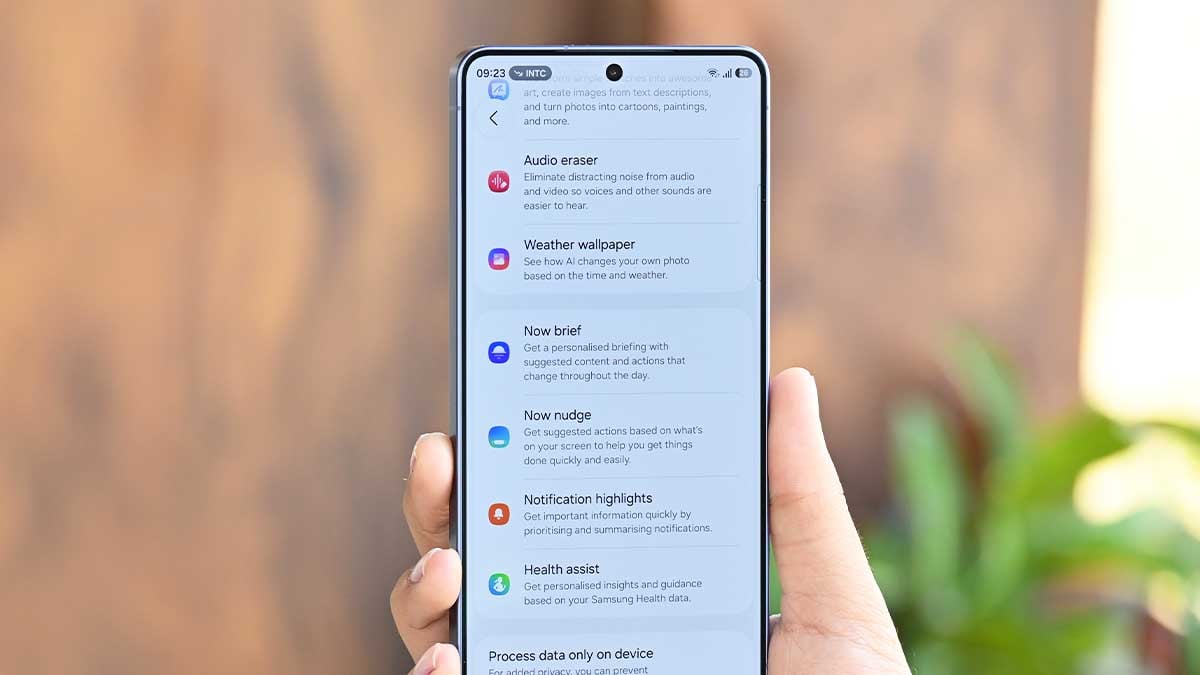
Right now, using Galaxy AI on Samsung devices forces a compromise between convenience and privacy. You either flip on the “Process data only on device” toggle in Galaxy AI Settings and lose your smartest editing and writing tools, or you trust Samsung’s policy promise that cloud servers won’t store your photos.
While the public One UI 9.5 Beta 1 rollout grabbed headlines for bringing native App Lock and upgraded Pro camera controls to the Galaxy S26 series, a fresh APK teardown from Android Authority reveals a much bigger privacy upgrade.
Digging through One UI 9.5 Beta 1 on a Galaxy S26 Ultra, investigators spotted a new Samsung software kit called SPAC, almost certainly standing for Samsung Private AI Cloud. Unlike One UI 9, this framework now sits inside four core system apps: Photo Editor, Smart Capture, PhotoRemasterService, and IntelliVoiceService.
Samsung isn’t relying solely on Gauss or Gemini anymore
For years, Samsung leaned heavily on Google’s Gemini and its own in-house Gauss models to power Galaxy AI. The One UI 9.5 code shows Samsung widening its playbook by bringing open-weight models onto its own private cloud servers.
One UI 9.5: Which AI models power which Galaxy features?
Code strings scattered across the four updated apps map specific open-weight engines to everyday Galaxy tasks:
- Smart Capture (AI Select): References Alibaba’s Qwen 3.6 and Google’s Gemma 4.
- IntelliVoiceService: Taps into Google’s Gemma 4 to handle live speech translation.
- PhotoRemasterService: Calls on Black Forest Labs’ FLUX.2 klein 4B alongside a Stable Diffusion model.
- Photo Editor (Inactive references): Includes dormant mentions of OpenAI TTS, Samsung Gauss, and Meta’s V-JEPA.
How SPAC protects your photos and voice data
SPAC connects to a server gateway codenamed “Arcane,” flanked by dedicated token, identity, and fraud detection services. Samsung is adopting the proven privacy architecture popularized by Apple’s Private Cloud Compute (2024), Google’s Private AI Compute (November 2025), and Meta’s Private Processing.
US server renewals suggest Samsung’s private AI back end is nearly ready
You cannot test SPAC on your Galaxy S26 Ultra today. Samsung has gated the feature behind unreleased app versions and newer Galaxy AI builds, and there are zero user-facing privacy prompts in Beta 1.
Behind the scenes, however, the infrastructure is moving fast. Public SSL certificate records show Samsung has actively renewed production SPAC server addresses over recent months while spinning up new servers in the US.


Samsung Display is investing around €210 million in ams OSRAM to develop a new display technology, MicroLED. With this investment, Samsung Display will get a 9.1% stake in the company and become its largest shareholder.
The deal has been announced on November 25, 2026. Samsung Display will purchase 9,984,439 newly issued shares of ams OSRAM. The deal is expected to be completed in early 2027 after receiving the required approvals.
Along with the investment, both companies have also signed an agreement to work together on developing ultra-small MicroLED technology for future displays. Their main aim is to make this technology better, more efficient and cheaper to manufacture.
MicroLED is considered an important display technology for the future. It uses very small LEDs that produce their own light. This means the display does not need a separate backlight. It can offer several benefits, including higher brightness, longer life and better design flexibility.
Through this partnership, Samsung Display will test the performance of the small LEDs made by ams OSRAM. It will also work on developing the manufacturing methods needed to produce MicroLED displays on a larger scale.
ams OSRAM has more than 120 years of experience in lighting and semiconductor technology. The company has strong knowledge of making smaller LEDs and producing them in large quantities. This experience will help both companies develop the new technology.
Samsung Display CEO Chung Yi said the investment is part of the company’s plan to prepare for future technology changes and find new business opportunities. With this partnership, Samsung Display wants to expand its business beyond OLED and strengthen its position in the display market.
-
 Wearables3 days ago
Samsung confirms Galaxy Watch 9 features for older models, including Watch 4!
-

 One UI23 hours ago
You no longer need to clear app caches one by one on Samsung Galaxy Phones
-

 News3 days ago
Galaxy S25 could be banned in the US as Samsung loses camera patent case
-

 Samsung1 day ago
Samsung’s new page transition effects make One UI feel surprisingly playful