
Business
Chinese panels harming Samsung D’s smartphone display demand


On March 28, market research agency DSCC predicted that this year’s global OLED sales would be $38.7 billion, down 7% from the previous year. Since Chinese display makers selling OLEDs at cheaper prices, demand for rigid Samsung smartphone OLEDs decreasing.
According to the report, smartphone OLED shipments by the application are similar to last year, but sales are expected to decrease by 8%. Possibly, it’s because of the decrease in rigid OLED sales and the decrease in average selling price (ASP).
Samsung Display
Smartphone OLED is expected to record 77% of shipment share and 78% of sales share in the entire OLED market this year. Smartwatch OLED is expected to account for 15% of shipments and 5% of sales. As revealed by Samsung Display, it’s expected to keep its market leadership this year as well.
Samsung D will reportedly supply OLED for all four models of the upcoming Apple iPhone 15 series, with a whopping share of 60 percent. The South Korean display maker is likely to see a three-digit YoY increase in monitor and automotive OLED shipments.
BOE Display
BOE’s OLED sales share is expected to rise from 9% last year to 13% this year. In the iPhone 15 series, BOE’s share was estimated at 18%. Compared to last year, DSCC explained that in the iPhone 15 series, the number of models that BOE supplies with OLED has increased to two, a regular type and a Plus.
LG Display
LG Display could increase its overall OLED market share from 20% last year to 21% this year. The expected market share of LG Display in the iPhone 15 series is 22%. The OEM supplies OLED only to the Pro lineup in the iPhone 15 series.
This year, LG Display’s share in the monitor OLED market is expected to be 35% based on shipments and 35% based on sales. The company’s share in the TV OLED market is estimated to be 85% based on shipments and 81% based on sales.
TV OLED
TV OLED shipments are expected to decline by 12% and sales by 15%. In addition, OLED shipments and sales required for augmented reality (AR) and virtual reality (VR), vehicles, laptops, monitors, and tablets are predicted to grow.



Early this week, Jensen Huang stepped down as Nvidia’s CEO and left the board after 33 years of service. Nvidia made Colette Kress interim CEO while the board looks for a permanent replacement.
For years, the GPU maker ran on a tight top-down setup. There were around 60 executives who reported straight to Jensen. Decisions on the one-year accelerator cycle went through that structure. That system is gone now.
Jensen was leading everywhere. Korean memory makers (Samsung and SK Hynix) are in the middle of talks on HBM4 and HBM4E specs and early volumes. Those discussions could slow while the interim team settles in and figures out the next moves, which looks really problematic now.
In addition, the US lawmakers and the Commerce Department are expected to look seriously at China bypass routes and supply-chain security. Jensen’s resignation is tied to a relationship with someone allegedly linked to Chinese intelligence. All of this means there will be tighter rules on China chips, more verification work for Korean suppliers, and more pressure on older China fabs.
But how is it opening the door for others, such as Samsung?
Big tech companies, including Google, Meta, and OpenAI, are moving faster on homegrown custom chips. These companies understand the risk of relying on one supplier; that supplier is TSMC. TSMC’s leading-edge and advanced packaging lines are already booked for years. The industry is now looking for the option – this is where we have Samsung in the department.
Samsung Foundry added a large US cloud customer in the third quarter after adding one in the second quarter. That gives it a base for commercial volumes in 2028. It can provide HBM4 supply, leading-edge logic die production, and advanced packaging in one chain. That means less waiting and fewer handoffs between different companies.
Memory is expected to push next year’s operating profit past 630 trillion won (about $472 billion). The 2028 US orders give the foundry business a real chance to stop losing money. Stable early 2nm yields and proven mass production at Taylor and other lines would complete the move to a broader semiconductor company.
How much of the HBM4 allocation pace actually slows while the interim team figures out the next decisions?

Samsung Electronics is facing another challenge in its TV business as Chinese display manufacturers tighten their grip on the LCD panel market and push prices higher.
Korea’s Chosun reports that Chinese vendors, including BOE and TCL CSOT, are strengthening their pricing power at a time when Samsung has limited alternatives for sourcing large-screen display panels, putting additional pressure on its TV business.
Samsung is estimated to buy around 4.4 million LCD panels from BOE in 2026, double the previous year’s volume. BOE is expected to represent 12.3% of its panel purchases, while TCL CSOT accounts for approximately 20.4%.
Rising panel prices add to an already difficult cost environment. Display panels account for roughly 40% to 50% of TV manufacturing costs. Samsung is responding by prioritizing premium televisions and managing supplier relationships.
The timing leaves Samsung with limited room to maneuver. Global TV shipments are forecast to decline 0.6% this year to 194.81 million units, making it harder for manufacturers to pass higher production costs directly to consumers.
Omdia reported that BOE, CSOT, and HKC now control an estimated 70% to 85% of the global supply of 65-, 75-, and 85-inch LCD TV panels. Their dominance is even greater in ultra-large screen categories. Samsung Display ended its LCD production in 2022, leaving Samsung Electronics increasingly dependent on external suppliers.

Image via Samsung

Apple and Samsung accounted for 69% of global smartphone revenue in Q3 2026, highlighting how the industry’s financial strength is becoming increasingly concentrated among its biggest players. The combined share came despite a 19% year-over-year decline in global shipments, as higher device prices pushed quarterly smartphone revenue to $114 billion.
According to Counterpoint Research, global smartphone average selling prices (ASPs) increased 27% annually to a record $442. Premiumisation, changes in product mix, and rising memory costs contributed to the increase. Revenue grew 3%, showing how higher prices are compensating for weaker demand.
Apple vs Samsung: Revenue share and Shipments
Apple led the market with a 50% revenue share, recording 17% growth and its highest-ever third-quarter revenue. Samsung followed with 19% of global revenue, up 14% annually. Interestingly, it retained shipment leadership with a 22% share.
Apple vs Samsung: Smartphone average selling price
Apple’s ASP increased 19%, supported by iPhone 17 demand and early sales of the iPhone 18 Pro series. Meanwhile, Samsung’s ASP climbed 21% to $367, reflecting higher Galaxy A-series prices and stronger contributions from the Galaxy S26 Ultra and Galaxy Z Fold 8.

Xiaomi maintained flat revenue despite declining shipments, while OPPO and vivo suffered revenue declines of 26% and 22%, respectively.
The performance of Chinese smartphone manufacturers highlights the difficulty of maintaining revenue when consumers become more price-sensitive.
Counterpoint expects smartphone revenue to contract in Q4 2026 as shipment declines outpace ASP growth. Elevated memory costs are also expected to keep pressuring manufacturers through 2027, potentially extending price increases.

A new report from Omdia reiterates the Q3 2026 global smartphone market crash, with Apple and Samsung managing to avoid the worst of the memory crunch era.
Last month, market research firm Omdia reported preliminary stats of the Global smartphone market in Q3. Worldwide shipments fell 20 percent year-on-year, making the period the worst in terms of sales in 10 years.
Third-quarter shipments this year fell 20% year-on-year, marking the lowest Q3 level since 2013. While Samsung and Apple held up relatively well, Chinese vendors including Xiaomi, Oppo, and Vivo posted high double-digit declines.
“Emerging markets, once the backbone of global smartphone volume growth, are now facing the greatest pressure from rising prices,” said Sanyam Chaurasia, Principal Analyst at Omdia.
Global smartphone shipments in Q3 reached 254.7 million units. Higher smartphone prices reduced consumer purchasing power, particularly in emerging markets, while distributors also took a cautious approach to securing inventory.
Samsung shipped 57.8 million units in Q3, down 5% year-on-year, but retained the top spot in shipments.
While competing Android manufacturers were affected by memory supply constraints and price hikes, Samsung’s budget and mid-range Galaxy A series helped expand its market share.
Additionally, the Galaxy Z8 series foldables, which were released in September, also supported sales in the premium segment with the help of trade-in and upgrade programs.
Apple placed second, shipping 56.50 million units and keeping sales roughly flat compared to the same period last year.
Continued demand for the iPhone 17 and preemptive inventory stockpiling by retail channels expecting price increases contributed to the result. Strong demand in China and North America offset weakness in emerging markets.

Xiaomi maintained third place with 30.7 million units, but its shipments plunged 29% year-on-year. Shipments to China and India dropped by 20% and 28%, respectively. As Xiaomi raised product prices to cope with rising component costs, sales fell sharply in price-sensitive emerging markets.
Oppo (including Realme and OnePlus) ranked fourth with 23.4 million units, down 39% year-on-year. Vivo also saw a 33% decline, shipping 19.3 million units.

Samsung Electronics reported a record-breaking third quarter, posting KRW 107.4 trillion ($80.04 billion) in operating profit, 783.11% year on year from 107.44 trillion won on consolidated revenue of KRW 195.3 trillion.
The South Korean tech giant became the first company globally to surpass KRW 100 trillion in quarterly operating profit, driven almost entirely by the ongoing generative AI infrastructure expansion.
While smartphone hardware margins face persistent input cost pressure, its silicon manufacturing footprint is reaping unprecedented gains from the global AI buildout.
Profit jumped 8x on AI chip boom
Samsung’s incredible Q3 performance was led by the Device Solutions division, which posted KRW 106.5 trillion in operating profit amid tight industry-wide DRAM and HBM supply.
Scaling shipments of next-generation HBM4 and server-grade QLC SSDs allowed the semiconductor business to capture maximum pricing power.
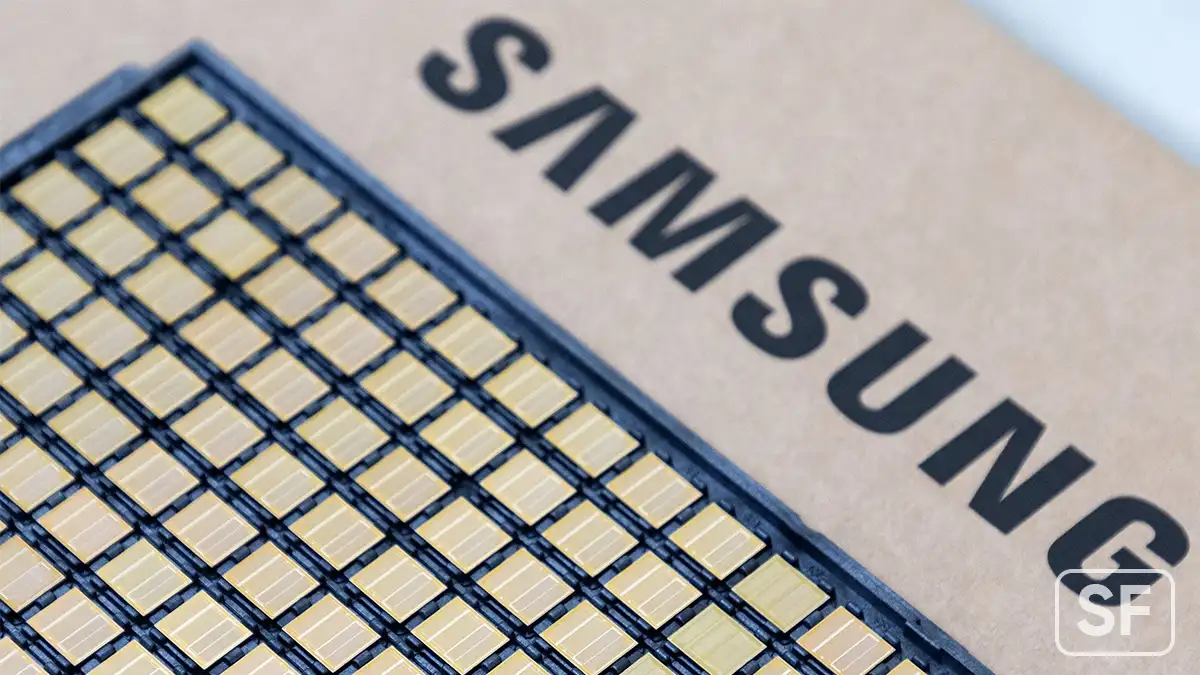
The results echo similar bullish signals from cross-town rival SK Hynix, validating that high-density memory demand remains structurally undersupplied.
Mobile business flagged another deficit
Conversely, consumer-facing sectors faced headwinds; the Mobile eXperience and Networks divisions recorded an operating loss of KRW 0.6 trillion as elevated memory component prices inflated handset manufacturing costs.
Samsung warned that supply constraints will intensify through 2027 as hyperscale cloud providers increase capital expenditures for AI deployments. To support this trajectory, the company allocated KRW 27.2 trillion of its KRW 29 trillion quarterly capex specifically to semiconductor infrastructure.
KRW 30 trillion third-quarter dividend
Samsung confirmed a KRW 30 trillion third-quarter dividend alongside planned share buyback programs.
-
 One UI3 days ago
One UI 9.0 official update now rolling out to these Samsung phones
-
 One UI2 days ago
One UI 9.5 Eligible Devices: These Samsung devices could receive the next major update
-
 Updates13 hours ago
Samsung Software Update Schedule: November 2026
-
 Semiconductor3 days ago
China’s CXMT is building 10 new memory fabs; DRAM prices could tank: DRAM Godfather