
News
Samsung released Android 12 One UI 4.1 update for Galaxy Note 20 in the US

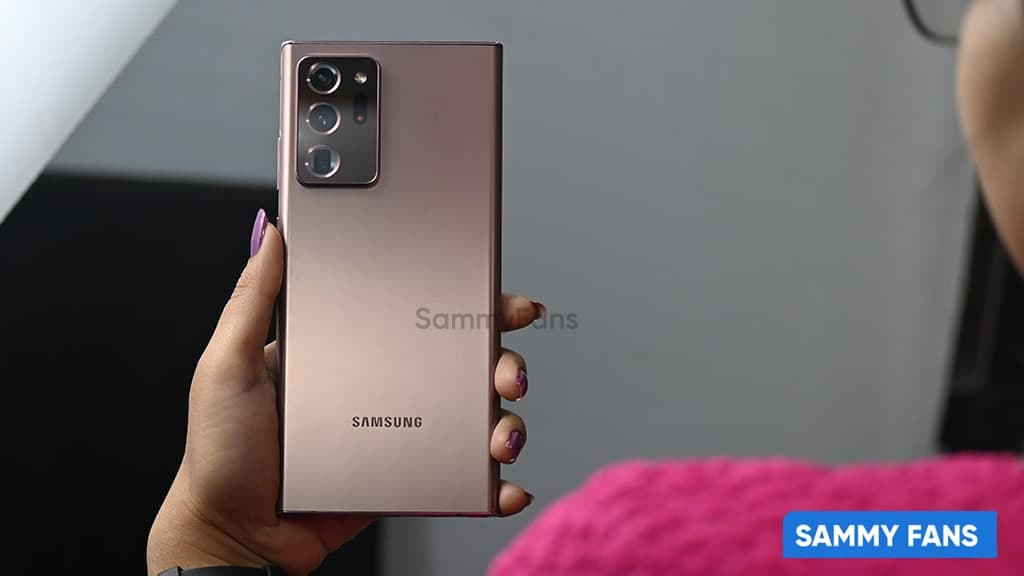
Samsung Galaxy Note 20 Android 12 One UI 4.1 update has reached many regions and now the company is expanding it for carrier-unlocked variants in the US markets. It’s currently released on Sprint and T-Mobile networks and more carriers will get it in the next few days.
Alike the other countries, Samsung brings multiple new features and changes for the unlocked variant as well. According to the changelog, this update installs the March 2022 Android security patch for better system security and performance enhancement.
Join SammyFans on Telegram
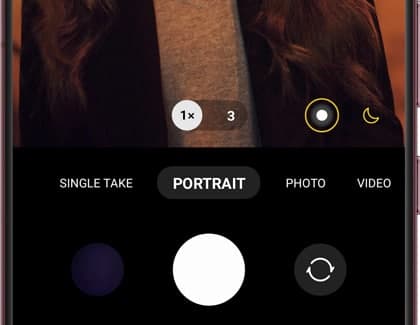
It comes with customizable RAM Plus, an improved Gallery app with build-in Reflection Eraser and Shadow Eraser, improved Bixby Routines, enhanced color palette, as well as better low-light portrait images that let you take stunning portraits even in low light.
The newly added Google Duo Live Share allows you to share your screen with people you are far away from. Whereas, the Grammarly-powered keyboard ensures that you won’t do typing mistakes and Enhncaed Quick Share lets you edit and share images with ease.
On the other hand, the company’s partnership with Google ensures a seamless experience when using your favorite third-party apps and services. There are many Galaxy S22 inspired Camera features including Pet recognition and Light position editing that further enhance your photography experience.
Software versions:
- Galaxy Note 20: N980U1UEU2FVC5
- Galaxy Note 20 Ultra: N986U1UEU2FVC5
How to download manually:
Make sure that you backup your important data before you staring the downloading process, so you won’t lose any important files. Although the upgrade procedure won’t replace or remove any of the corresponding data from your smartphone, it’s recommended to do so for extra safety measures.
If you haven’t received the Samsung Galaxy Note 20 One UI 4.1 update notification, you can check and download it by navigating Settings >> Software update >> Download and install. Now follow the on-screen prompts to get it on your phone.
Get notified –
Aside from SammyFans’ official Twitter and Facebook page, you can also join our Telegram channel, follow us on Instagram and subscribe to our YouTube channel to get notified of every latest development in Samsung and One UI ecosystem. Also, you can follow us on Google News for regular updates.







Samsung has revealed that around 73% of UK parents use search engines or AI chatbots to understand new qualifications and job roles before discussing them with their teenage children.
The research shows that many parents struggle to guide their children about future careers because technology and job opportunities are changing quickly. Around 35% of parents say they cannot help their children understand today’s job market, while 40% are not confident about giving career advice. Also, 63% believe their teenagers know more about modern technology and future jobs than they do.
Many parents are also unfamiliar with new education options. Around 45% do not know much about T-Levels, while 44% have little knowledge of Higher Technical Qualifications. More than half also find it difficult to explain new jobs such as AI Prompt Engineer and Climate Tech Specialist.

To help young people explore future career options, Samsung has launched its seventh annual Samsung Solve for Tomorrow competition. It is open to students aged 11 to 18 across the UK and Ireland.
TV presenter Joe Swash has also joined the campaign by visiting his local community to ask people about future careers. He found that many people were just as confused as parents.
Students can take part alone or in teams of up to four. They must use technology to solve real-world problems under three themes: Smarter Sport, Greener Future and Safer Online.
Entries are open until 18 January 2027. Selected students will receive mentoring and funding to develop their ideas. Finalists will also get work experience with Samsung, while winners will have their ideas displayed at Piccadilly Circus. The programme aims to help young people build skills, gain confidence and prepare for future careers.

Samsung is working on making chat backups easier for Galaxy users with a new cloud backup feature for WeChat. Currently available on the Samsung W27, the feature allows users to save their chats, voice messages, emojis, and shared files online. Samsung is also planning to bring this feature to more Galaxy devices with the One UI 9.5 update.
The new service comes through a partnership between Samsung and Baidu Cloud. It allows users to back up their WeChat conversations to Baidu Netdisk, removing the need for manual backups. This can be helpful when switching to a new phone or recovering data after losing or damaging a device.
Users can find the new option under Settings > Accounts and Backup. From there, they can create backups, download existing backups and restore their chat history whenever needed.

Image via Samsung Members app
Samsung says the backed-up data is encrypted during transfer and storage to keep users’ information safe. However, users need to install Baidu Netdisk and sign in to their Baidu account to use this service.
Samsung has confirmed that the feature will also support Galaxy devices eligible for the One UI 9.5 update. However, the company has not shared a list of supported models yet. For now, Galaxy users will have to wait for more details about supported devices and availability.


Samsung Electronics strengthened its presence in the global DRAM market, with its shipment share hitting a record 38 percent in Q3 2026. The company has not just retained its DRAM crown, but has widened the gap with SK Hynix.
On November 5, Counterpoint Research published fresh data on the worldwide DRAM market share in the third quarter. Samsung led the global DRAM market, followed by SK Hynix, Micron and CXMT in Q3 2026.
Researchers at Counterpoint state that every new HBM generation is resetting the leadership position. For example, SK Hynix led with HBM3E, and Samsung snatched the crown with the rapid introduction of HBM4 semiconductor.
“Every new HBM generation is resetting the leadership position,” said MS Hwang, Research Director at Counterpoint Research.
HBM prices, which rose less than conventional DRAM earlier this year, are now catching up. Long-term agreements are underpinning prices, and with major new fabs not starting operations until 2028, the supply shortage will persist.
In the third quarter of the year, Samsung’s DRAM share was 38 percent, much higher than 29 percent of SK Hynix. Micron and CXMT held third and fourth ranks with 21 percent and 9 percent market share, respectively.
Global DRAM market chart in Q3 2026:
- Samsung: 38%
- SK Hynix: 29%
- Micron: 21%
- CXMT: 9%
China’s CXMT went aggressive with DRAM architecture, threatening global memory leaders. The company is also trying to enter the HBM market, but it’s not happening anytime soon, and that letdown is keeping its share restricted.
Samsung Electronics and SK Hynix revealed long-term memory supply contracts during their Q3 2026 earnings call. Samsung, in particular, revealed ten LTAs along with ten more in talks with “good” progress.


Samsung Display is reportedly planning to raise prices of smartphone OLED display panels for 2027. This move will directly hit your wallet, as memory costs are already high and application processors have also become costlier.
Samsung plans smartphone OLED price hike
New supply chain info (via ithome) suggests that Samsung Display is all set to increase OLED display prices in 2027. While an official confirmation is awaited, the target price hike ranges between $10 and $20 for smartphone OLEDs.
Memory crunch has made electronics more expensive than ever. The semiconductor shortage isn’t easing anytime soon, so there’s no chance of price stagnation in the near future. Chip designers and manufacturers have also raised costs.
By increasing panel prices, the Korean display giant aims to regain control over OLED pricing. As a preemptive measure, some smartphone makers have begun stockpiling OLED panels to minimize the impact in the short term.
However, stockpiling OLED panels alone won’t ease the situation. As the smartphone generation changes, it will become inevitable to keep prices unchanged. The bill of materials has already increased significantly due to component costs.
Display has always been one of the key drivers in BoM. Meanwhile, the semiconductor shortage and expensive cutting-edge chip technologies have had a significant impact on smartphone prices and will continue to do so.
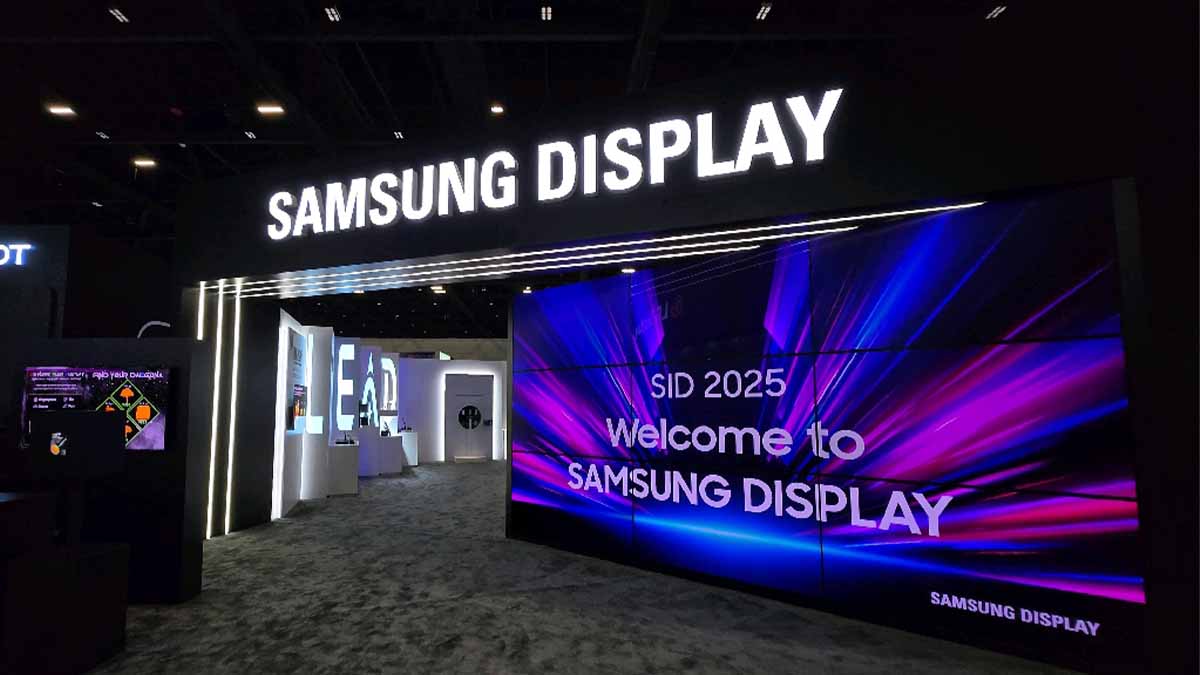
Samsung’s Mobile Division sources OLED panels from Samsung Display. The Korean display maker is also the largest supplier of Apple’s flagship iPhone models. The iPhone Duo also uses OLED panels manufactured by Samsung Display.
Galaxy S27 series is coming next year, and it will also face increased OLED costs. The Pro and Ultra models are reportedly getting Privacy Display, while the base and Plus variants are slated for an enhanced OLED material set.
You may like:

SpaceX has partnered with Qualcomm Technologies to build Starlink Mobile’s nationwide 5G network in the United States. The partnership aims to provide better mobile coverage, faster internet, and more reliable connections by combining satellite technology with traditional mobile networks.
Qualcomm will provide its Dragonwing Cellular Infrastructure platforms to support Starlink Mobile’s 5G base stations. These include the Dragonwing QRU100 and QDU100 platforms, which will help improve network speed, capacity, and energy efficiency.
The network will use a technology called Massive MIMO, which uses multiple antennas to send and receive data at the same time. Starlink Mobile will use a 64T64R system with 64 transmit and 64 receive paths. This will help improve signal strength, cover more users and handle large amounts of data more efficiently.

Image via SpaceX
Qualcomm’s QRU100 platform will support radio operations, while the QDU100 platform will manage important data processing tasks. Together, these technologies will help SpaceX build a powerful 5G network while keeping power consumption low.
SpaceX plans to begin rolling out its nationwide 5G network in the United States in 2027. The company expects to install tens of thousands of base stations over several years. The partnership also looks beyond 5G, as both companies see it as a step towards future 6G technology and AI-powered networks.
By combining satellite and ground-based mobile networks, SpaceX aims to keep people connected in more places, including areas where traditional mobile networks often struggle.
The collaboration with Qualcomm could help Starlink Mobile make mobile connectivity more reliable and widely available in the coming years.
-
 Updates3 days ago
Samsung’s November 2026 security patch details revealed: 200+ Android and One UI fixes
-

 Updates2 days ago
Samsung ends software support for two Galaxy phones
-
 News3 days ago
Galaxy Z Fold 8 sees reverse trend in sales, rising over 20% after iPhone Duo launch
-

 Apps3 days ago
Google ditches its old Messages app icon for this fresh new design