
Samsung
Samsung’s The Serif offers glimpse into several spots around the world: [Infographic]


Last month, Samsung released the 65-inch lifestyle TV ‘The Serif‘ in the South Korean market. Samsung’s newly introduced 65- inch model reflects the consumer trend who prefers large screens over the existing 43, 50, and 55-inch screens.
The Serif is a product developed by world-renowned furniture manufacturers Ronan & Erwan Bouroullec and is a product inspired by the book ‘I’ in the serif font.
The Serif, which is considered as a product that blurs the boundaries between furniture and TV, agrees anywhere, and if you do not watch TV, you can enhance the interior effect by using ‘Magical Screen’ content designed by the Bouroullec brothers.
Join Sammy Fans on Telegram
At a time when traveling abroad is not as easy as it would have been, Samsung is here to give readers a glimpse of many places in the world – from their screens.
Considering Serif’s leading design, which was inspired by the character ‘I’ and even appeared on the TV frame, the combination below features Serif in nine different countries with different interior designs as a living TV contract to match any beauty.

At a time when traveling abroad is not as easy as it normally would be, Samsung Global Newsroom is here to offer readers a glimpse into several spots around the world – right from their screens.
Check out the infographic below to take a closer look and get some insight from Samsung TV’s local experts on how Serif is able to adapt harmoniously to any interior and elevate its daily user spaces.
Samsung South Korea
Samsung Korea Sales & Marketing Jae-Sung Lee, – When it comes to TVs, bigger is always better for consumers. Following this trend, Samsung has released a 65-inch version of The Serif so that users can now enjoy a bigger and more immersive lifestyle TV experience.
Samsung Electronics UK
Samsung Newsroom James Parker, – Thanks to the seamless connection between the panel and the frame, The Serif looks great in any space. You can personalize The Serif to your lifestyle and place it anywhere in your house, from the living room to the bedroom.
Samsung Electronics Russia
Samsung Konstantin Mosunov – Russian interior designers have been recommending The Serif and it has been gaining popularity among millennials and Gen Z-ers. The TV has received acclaim for its sleek and minimal design that breaks the mold of traditional TV design.




Jensen Huang’s departure from NVIDIA does not automatically put Samsung Electronics’ chip deals at risk. It introduces a new question for the semiconductor industry: will NVIDIA maintain the same supplier relationships and long-term technology ambitions without the executive who personally helped establish them?
Samsung Elec’s relationship with NVIDIA now extends beyond memory chips to foundry manufacturing, AI infrastructure and next-generation semiconductor development. Existing commitments provide some protection, but future opportunities could depend on how the new leadership approaches suppliers.
What is locked in: Rubin HBM4 and Groq 3
The immediate risk to Samsung appears limited (via KoreaJoongAngDaily) because several important commitments are already moving beyond the negotiation stage.
Samsung has started (via Yonhap) commercial shipments of HBM4 designed for NVIDIA’s Vera Rubin platform. The company also confirmed that its foundry division manufactures NVIDIA’s Groq 3 LPU, expanding a relationship that previously centered largely on memory components.
Nvidia and Samsung have also discussed longer-term cooperation involving HBM5, HBM4E and next-generation foundry technologies. Samsung’s semiconductor chief Jun Young-hyun confirmed those discussions following a meeting with Huang in June 2026.

File Photo | Source – Yonhap
Samsung’s broader memory business provides another layer of protection.
The Korean tech giant has signed long-term memory supply agreements with 10 major customers and is negotiating with another 10. The company has also said its targeted 2027 HBM supply volume is sold out. It has not identified NVIDIA as one of those customers.
NVIDIA’s board has also stated that customer commitments, operations and its product roadmap are expected to continue without interruption. That is an important signal against assuming an immediate cancellation of existing chip orders.
The projects at risk: AI factories and HBM5
The biggest question concerns projects that still require substantial investment.
Samsung’s AI Megafactory initiative, involving more than 50,000 NVIDIA GPUs, is one example. Future HBM5 development, additional Groq manufacturing, and physical AI initiatives also depend on continued collaboration.

Via – SemiconductorX/X
The Korea Herald reported that projects personally championed by Huang could face a fresh evaluation under new leadership. NVIDIA’s next CEO might maintain the same investment strategy, but a more financially conservative approach could change the pace of expansion.
For now, CFO Colette Kress is serving as interim CEO while NVIDIA considers internal and external candidates for the permanent position. Her first major opportunity to explain the company’s direction comes with its November 17 earnings announcement.

Image: GettyImages
Samsung could gain negotiating power against SK Hynix
Semiconductor industry analysts believe Huang’s departure could weaken preferential relationships established with suppliers, particularly SK Hynix. SemiAnalysis has argued that Huang personally helped secure memory capacity in South Korea and manufacturing capacity in Taiwan.
If NVIDIA adopts a more standardized procurement strategy, Samsung could receive greater opportunities to compete for HBM orders.
This possibility matters because Samsung has been working to strengthen its HBM position against SK hynix. However, there is no evidence yet that NVIDIA has changed its supplier allocation or pricing strategy.

Samsung does not necessarily lose its NVIDIA business without Jensen Huang. But the relationship could become more commercially driven, making future supply agreements, technology partnerships and AI investments less predictable.
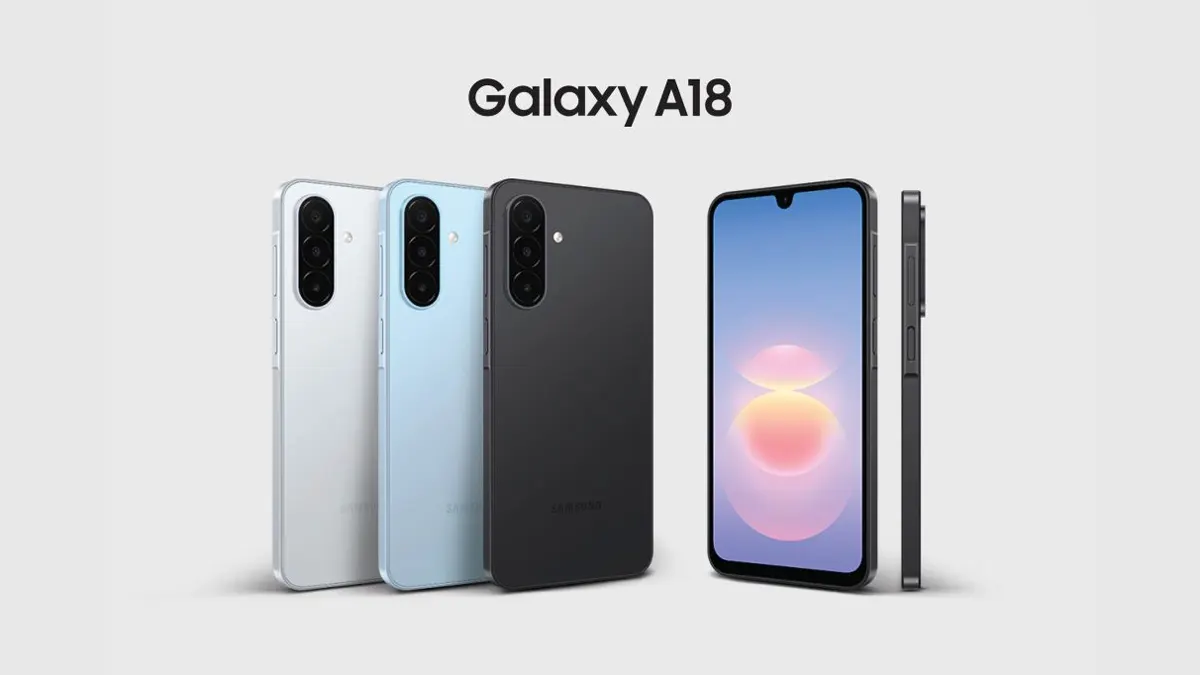
Samsung Electronics has launched its new Galaxy A18 smartphone in Singapore. The latest addition to the Galaxy A Series is designed for users who want good performance, useful features, and a quality camera at an affordable price.
The Galaxy A18 comes with a 6.7-inch FHD+ Super AMOLED display and a 90Hz refresh rate for bright visuals and smooth scrolling. It is powered by the MediaTek Helio G99+ processor and offers 4GB RAM and 128GB storage for everyday use, gaming and multitasking.
For photography, the smartphone features three rear cameras, including a 50MP main camera, a 5MP ultra-wide camera and a 2MP macro camera. It also has a 13MP front camera for selfies and video calls.
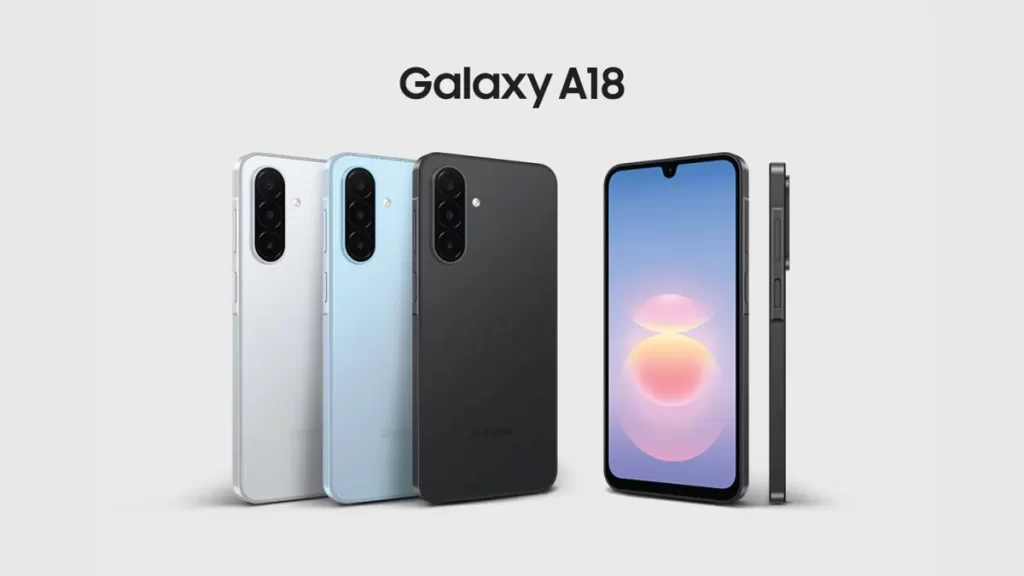
The Galaxy A18 includes useful AI features to make daily tasks easier. Circle to Search allows users to find information by simply circling or tapping something on their screen. The new Find the Look feature helps users discover outfits and identify nearby music. Users can also access AI assistants such as Google Gemini and Perplexity.
For better protection, the phone comes with an IP64 rating against dust and water splashes, along with Corning Gorilla Glass 3. Samsung Knox Vault also helps protect personal information. The company promises up to six generations of OS upgrades and six years of security updates.
Available in Light Blue, Black and Silver, the Galaxy A18 is priced at S$328 in Singapore. Sales begin on 13 November 2026. Customers can enjoy an instant S$30 discount and a free 25W power adapter at selected stores. The offers are valid until 8 December 2026.

Samsung has announced the launch of its new AI-powered smart glasses, bringing artificial intelligence and stylish designs together. Developed in partnership with Google, the glasses will come with Gemini AI to help users with everyday tasks without using their hands.
The new smart glasses will be available from December 10, 2026, in the United States and South Korea. Pre-orders have started from November 12 in the US. The collection includes 30 different designs from popular eyewear brands Gentle Monster and Warby Parker.
Weighing around 41 grams, the glasses are designed to be lightweight and comfortable for daily use. With Gemini AI, users can ask questions about things they see, identify famous places, translate restaurant menus and get directions through Google Maps.
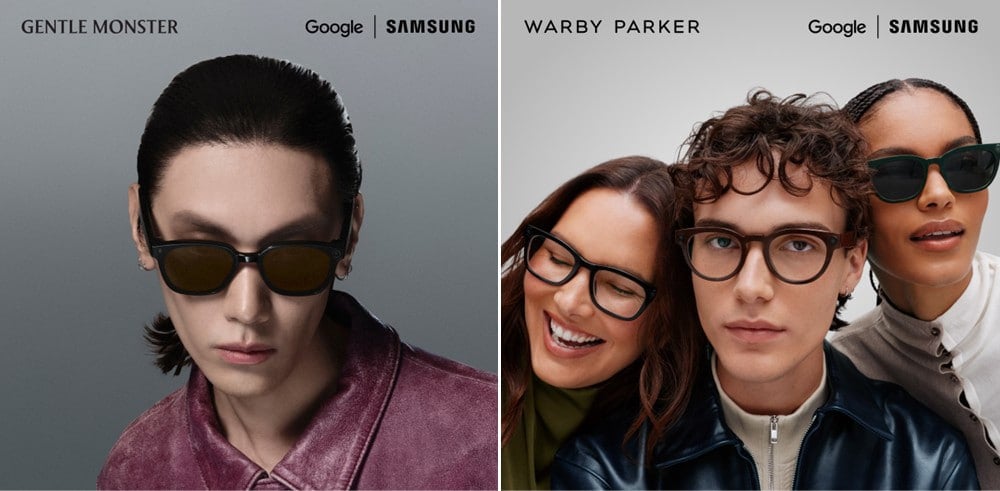
Image via Samsung
The glasses can also help users at work. For example, they can take a picture of a meeting whiteboard and ask Gemini to summarize the important points. Users can also make calls, listen to notifications and reply to messages using voice commands.
The device features a 12MP camera, two open-ear speakers and four microphones. It is powered by Qualcomm’s Snapdragon AR1 Gen 1 processor and offers up to nine hours of battery life on a single charge. With the charging case, battery life can extend up to 72 hours.
Samsung has also included privacy features, such as an LED light that indicates when the camera is recording. In the US, prices start at $395 for Warby Parker models and $449 for Gentle Monster models.

Samsung’s upcoming Exynos 2700 (codename Ulysses) could become much more important than another processor powering the Galaxy S27. The chipset is expected to serve as the first major flagship test of Samsung Foundry’s second-generation 2nm manufacturing process, known as SF2P, at a time when the company is trying to rebuild confidence among external semiconductor customers.
Samsung reportedly began full-scale front-end production of the Exynos 2700 in October 2026. The development is significant because the company needs more than a working flagship processor to convince major chip designers to consider its manufacturing technology. It must demonstrate consistent yields, competitive performance per watt and reliable mass production.
The commercial opportunity is substantial. Kiwoom Securities estimates Samsung Electronics’ non-memory semiconductor businesses could generate 1.8 trillion won in operating profit in 2027, reversing an estimated 3.6 trillion won loss in 2026. That forecast includes Samsung Foundry and System LSI, rather than the foundry business alone.
Inside SF2P: Samsung’s second-gen 2nm chip tech
SF2P represents the next stage of Samsung Foundry’s Gate-All-Around (GAA) manufacturing development. Compared with its first-generation SF2 process, the second-generation technology reportedly targets 12% higher performance, 25% lower power consumption and an 8% reduction in chip area.
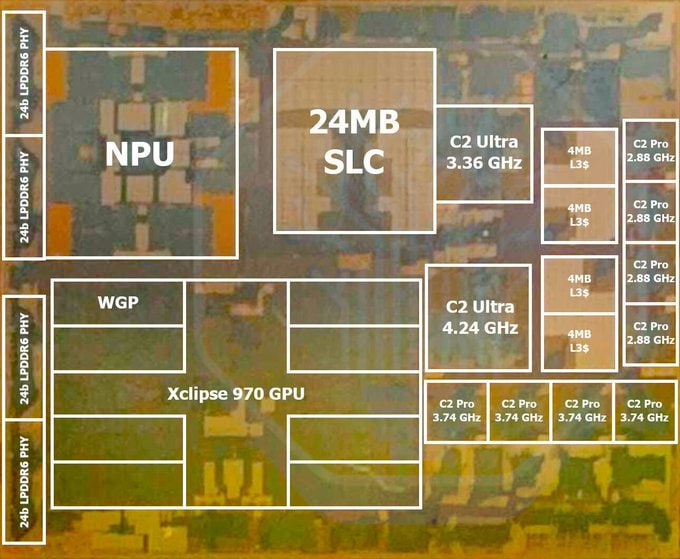
Image via
These are important improvements, particularly for high-performance computing processors and mobile devices, where performance and energy consumption increasingly determine commercial competitiveness.
There is another important distinction regarding production yields. ChosunBiz reported in September that Samsung’s first-generation SF2 yield had approached 60%. That figure should not be mistaken for the Exynos 2700’s SF2P yield, which remains undisclosed.
Samsung’s October 29 earnings announcement provides a more concrete indication of its manufacturing plans. The company said its Foundry business would begin mass production of new mobile products using its second-generation 2nm process in the fourth quarter of 2026.
Why supply-chain reports remain divided
Samsung’s history with flagship Exynos processors explains why the Exynos 2700’s production progress deserves attention.
The Exynos 2300 never reached the Galaxy S23 lineup, which instead used Qualcomm processors globally. The more clearly documented setback came with the Exynos 2500. Reports in 2024 and early 2025 described extremely low 3nm yields that prevented Samsung from supplying enough processors for the Galaxy S25 series. Samsung eventually introduced the chipset in the Galaxy Z Flip7 in July 2025.
The Elec’s October report indicated that Samsung had planned Exynos 2700 production for the S27, S27+ and S27 Pro. However, subsequent database reporting has pointed toward Snapdragon processors for the Pro and Ultra models in certain markets.
Winning back external foundry customers
The Exynos 2700 could provide Samsung Foundry with something valuable: a high-volume internal customer that helps validate its 2nm manufacturing technology.
For external fabless companies, choosing a foundry involves manufacturing yields, defect rates, power consumption, wafer costs, production capacity, packaging capabilities and delivery reliability.
A successful Exynos 2700 production ramp would give Samsung another opportunity to demonstrate that its advanced process technology can support demanding commercial products.
Kiwoom Securities’ 1.8 trillion won operating-profit projection (via FNNews) reflects the potential recovery of Samsung Foundry. The brokerage expects 2027 revenue of 36.4 trillion won for this business group, compared with 30.1 trillion won in 2026. These are analyst forecasts, not company guidance.
On November 3, ChosunBiz reported that Taiwan-based Faraday had secured a design project for a US cloud customer’s AI chip, with Samsung expected to handle wafer manufacturing using its 2nm GAA technology.
Separately, Samsung confirmed continued 2nm project wins involving major cloud service providers and AI/HPC customers during its Q3 earnings disclosures.
How packaging compromises could impact real-world efficiency
Manufacturing technology is only one part of the Exynos 2700’s efficiency equation. Packaging could also influence how well the processor performs inside a Galaxy smartphone.
Supply-chain reports have raised questions about whether Samsung will retain Fan-Out Wafer-Level Packaging (FOWLP) or move toward a simpler side-by-side arrangement involving the processor, memory and Heat Path Block (HPB).

That said, the Exynos 2700 represents a manufacturing credibility test for Samsung. Its success could strengthen the case for SF2P among external chip designers, while disappointing yields or inconsistent power efficiency could undermine that opportunity.
Big Tech has reason to watch the Galaxy S27 chip rollout closely because Samsung needs to prove that its 2nm technology works reliably beyond its own Galaxy ecosystem.
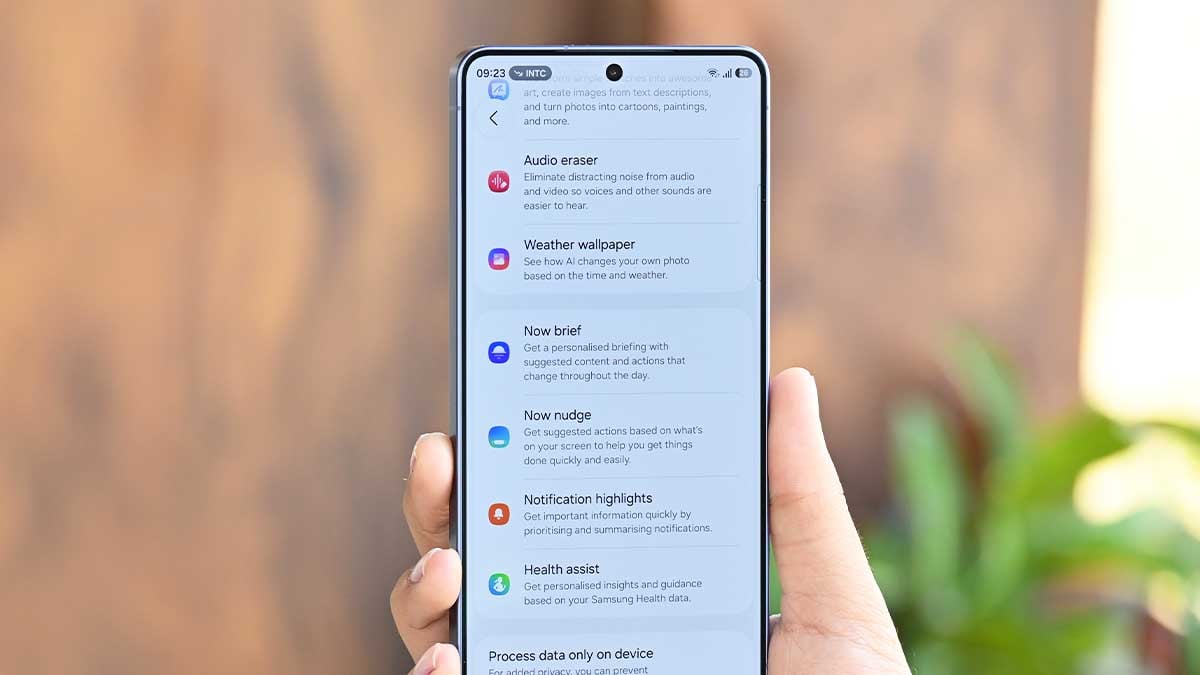
Samsung is testing a paid Galaxy AI Premium plan, and leaked code prices it at $5 a month or $48 a year. Reports say today’s core tools stay free but come with usage caps. Samsung has not announced prices, tiers, or a launch date, so every figure below is a leak, not a confirmed offer.
The end of free Galaxy AI
When Galaxy AI debuted with the Galaxy S24 series in January 2024, Samsung’s fine print said the features would be free until the end of 2025. Many buyers read that as a countdown to a paywall. Samsung later softened the wording: its updated footnote says basic Galaxy AI features provided by Samsung are free, while future enhanced features or new services may be paid.
On November 8, 2026, SammyGuru found strings in a Galaxy AI Premium app that point to an early-access program tied to One UI 9.5. The strings list $4.99 monthly and $47.99 annually.
A version gate in the app suggests the Galaxy S27 series gets it first, and that phone is expected in the first quarter of 2027. Samsung’s statement only guarantees free access to core Galaxy AI features, which leaves open what counts as core.

Core vs Max: Where the paywall sits
The free Standard tier keeps the tools most owners already use: Browsing Assist, Now Brief, Creative Studio, Smart Capture, Samsung Keyboard, Photo Assist and Personal Agent. They stay free but are capped, with reports describing daily limits on tasks such as translation, summaries and image generation.
The paid tier adds three things (via SamMobile), plus roughly four times the Standard usage allowance:
- Gen Video: the app describes it as generating AI videos from your photos.
- Bixby Action: the app’s one-line pitch is automating tasks across your apps.
- Daily Briefing: it has no description in the app, but separate from Now Brief
The two leaks name the tiers differently, which suggests Samsung is still deciding how to charge:
| Tier | Reported price | Usage | What you get |
|---|---|---|---|
| Standard | Free | Capped daily | The seven core tools above |
| Max | $4.99/month or $47.99/year | 4x Standard | Standard tools plus Gen Video, Bixby Action, Daily Briefing |
| Starter / Plus / Pro | Not reported | 10,000 / 20,000 / 50,000 credits | Daily Briefing in Plus, Bixby Action in the top tier |
The credit top-up system
When a free user hits a daily cap, Samsung’s flow reportedly offers two exits: buy a credit pack or move up to a paid plan. Packs are sold separately from the subscription, so you do not need to subscribe to buy one.
Analysis: Is $5/month or $60/year justifiable?
Only for heavy users, and not before pricing is confirmed. Billed monthly, the plan costs $59.88 a year. The annual option at $47.99 works out to about $4 a month, a saving of roughly 20%.
Alternative from Google and Microsoft
Google AI Plus starts at $4.99 in the US, while Google AI Pro, the successor to the Gemini Advanced brand, costs $19.99.
Microsoft no longer sells Copilot Pro on its own. Copilot now sits inside Microsoft 365, at $9.99 a month for Personal and $19.99 for Premium.
The difference: Plans from Google and Microsoft buy a general assistant and office tools. Samsung’s plan buys phone features: video from photos, automation across apps, and higher caps on tools in the keyboard and camera.
Reader poll and community discussion
Will you pay $4.99 a month for Galaxy AI Premium when it launches with the Galaxy S27 series? Reply in the comments with the number that fits you best:
- Yes, on monthly billing
- Yes, but only on the $47.99 annual plan
- No subscription, but I would buy credit packs
- No, the free tier is enough
- Undecided until Samsung confirms pricing and perks
Will you pay $4.99/month for Galaxy AI Premium when it launches with the Galaxy S27 series? pic.twitter.com/9HB4gAgYoA
— Sammy Fans (@thesammyfans) November 11, 2026
-
 One UI9 hours ago
One UI 9.0 official update now rolling out to these Samsung phones
-

 One UI2 days ago
Fresh One UI 9.5 leaks reveal AI Rambler, Telegram and WhatsApp call recording, new widgets and UI tweaks
-
 AI2 days ago
Gmail gets new Gemini AI tools for writing and email summaries
-
 Updates1 day ago
Flagship Galaxy S26 lineup now getting November 2026 update globally