
Wearables
Samsung to roll out software-based Hearing features for Galaxy Buds in early 2027

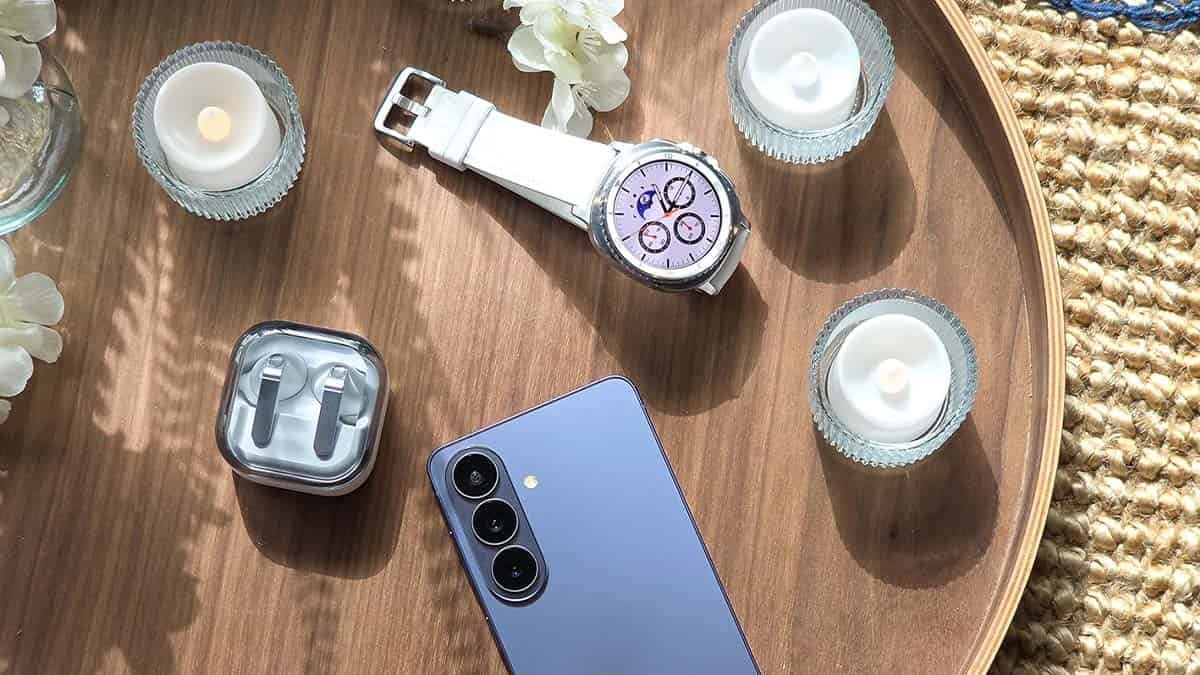
Samsung has finally obtained approval for two Hearing features for its Galaxy Buds lineup. The company announced today that it received medical device approval from the Ministry of Food and Drug Safety (MFDS) for its “Hearing Test” and “Hearing Aid” features, targeting the premium Galaxy Buds lineup.
With approval from South Korea’s Ministry of Food and Drug Safety (MFDS), Samsung’s Galaxy Buds 4 Pro and Galaxy Buds 3 Pro users can use their existing Galaxy Buds for “Hearing Test” and “Hearing Aid” purposes.
Samsung also confirmed that its “Hearing Test” and “Hearing Aid” features will be provided to the Galaxy Buds 4 Pro and Galaxy Buds 3 Pro users early next year via a software update.
The Hearing Test feature will be accessible through the Galaxy Buds menu in smartphone settings. It uses pure-tone air conduction audiometry, a standard hearing assessment method that plays tones at different frequencies to determine the quietest sounds a person can detect. Each ear is tested separately, with the results converted into an audiogram showing the user’s hearing profile.
Samsung will classify results into seven levels, ranging from normal hearing to profound hearing loss. Users will also receive guidance on potential follow-up actions based on their results.
The second feature, Hearing Aid, builds on this assessment to personalize audio amplification. Rather than applying uniform volume increases, the software adjusts sound according to the user’s audiogram, helping amplify frequencies that are difficult to hear.
Samsung is using the NAL-NL2 prescription formula developed by Australia’s National Acoustic Laboratories. The globally recognized fitting standard calculates frequency-specific amplification based on individual hearing characteristics.
The hearing-related information will also connect with Samsung Health, where users can review their test results and noise exposure levels.
Back in August, Samsung secured US Food and Drug Administration (FDA) clearance for its Galaxy Buds Hearing Aid feature. The latest MFDS approval marks another regulatory step in bringing these capabilities to consumers.
More on Samsung wearables:






On November 3, Samsung announced that the updated Sleep Apnea risk detection feature is now available on the Galaxy Watch and Galaxy Ring. Last month, the company announced MFDS clearance for the new version and confirmed availability in November.
Galaxy Watch users in the US have had this feature for a while, but this marks the first time Sleep Apnea is landing on Galaxy Ring. That makes Galaxy Ring the first of its kind to be equipped with Sleep Apnea risk detection.
Samsung’s new Sleep Apnea feature comes with smart upgrades. Users with a compatible smartwatch or Galaxy Ring can access and utilize it through the Samsung Health Monitor app.
The enhanced algorithm analyzes a user’s vitals during sleep in greater depth and now provides insight into the level of breathing disruptions detected to deliver more comprehensive, meaningful information.

With the feature’s low data requirement, users can gain meaningful insight into their sleep health from as little as two nights of monitoring within a 10-day period. Samsung lets users monitor their sleep health in the way that best fits their lifestyle.
Sleep Apnea was first approved by U.S. FDA De Novo authorization in February 2024. Later, the company got its updated Sleep Apnea validated by Korea’s MFDS last October.
“Samsung has long worked to make sleep health a simple and seamless part of everyday life,” said Jongmin Choi, Head of Health R&D Group, Mobile eXperience (MX) Business, Samsung Electronics. “This approval from Korea’s MFDS, along with our introduction of the world’s first support for a smart ring, reflects our commitment to accessible innovation. We are giving people the tools to help spot possible early signs of sleep apnea and take charge of their wellbeing.”
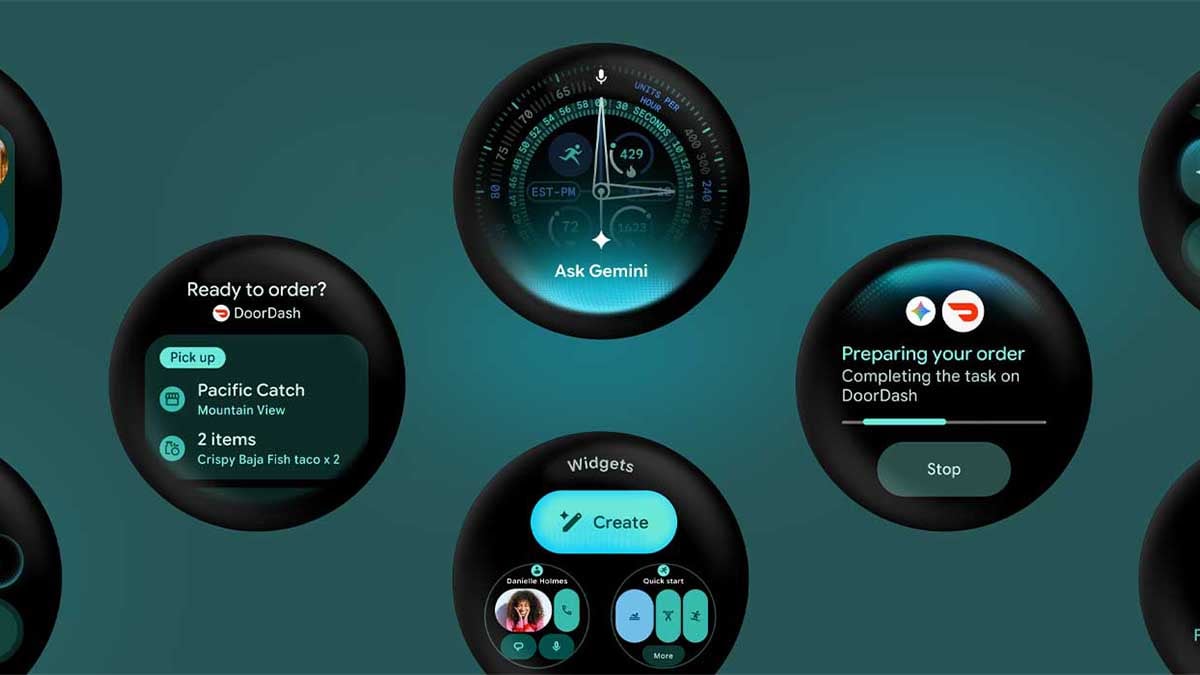
Google has quietly revealed Wear OS 7.1 through its latest developer emulator, offering an early look at the next iteration of its smartwatch platform.
The software is based on Android 17 and introduces changes to the development environment, including an early implementation of a system-level status bar that could eventually change how information appears inside smartwatch apps.
The discovery (via 9to5Google) comes from Google’s October 26 release of the Wear OS Canary emulator through Android Studio. Identified as Wear OS 7.1 (API level 37.2-beta1), the build allows developers to test the upcoming platform.
To prepare for an upcoming platform release of Wear OS, this canary emulator renders a persistent system status bar over Wear OS app windows at the top position of the circular display. The system status bar displays the current time and system status indicators. These indicators use standardized clock typography, placement, and backplate across the platform and different apps, including your app.
The most notable change is a persistent system status bar positioned at the top. It is designed to show the current time and system status indicators using consistent typography, positioning and background treatment across different applications.
The system status bar is included exclusively in this canary emulator to support early testing and feedback. It won’t be included in the upcoming Wear OS 7.1 stable emulator.
The implementation also introduces some interesting interface behaviour. The clock reappears after approximately two seconds of user inactivity, while scrolling can hide the status bar to preserve screen space.
Full-screen interfaces, including date and time pickers and dialogs, automatically suppress it to avoid interfering with app content. The current emulator still displays a placeholder star instead of the final system indicators.
Google says the status bar is exclusive to the Canary emulator and will not appear in the upcoming stable Wear OS 7.1 emulator. Its developer documentation instead identifies Wear OS 8 as the platform release that will bring the feature to physical devices.

Samsung Galaxy Buds On demand looks crazy as the company’s first open-ear wearable has sold out in just 3 days of its initial release.
Despite a premium 299,000 won price tag ($229 in the US), primary distribution channels, including Samsung.com, Coupang, and Naver, transitioned entirely to backorder allocations, with shipments pushed out to November 8.
The rapid sellout highlights shifting consumer sentiment within personal audio, where fatigue over intrusive in-ear silicone seals is expanding the addressable market for open-ear form factors.
Historically, open audio designs sacrificed acoustic depth and low-frequency response. Samsung tackled this structural limitation by implementing TwinBoost drivers and phase-cancellation tuning to limit acoustic leakage while maintaining bass output without sealing the ear canal.
The commercial response validates a broader repositioning of hearables toward all-day situational awareness and ambient computing.
While supply constraints early in a rollout can overstate underlying demand, the quick exhaustion of inventory suggests Samsung successfully tapped an underserved segment of commuters and fitness enthusiasts.
The broader commercial viability of the open-ear category will face its next benchmark when the device expands into North American retail storefronts on November 6.


Samsung is preparing to launch its first AI-powered smart glasses, Intelligent Eyewear, in South Korea and the United States in December. With this launch, Samsung will enter the growing smart glasses market, where Meta is already a major player.
According to information, Samsung has selected South Korea and the US for the first sale in mid-December 2026. However, the price of the glasses has not yet been decided. Countries including the UK, China, Japan, and other European markets will not get the product in the first phase. Samsung may expand sales to more countries after checking customer interest.
The new glasses are powered by Google’s Android XR platform and Gemini AI. They come with a camera and microphone that help users understand their surroundings. The glasses can translate different languages in real time and provide directions through voice commands. This means users can access information without taking out their smartphones.
The glasses can also capture documents and meeting details and save the information in the Notes app on Galaxy smartphones. Powered by Qualcomm’s Snapdragon AR1 Gen 1 processor, the glasses offer up to nine hours of battery life on a single charge.
Samsung has worked with eyewear brands Gentle Monster and Warby Parker to create four different designs. The launch will increase competition with Meta’s Ray-Ban smart glasses. Samsung hopes to attract customers with Google’s AI technology and easy connection with Galaxy devices. Stay tuned for more information.

Samsung could face an import ban on its Galaxy Ring in the United States because of a patent dispute with smart ring maker Oura. The US International Trade Commission (ITC) is expected to announce its initial decision on November 20, 2026.
Oura accused Samsung of using its patented technology without permission. It initially raised concerns over eight patents but later withdrew four claims. The dispute now focuses on the remaining four patents.
The main concern for Samsung is whether the ITC will find that it violated Oura’s patents. If the decision goes against Samsung, the commission could stop the company from importing Galaxy Rings into the U.S. This could affect its sales in the country.

However, the immediate impact may be limited because Galaxy Ring sales have reportedly been low. Samsung launched its first Galaxy Ring in 2024 but has not released a new model since then.
The ITC is expected to announce its final decision around four months after the initial findings. Samsung can appeal if the ruling goes against it. The company is also challenging Oura’s patents through separate proceedings at the US Patent Office.
Samsung has also filed its own patent complaints against Oura. The ITC is expected to announce its initial findings in Samsung’s case in January 2027.
Even if Samsung avoids an import ban, it could face another financial challenge. If Oura wins the dispute, Samsung may have to pay royalties for future Galaxy Ring sales. The case could become important for Samsung’s future in the smart ring market.
-
 Updates2 days ago
November began but Galaxy S25 phones getting 2nd update dated October 2026
-
 News2 days ago
Samsung begins Galaxy S27 Pro Privacy Display production ahead of early 2027 launch
-
 Updates1 day ago
Samsung’s November 2026 security patch details revealed: 200+ Android and One UI fixes
-

 Updates23 hours ago
Samsung ends software support for two Galaxy phones