
News
5 improvements to notice in Samsung One UI 9.0 beta 3


Earlier this week, Samsung released One UI 9.0 beta 3 for the Galaxy S26 series, and we’ve explored five improvements targeting the system and apps experience. If you are using the One UI beta, tag along and try to notice them by yourself.
Animations
The first thing is smoother animations; pulling down the notifications or quick panel shows a smooth, gradual unfolding of the content. Scrolling through the home screen and the content also feels slightly improved as well.
Camera fix
Users have previously reported this issue for the 30X camera zoom. The problem it used to create is that the focus automatically shifts away from the subject. It sometimes returns and sometimes remains blurred.
Another issue that was addressed in this update is the new camera preview screen, which previously cropped under certain conditions.
Performance
The one thing in this update is obvious, and that is the performance enhancements, specifically, the app openings are smoother and faster than the initial version. The app opening and closing sequence is also aligned with the smoothness.
Blackout bug fix
Last but not least, the random screen blackout bug is fixed with the One UI 9.0 beta 3. We’ve found this bug in the beta 2 while going back and forth through the background apps, but there’s no bug in this area any longer. That’s what I should give Samsung devs credit for resolving.
Battery
The beta 1 and 2 have been slightly offset from the good battery backup, but beta 3 has been performing well in terms of overall battery performance since installation. This experience might vary for testers, but we would like to read your own experience on this matter.
Conclusion
With these improvements, Samsung has really pushed the One UI 9.0 beta program to the next phase. However, there’s always room for more optimizations as we still have rollouts left before the stable release.




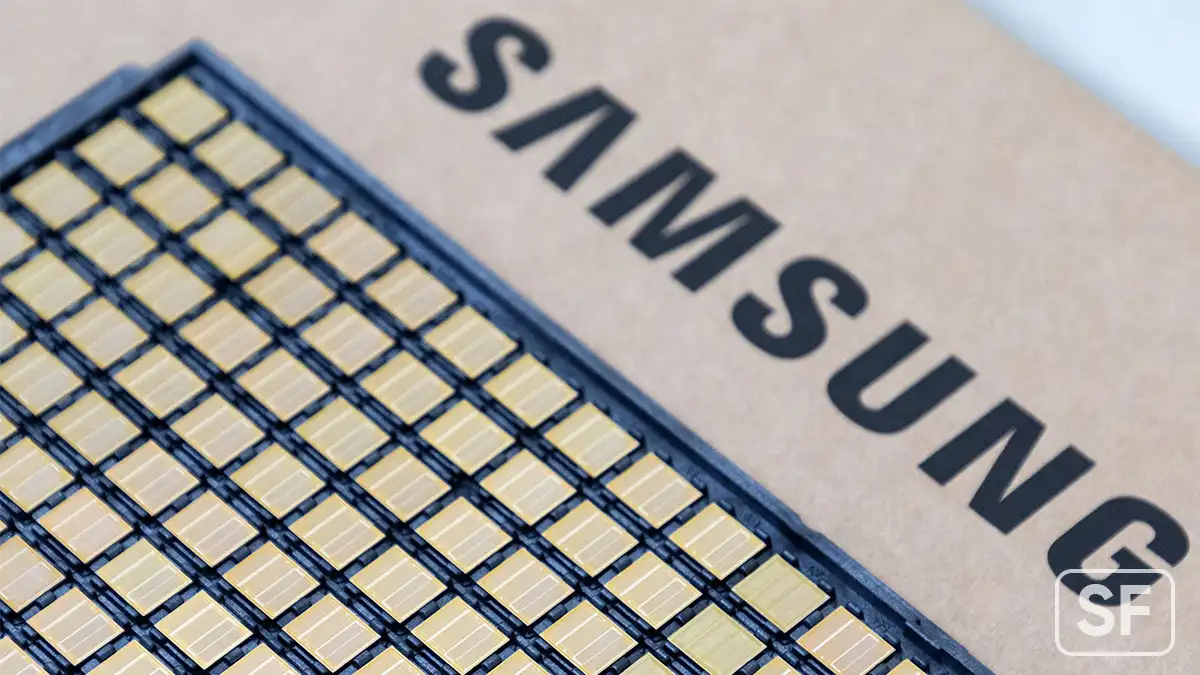
Samsung isn’t playing defense anymore; the company’s Device Solutions Division held a closed-door global strategy meeting. To meet its AI ambitions, Samsung prepares to fix the HBM pipeline, lock in the big customers, and stop losing ground.
According to SemiconductorsX (via MojoTrick), the meeting Samsung held on June 18 was focused on HBM3E, the fifth-generation stack Samsung is still trying to push into Nvidia’s supply chain in meaningful volume.
Samsung also mapped out the road ahead on HBM4 and HBM4E, where it claims two notable firsts: mass production of HBM4 began back in February, and samples of seventh-generation HBM4E started shipping to customers last month.
The core agenda was the HBM supply strategy.
Discussions focused on how to expand the supply of 5th-generation HBM3E targeting major Big Tech customers such as Nvidia. Strategies regarding the supply of next-generation lineups (HBM4 and HBM4E) were also devised.
Long-term agreements were also on the table. Leading global firms are tired of supply volatility, so they’re asking for multi-year contracts. Samsung is trying to use those deals to stabilize revenue while adjusting production capacity to match demand.
Additionally, Samsung Foundry, along with System LSI, apparently got some airtime too. Both divisions have been underperforming.
The company has the roadmap, the milestones, and the executive attention; however, it is not yet the kind of unshakeable customer trust that SK Hynix spent years quietly earning.

Netlist has filed complaints at the US International Trade Commission and the Eastern District of Texas, seeking an import ban on Samsung HBM and DDR5 RDIMM and MRDIMM DRAM AI memory product lines.
It’s demanding import bans (via SemiconductorsX) and sales prohibitions across the board, and it didn’t stop at Samsung. Notably, Google, NVIDIA, Broadcom, and Supermicro are also named alongside Samsung in the complaint filed by Netlist.
The patents at the center of this are U.S. Patent Nos. 12,646,537 and 12,650,937, both registered this year. The ‘537 covers vertically stacked memory dies with TSV structures, the core architecture inside every HBM chip Samsung ships.
The “937” covers a clock driver trick that repurposes an error signal line during initialization. Neither one, Netlist argues, is a JEDEC standard-essential patent, so Samsung can’t hide behind RAND licensing terms.
Samsung and Netlist signed a joint development deal back in 2015. Samsung walked in 2020. Two Texas juries have since handed Netlist $303 million and $118 million in willful infringement verdicts. Samsung kept shipping anyway.
Samsung Electronics previously entered into a licensing agreement with Netlist in 2015 but breached it in 2020. Despite twice receiving verdicts of willful patent infringement and damages awards (amounting to $303 million and $118 million, respectively) from federal juries in Texas, Samsung continues to import the infringing products into the United States.
C.K. Hong, CEO of Netlist, stated, “Netlist continues to lead innovative breakthroughs in the AI memory sector. This legal action expands our efforts to protect next-generation server DIMM and HBM technologies from unauthorized use.”
Samsung’s HBM3E is inside NVIDIA’s Blackwell GPUs. Those GPUs are inside data centers that half the AI industry depends on. A successful exclusion order wouldn’t just sting Samsung; it would have a very broad impact.

Samsung isn’t the kind of company you stiff on a contract and walk away from clean; Triller learned that lesson the hard way, and it’s still learning it.
According to TheBiz, Samsung is seeking nearly $3 million from Triller after the short-video platform allegedly failed to pay for a Galaxy app promotion deal.
The dispute began in December 2020, when Samsung and Triller signed an agreement where Samsung would promote Triller’s app on Galaxy smartphones, with Triller paying based on installations.
Payments were made initially, but between April and September 2021, Triller stopped paying, leaving $1.81 million in unpaid principal.
Samsung filed for ICC arbitration in July 2022. Triller argued that some installations were generated by bots and raised concerns about suspicious traffic, but the company never completed its defense. Its legal counsel withdrew.
Triller did not submit a response or request a hearing; the ICC ruled in Samsung’s favor. Samsung then moved to enforce the award in the US federal court, where the Central District of California confirmed the judgment in May 2024.
With interest, arbitration costs, and legal fees added, the amount reached nearly $3 million.
The case continued after Triller’s parent company, Triller Group, listed a roughly $3 million “Samsung Arbitration Award” liability in its 2025 SEC filing.
Samsung used that disclosure to seek to add Triller Group as a judgment debtor, but the court denied the request due to procedural issues, allowing Samsung to refile after proper notice.
Triller Group was delisted from Nasdaq in December 2024 and continues facing creditor pressure. Samsung is pursuing enforcement through asset tracing and legal measures, showing the company is not ready to abandon the unpaid debt.

Google officially released the Wear OS 7 update for Pixel Watch models. The new wearable platform introduces a battery life boost, Live Updates, Gemini Intelligence, and cross-device connectivity.
Samsung will bring the new wearable operating system to its Galaxy devices through the One UI 9 Watch update. A Beta Program was assumed to have already started, but users are still awaiting an announcement.
Meanwhile, Samsung is more widely rolling out its May 2026 security patches. In the latest expansion, the fresh security patches have started to arrive on 8 Samsung Galaxy Watches in the US.
The May 2026 update’s changelog clearly states that the OTA includes the most up-to-date Android security patches. However, the OTA has even more to offer, which Samsung hasn’t even mentioned in the changelog.
Samsung users reported a broken app launch bug on Galaxy Watches in the US. Every time they launch/open an application from the app drawer, it shows a dark black glimpse on the screen and then returns to the app drawer.
Galaxy Watch users found that the problem had been resolved after installing the May 2026 security update. It was initially dropped in South Korea, and a major expansion brought it to users in the United States.
Samsung may have also included system optimization inside. System cache and junk data will also be cleared during installation, which would provide an enhanced user experience.
Software version information:
- Galaxy Watch 4 – R865USQS2JZE1 (40mm) / R875USQS2JZE1 (44mm)
- Galaxy Watch 4 Classic – R885USQS2JZE1 (42mm) / R895USQS2JZE1 (46mm)
- Galaxy Watch 5 – R905USQS2DZE1 (40mm) / R915USQS2DZE1 (44mm)
- Galaxy Watch 5 Pro – R925USQS2DZE1 (45mm)
- Galaxy Watch 6 – R935USQS2CZE1 (40mm) / R945USQS2CZE1 (44mm)
- Galaxy Watch 6 Classic – R955USQS2CZE1 (43mm) / R965USQS2CZE1 (47mm)
- Galaxy Watch FE – R866USQS2BZE1
The updates are available on Verizon-bound Galaxy Watches in the US. You can get the latest software on your smartwatch using the Galaxy Wearable app.

Samsung is showcasing the Galaxy A37 and Galaxy A57 cameras in collaboration with South African creators. Samsung South Africa teamed up with one of Mzansi’s leading film production companies to drop a short film.
The Korean tech giant has been quietly building something in the Galaxy A series for years. The Galaxy A57 5G and Galaxy A37 5G are the latest proof that AI-powered photography isn’t just for flagship phones anymore.
The short film is less product advertisement and more of a cultural document.
Director Lindo Langa helmed the project, and the result is genuinely cinematic. The film opens frozen, moments suspended just before the shutter clicks, then accelerates into the full kinetic energy of South African youth culture.
It’s the kind of brief you don’t expect from a mid-range phone launch. Content creators Dee Koala, Sine Madondo, Coachella Randy, and Jaedin Rhodes appear as themselves, doing exactly what they do in real life.
Designed to make everyday experiences simpler, smarter, and more intuitive, the new Galaxy A57 5G and A37 5G reflect Samsung’s ongoing commitment to democratising artificial intelligence.
By expanding AI capabilities across more accessible devices, Samsung continues to empower users to do more with the technology in their hands, from capturing meaningful moments to enhancing everyday productivity.
Samsung is pushing AI camera capabilities down into devices that real people can afford. Not everyone is buying an S-series phone, and pretending otherwise is how you lose the next generation of customers.
-
 One UI2 days ago
Samsung is testing One UI 9.0 (Android 17) for these 21 Galaxy devices
-
 News3 days ago
Samsung preparing Galaxy devices for quantum security era with One UI 8.5
-
 Updates2 days ago
Samsung phones get 27 improvements with June 2026 Google Play system update
-
 Samsung1 day ago
3 Google updates quietly improving every Samsung phone