
Samsung
Samsung TV Plus is bringing more free K-Dramas and Korean movies to the US


Samsung TV Plus is bringing more Korean entertainment to viewers in the United States and South Korea. The free streaming service is adding Korean movies, short dramas, and reality shows, giving fans more content to enjoy without paying a subscription fee.
Starting October 28, viewers can watch “K-Wave Wednesdays” on the Movie Hub channel. A new Korean movie will be available every Wednesday until the end of the year. The lineup begins with Exhuma, a supernatural thriller perfect for Halloween.
Other movies include The Roundup, Along with the Gods: The Two Worlds, Assassination, 12.12: The Day, and A Taxi Driver. Two films, Salmokji: Whispering Water and The King’s Warden, will also be available exclusively through free streaming services.

From November 4, viewers can watch Iron Squad Season 3 on the All Action channel. This Korean reality competition features former elite special forces members taking part in challenging competitions.
Samsung TV Plus will add more than a dozen short-form dramas in December. These shows, from Lezhin Snack, will be available on-demand in the United States and on a dedicated channel in South Korea.
The new dramas cover romance, mystery, and comedy. Titles include A Cute Guy from Korea, My Baby Daddy Is My Best Friend, Touch Me If You Can, and The Secret Roommate.
With these new additions, Samsung TV Plus aims to bring more Korean entertainment to fans for free. The company also plans to announce more Korean movies and shows in the coming months.




Samsung Galaxy Watch and Galaxy Ring users will receive an upgraded AI-powered Sleep Apnea tracking feature. The company announced that it has secured approval for a Korean rollout and detailed the eligibility scope as well.
Detailed Sleep Apnea tracking
On October 28, Samsung announced that its 3-level sleep apnea tracking obtained approval from South Korea’s Ministry of Food and Drug Safety (MFDS). This follows the approval by the US Food and Drug Administration (FDA) last July.
Samsung is introducing an enhanced iteration of Sleep Apnea with AI. Galaxy users can analyze respiratory disturbance data by the hour during sleep, broken down into three detailed levels.
Sleep Apnea feature is designed to measure and analyze breathing data during sleep. It lets users check their breathing status while sleeping and detect signs of moderate and severe sleep apnea.
The enhanced Sleep Apnea with MFDS nod analyzes the frequency of hourly breathing disturbances during sleep using an AI algorithm, helping users understand not just simple signs, but the exact level of respiratory disturbance.
Depending on the frequency, users can view results divided into three levels: Mild, Occasional, and Frequent, enabling them to manage their sleep health status much more specifically and systematically than before.

The new sleep apnea feature is available through the Samsung Health Monitor app downloaded on a Galaxy device. If a user measures at least 5 hours of sleep twice within 10 days, it is possible to detect signs of sleep apnea early.
Wear OS 7.0 required for detailed AI sleep apnea tracking
In its press release, Samsung confirmed that Galaxy Watch 9, Galaxy Watch Ultra 2 and Galaxy Ring users will receive the new AI-powered Sleep Apnea tracking feature in November 2026.
Older models, such as the Galaxy Watch 7 and Galaxy Watch 8 series, will receive the feature later, ultimately after getting upgraded to the stable One UI 9 Watch based on Wear OS 7.
The existing version, which only detects the presence or absence of sleep apnea signs, will continue to be provided on the Galaxy Watch 4 and later models running Wear OS 5.0 or higher.
China’s major technology companies, Alibaba, Tencent and ByteDance, are reportedly seeking long-term memory supply deals with South Korean chipmakers Samsung Electronics and SK Hynix. Some companies want to secure memory supplies until 2035, much longer than the usual three-to-five-year contracts.
The main reason is the growing demand for memory chips used in AI servers and data centers. As AI services expand, companies need more memory chips to process data and run their systems smoothly.
According to industry sources, Chinese companies want to ensure a steady supply of memory for their future needs. Major US technology companies are also seeking long-term deals to secure enough memory for their AI operations.
The companies are interested in two types of memory: DDR and LPDDR. DDR helps servers process data quickly, while LPDDR uses less power and is commonly used in smartphones. LPDDR is also gaining attention for AI servers because it can help reduce electricity use.
The rapid growth of AI has increased demand for memory chips and raised concerns about possible shortages. As a result, companies are trying to secure supplies in advance, even if they have to pay higher prices. For Samsung and SK Hynix, these deals could provide steady demand and stronger business relationships.

Galaxy S27 series will mark the biggest launch of early 2027, and Samsung doesn’t randomly decide the launch and release date. The lineup is reported to bring an additional Pro-tagged model, directly rivaling Apple, which is projected to introduce the cheapest iPhone 18 model around the same time Samsung drops its biggest flagships early next year.
Samsung has not set a date. Five years of launch data point to a Wednesday Unpacked in January or February 2027, with stores following about two weeks later.
Samsung has not announced the Galaxy S27, so every date in circulation is a projection. But Samsung’s launch habits are unusually regular, and the last five Galaxy S cycles narrow the field more than any single leak.
This analysis uses Samsung’s dates for the S22 through S26 to test what the pattern allows, what could break it, and where the S27 is most likely to land.
| Series | Unpacked Announcement | Market Release | Launch-Release Gap |
|---|---|---|---|
| Galaxy S22 | Wed, Feb 9, 2022 | Fri, Feb 25, 2022 | 16 days |
| Galaxy S23 | Wed, Feb 1, 2023 | Fri, Feb 17, 2023 | 16 days |
| Galaxy S24 | Wed, Jan 17, 2024 | Wed, Jan 31, 2024 | 14 days |
| Galaxy S25 | Wed, Jan 22, 2025 | Fri, Feb 7, 2025 | 16 days |
| Galaxy S26 | Wed, Feb 25, 2026 | Wed, Mar 11, 2026 | 14 days |
The Wednesday rule is absolute
Every Galaxy S Unpacked of the past five years happened on a Wednesday. That is five events with no exceptions, whether the date fell in early February, mid-January, or the last week of February. Retail timing is nearly as orderly: phones reached market shelves 14 to 16 days after the reveal, on a Friday in 2022, 2023, and 2025 and on a Wednesday in 2024 and 2026.
For forecasting, this turns a vague two-month window into a short list. On the 2027 calendar, the Wednesdays that matter are January 13, 20, and 27, and February 3, 10, 17, and 24. January 6 is out because it is the opening day of CES in Las Vegas. Any rumored date that falls on another weekday deserves suspicion.
The January vs February tug-of-war
Samsung has split its choices: February in 2022, 2023 and 2026, January in 2024 and 2025. The earlier S24 launch was reportedly meant to lift first-quarter sales. The S26 slip to February 25 was reportedly tied to a late lineup rethink, after Samsung weighed replacing the base and Plus models with Pro and Edge versions before returning to its familiar trio.
Two outside forces now shape the S27 decision.
CES: Samsung has tended to keep clear of the show, and CES 2027 runs January 6 to 9. In 2024, Unpacked followed days after CES closed. That makes January 13 the earliest workable date and January 20 or 27 the more comfortable ones.
Apple: Supplier comments indicate that Apple is holding the standard iPhone 18 until early 2027. At its September Event, the iPhone maker has officially introduced the iPhone 18 Pro, iPhone 18 Pro Max and iPhone Duo foldable.

Apple has not confirmed the plan. If it holds, the vanilla Galaxy S27 meets its main rival in spring rather than September. A January launch gives Samsung several weeks of uncontested sales. A late February launch runs into Apple’s window.
The pre-order pipeline
Samsung’s sales funnel runs in the same order every year, which makes the date easy to track once the first signal appears.
- Reservations and invite. Reservations open about two weeks before the event.
- Pre-orders. In the US, pre-orders opened on Unpacked day in all five cycles.
- Pre-order window. It runs 14 to 16 days, with freebies including Google AI Pro and more.
- Retail. General availability lands on the Wednesday or Friday two weeks later.
If Unpacked lands on January 20, 2027, an official invite should arrive in the first days of January, around CES.
Projection for the Galaxy S27 launch
My estimate, not Samsung’s: Unpacked on Wednesday, January 20 or January 27, 2027, with pre-orders opening the same day and retail availability between February 3 and February 12.
Until a reservation page or invite appears, treat every date as provisional. Look for a Wednesday, and expect shelves two weeks later.
CAD renders: Android Headlines x Onleaks

Samsung revealed official hands-on and real-world usage scenarios for the Galaxy Buds On, highlighting how modern form-factor adjustments are shifting hearables away from passive isolation toward continuous spatial awareness.
The move reflects a broader hardware transition across personal audio. As consumers rely on earbuds for extended work shifts, outdoor exercise, and commuting, long-term intra-concha pressure has become a primary bottleneck.
Samsung addressed this by engineering an ergonomic clip-on chassis derived from volumetric data analysis across diverse ear geometries. The structure offloads weight to the outer cartilage while allowing user-adjustable band angles, securing the fit without occluding the ear canal.
During active outdoor use, this open-air architecture preserves environmental audibility, such as oncoming traffic or passing cyclists, while delivering low-frequency audio via updated TwinBoost drivers.

Gemini Live and Ask Bixby
System integration extends to contextual assistance; pairing the hardware with Galaxy AI enables native Gemini Live interactions via voice prompts, letting users query route distances and navigation points without handling their secondary display.

Productivity functions rely heavily on low-latency device bridging. Pressing the earbud touch surface initiates Quick Voice Memo, recording dictation directly into system storage where Bixby indexing allows users to query saved tasks verbally later.

For call handling, hands-free operation relies on head-gesture recognition, nodding or shaking to accept or decline incoming calls, reducing touch dependency when multitasking. Call fidelity in high-noise transit environments hinges on a multi-sensor array.
The Galaxy Buds On combines a three-microphone beamforming setup with a bone-conduction Voice Pickup Unit (VPU) sensor. This hybrid data feed is processed through a machine-learning noise suppression algorithm designed to isolate structural vocal vibrations from ambient acoustic noise.
By combining biometric ergonomics with multi-sensor call isolation and hands-free AI execution, Samsung’s deployment indicates that open-ear hearables are moving from niche athletic gear into primary daily computing endpoints.

Samsung Mobile is risking its global smartphone market crown by squeezing the production of its high-volume Galaxy A series in Q4 2026. The company is prioritizing Galaxy S and Z series phones for profitability amid a memory crunch, but reduction in the Galaxy A series will end up crashing on shipments volume front in near future.
Samsung is cutting output of its Galaxy A series, the budget and mid-range line that carries its global volume, in a bet that margins now matter more than rank. Korean industry reports say fourth-quarter component orders for the line are down about 20% from earlier plans, with a further cut of more than 10% planned for 2027. Samsung still leads the global market, but only just, and its mobile division is reported to be losing money.
Galaxy A accounts for ~70% of shipments
The Galaxy A family has historically made up more than 70% of Samsung’s phone shipments, so a cut here moves the global ranking in a way a flagship adjustment would not. The fourth-quarter trim equals roughly 10 million units a year, according to Electronic Times.
MoneyToday reports deeper cuts across the whole Galaxy range, while a later report put Samsung’s 2026 shipment target in the low 230 million range, down from 240 million. Samsung has confirmed none of these figures.
IDC put Samsung’s third-quarter shipments at 57.8 million units, a 22.6% share, in a market that fell a record 22%. Counterpoint had Samsung at 23% and Apple at 22%, the first third quarter in which Apple topped 20%.

Counterpoint expects Samsung to finish first, while GF Securities projects Apple at 257 million units against 241 million for Samsung. Apple’s iPhone Duo went on sale this month, and Samsung has no flagship launch left this year.
Memory now accounts for more than half the bill of materials on budget and mid-range phones, as AI data centers absorb supply. Samsung’s chip arm is heading for record profit, yet its mobile arm slipped into a loss in the second quarter and is reportedly set for another in the third.
Retail/carrier channels will turn to Chinese vendors
When Samsung ships fewer Galaxy A phones, retailers and carriers in India, Southeast Asia, Latin America and the Middle East and Africa will look to Xiaomi, Transsion, Oppo and Vivo to fill the gap with sharper pricing and carrier incentives. The near-term picture is more complicated, because the Chinese vendors are suffering too.
Analysts expect leading Chinese makers to see 2026 shipments fall between 15% and 34%. Transsion has reportedly cut its target by 30 million to 45 million units from about 115 million, and Xiaomi and Oppo have trimmed forecasts by more than 20%.
In India, Samsung took first place in the third quarter with 6.7 million units and a 19% share, while the combined Chinese share fell to about 68% from 75%, according to Omdia.
The challengers best placed to gain are Huawei, which is shielded by localized memory supply and weighing price cuts, and Honor, which grew 101% in Africa in the first quarter.
Omdia expects Africa’s sub-$200 segment to shrink 28% this year. Samsung’s Galaxy A holds the $150 to $299 band there, the tier most exposed to a rival push.
Profitability defense with Galaxy S and Z
Samsung is redirecting scarce memory toward the Galaxy S and Z lines, where higher prices absorb the cost. Omdia expects global shipments of phones above $400 to grow 5.7% in 2026, while those below $400 fall more than 22%.
Reason: Memory’s share of the bill of materials shrinks as prices rise, which gives premium vendors room to handle.
Counterpoint credits Samsung’s third-quarter result to a deliberate push toward higher average selling prices and a strong start for the Galaxy Z Fold 8. Samsung has raised prices across its range, including the Galaxy S26 series and various A series phones.

Premium volumes are smaller, and Apple is stronger there, so Samsung is trading a defensible position for a contested one. Lower price tiers are left exposed, and a planned second Galaxy A cut in 2027 suggests Samsung does not expect memory costs to ease soon. Xiaomi’s president has warned that pricing pressure will be heavier next year.
Samsung is choosing profit over a ranking
If the fourth-quarter cut costs it the top spot, the margin is likely to be a few points, and Samsung appears ready to accept that. The real test is whether Chinese rivals can supply the shelves Samsung vacates, and whether Samsung can win them back once memory prices turn. Its full third-quarter results, expected this week, should show how deep the mobile loss runs.
-

 Updates3 days ago
Samsung offers Galaxy S26 users a brand-new One UI 9 update, addressing freezing issue
-
 Android2 days ago
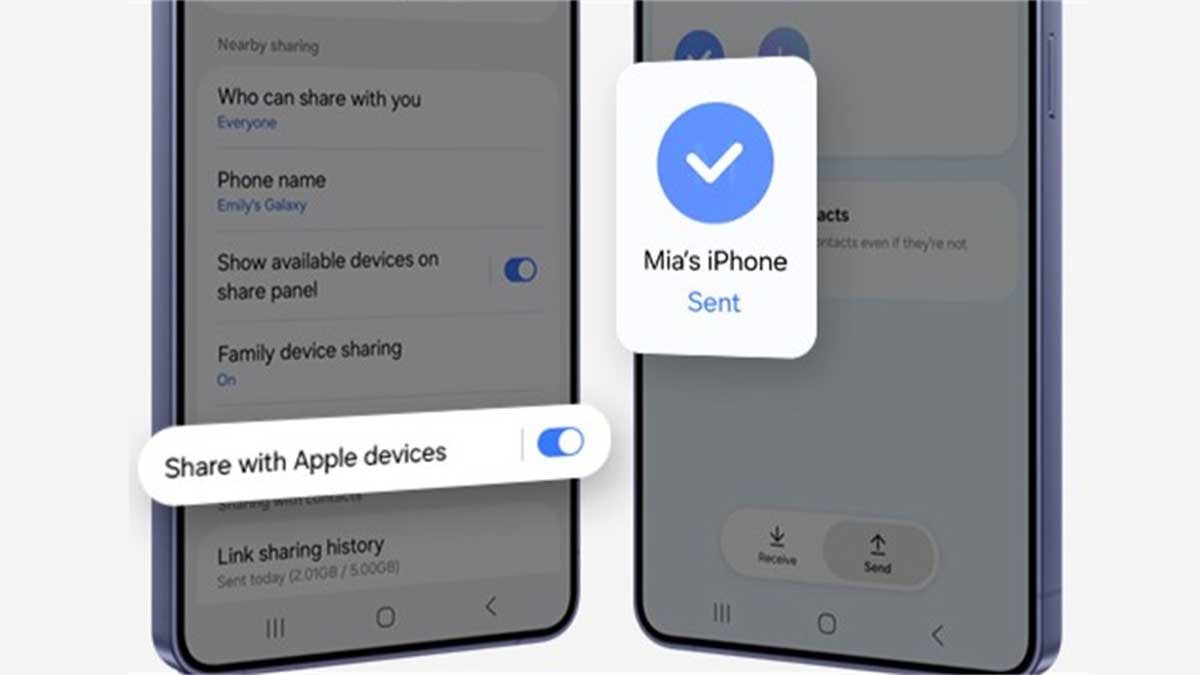
Samsung expands Quick Share AirDrop support to low-cost Galaxy A lineup
-
 Updates2 days ago
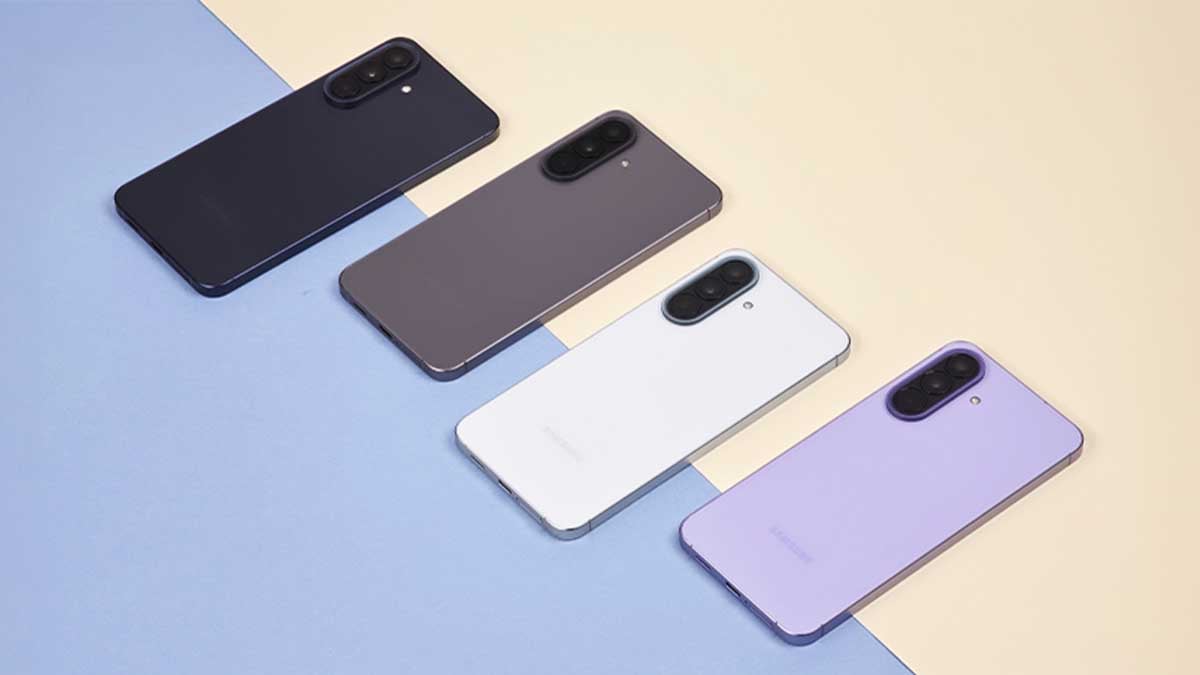
Samsung Galaxy A57 receives One UI 9 based October 2026 security update
-
 Updates2 days ago
Samsung releases second October 2026 update for Galaxy Z Fold 8 and Ultra