
News
Samsung has OLED display demand, but not the same profit cushion

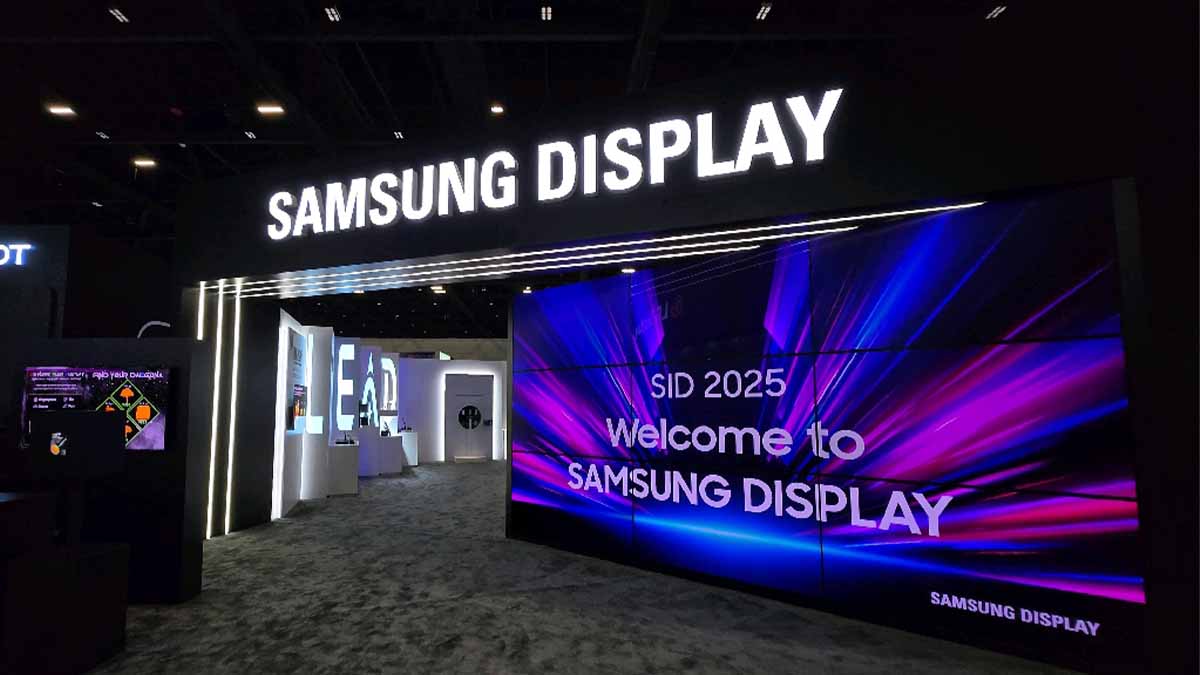
Samsung Display is entering a critical stretch for its OLED business profit. Panel shipments to major customers remain solid, but stronger demand is no longer translating into the same level of profitability.
Currency movements (Korean Won to US Dollar exchange rates), higher memory costs and heavy investment in new production capacity are squeezing margins just as the company expands beyond smartphones.
Samsung Display could post around 1.1 trillion won as Q3 2026 profit, up sharply from the previous quarter but roughly 10% lower than the year-ago period. Its operating margin is projected at about 13%, compared with 15% a year earlier.
Notably, Samsung Display is not facing a simple demand problem. Its mobile OLED business continues to benefit from flagship smartphone launches, while the company is simultaneously building a much larger position in tablets and laptops.
Samsung’s new 8.6-generation IT OLED line in Asan entered mass production this year. Apple is also expected to be an important customer as OLED expands into more Mac and iPad products.
If OLED adoption across laptops, tablets and other IT products accelerates, today’s investment costs could eventually support a broader and more diversified profit base. For now, strong OLED demand does not guarantee strong OLED margins.


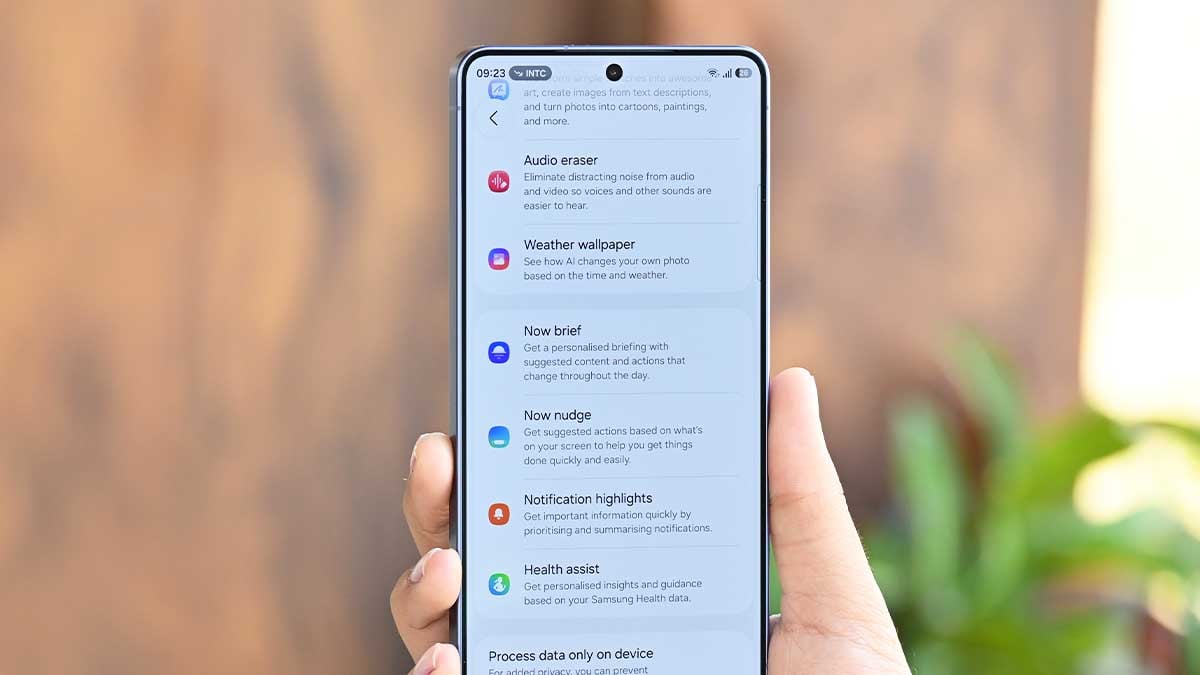
Samsung has reportedly developed a Galaxy Premium app to roll out subscription-based AI features on Galaxy devices. Meanwhile, new information suggests that Samsung may restrict the Galaxy Premium app in key European countries.
Information shared in Telegram channel CipherProject indicates Samsung has restricted the Galaxy Premium app in key European countries. Galaxy Premium can’t be accessed in Germany and the Netherlands without bypassing the ban.
After doing some checks through the Galaxy Premium app, we’ve discovered that there are regional blocks; for example, the Netherlands and Germany currently do not support Galaxy Premium and require a bypass to be opened.
Galaxy Premium is an app that helps Samsung users purchase AI Premium perks, such as Credits, while unlocking additional AI features. Leaked screenshots showed that the Galaxy AI Subscription may launch at $5/month.
European countries have a history of additional checks. This is to ensure consumers in the region benefit the most without any deficiency. That said, Samsung may take some time to bring Galaxy Premium to Germany and the Netherlands.

Galaxy Premium app is expected to debut on Samsung’s flagship S27 series. There’s still time of around three months, so the company still has a prominent window to get Galaxy AI accessible by the time the flagships land.
Samsung’s Mobile Business has reported a loss for the second quarter in a row. Memory crunch has crushed profits, and sales of flagship phones are no longer profitable. Mid-range and budget devices are out of the race due to expensive memory.
That said, Samsung may have been bringing Galaxy Premium to ramp up its profitability through services. A $5/month subscription would unlock several advanced features and useful tools across Samsung apps and services.


Samsung is reportedly developing a new feature, PlayOn Agent, for One UI 9.5. It is designed to make gaming easier by bringing important game updates and activities directly to the phone’s built-in apps.
With this feature, users may not need to open their favorite games every time they want to check something. PlayOn Agent will bring useful gaming information to different parts of the Samsung interface.
This means that players will be able to check messages from their gaming friends through the Samsung Messages app. They can also reply to those messages without launching the game. This will help users stay in touch with teammates even when they are not playing.
Samsung is also planning to connect this feature with its Contacts app. Gaming friends will appear in a separate PlayOn section, making them easier to find and contact.
-

- Image via Sammobile
-

- Image via Sammobile
Another useful addition will be its support for Now Brief. It can show important game information, such as upcoming events, daily missions, special rewards, and login bonuses. These updates may appear as cards and widgets on the phone’s home screen and lock screen.
PlayOn Agent will also be helpful for people who use more than one account in a game. It will let them manage different gaming profiles from a single place and select which character they want to use in each game.
With this addition, Samsung wants to make gaming activities easier to manage on Galaxy phones. However, the company has not officially announced PlayOn Agent or confirmed when users will get it.

TSMC, the world’s largest chipmaker, has confirmed a data leak involving personal information of its current and former employees. A hacker claims to have stolen more than 46,000 records and is offering them for sale for three bitcoins.
TSMC said on the 12th that some employee information was shared on an external website without permission. The company believes the data came from an outside cloud service provider. However, it said there is no evidence that its own computer systems were hacked.
According to Taiwan’s United Daily News and Central News Agency (CNA), the hacker posted the data for sale on online hacking forums, including DarkForums and BreachForums. The stolen data is said to be around 6.9 gigabytes. The hacker has also threatened to release all the information if no buyer is found within a week.
The leaked information reportedly includes employees’ names, dates of birth, job positions, ID numbers, home addresses, phone numbers, email addresses and bank details. It may also contain information about their emergency contacts. However, it is not clear whether all 46,000 records are genuine.

TSMC said it is informing affected employees and providing support. The company is also working with the cloud service provider, police and cybersecurity experts to investigate the incident.
This is not the first such incident involving TSMC. In 2023, a ransomware attack on its equipment supplier, Kinmax, led to a $70 million ransom demand from the LockBit hacking group.
The incident comes as Taiwan faces a growing number of cyberattacks. Its cybersecurity agency recently reported that attacks on more than 10 companies may have exposed around eight million personal records.
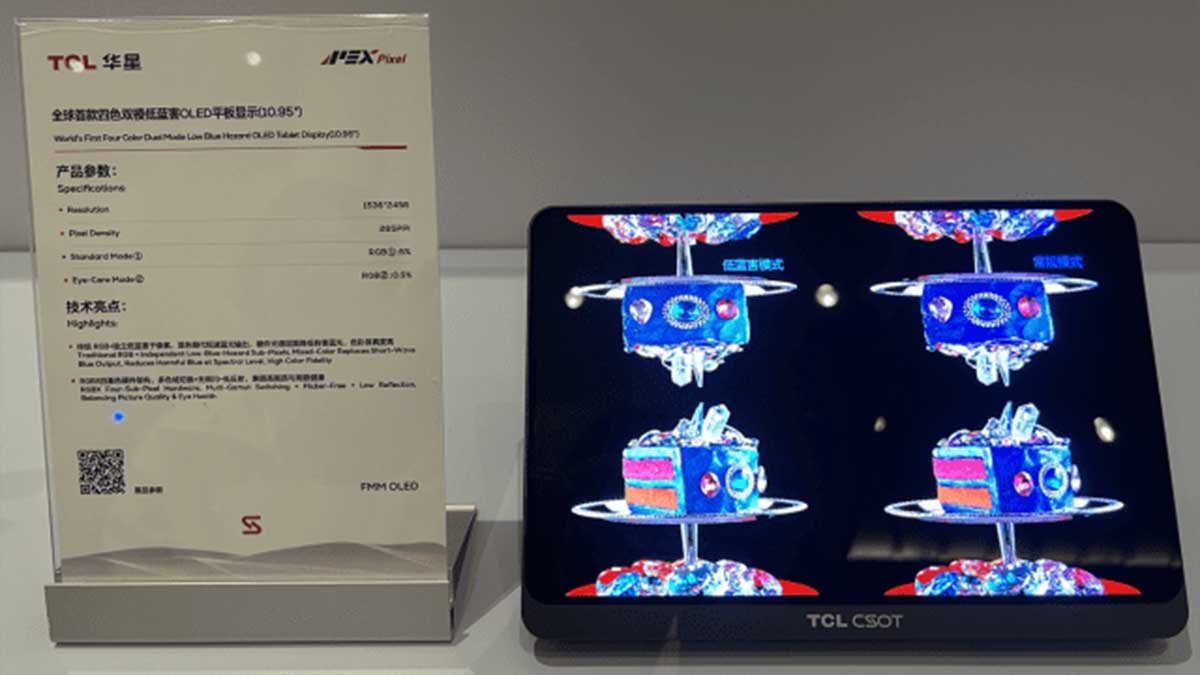
China’s display manufacturer TCL CSOT showcased three types of 4-subpixel dual-mode OLED display technologies at its Global Display Tech-Ecosystem Conference in Wuhan, China. CSOT’s new OLED solutions claim to reduce power consumption without compromising color.
The new CSOT OLED panels utilize technologies, such as Blue phosphorescent emitters, thanks to a 4-subpixel dual-mode solution. The Chinese panel maker touts power saving without affecting the color production of the displays.
Korea’s ZDNet reports that CSOT’s 4-subpixel dual-mode OLED adds one specific-colored subpixel to the existing small- and medium-sized RGB OLED structure that deposits organic materials using a fine metal mask (FMM).
The new display structure switches the combination of driven subpixels depending on the mode. Based on the color of the added subpixel, it is categorized into RGBB, RRGB, and so on.
How CSOT’s new OLED is different
Legacy OLED panels make Red and Green subpixels use phosphorescent emitters with an internal quantum efficiency of 100%, whereas blue OLED subpixels use fluorescent emitters with an internal quantum efficiency of 25%.
TCL CSOT worked on replacing the Blue fluorescent emitters with phosphorescent or thermally activated delayed fluorescence (TADF) emitters, but the RGBB OLED solutions have not yet been commercialized due to lifespan issues.
CSOT official stated, “Compared to the standard mode that uses the blue fluorescent emitter, the low-power mode applying the blue phosphorescent emitter can save 20% in power consumption.”
RGBB OLED
CSOT showcased another RGBB OLED, which has both blue (B) emitters as fluorescent. The product specifications are the same as those of the RGBB OLED applying the blue phosphorescent emitter.
A CSOT official explained, “We applied a fluorescent emitter with reduced blue light emission to one of the two blue subpixels.”
RRGB OLED
TCL’s CSOT also showcased an RRGB OLED with an added red (R) OLED subpixel. A deep red (RD) subpixel was added to the existing RGB structure. It can be used by switching between standard mode (RGB) and wide color gamut mode (RDGB).
BT.2020 color gamut coverage:
- 89% in standard mode
- 95% in wide color gamut mode
RGBN OLED
CSOT exhibited an RGBN product that adds a white (W) color filter to the RGB color filter of LCD products. The company expressed the W color filter as N (natural), with specs supporting 4K resolution, a 120Hz refresh rate and over 95% of the BT.2020 color gamut.
The CSOT official stated, “The RGBN product increased light transmittance from the previous upper 6% range to 9%.” Higher light transmittance allows for savings in backlight unit (BLU) power consumption.

Samsung’s $898 million patent licensing agreement with US semiconductor company Netlist is facing fresh scrutiny after a US appeals court upheld the invalidation of three memory-related patents involved in a long-running legal dispute with Micron.
On November 13, the US Court of Appeals for the Federal Circuit affirmed the Patent Trial and Appeal Board’s (PTAB) decisions invalidating three Netlist patents.
The patents include technologies covering memory rank multiplication and data buffering modules. They were also central to a $445 million damages verdict previously secured by Netlist against Micron.
The ruling is particularly relevant to Samsung because the company had already agreed to a five-year global patent licensing arrangement with Netlist before the appeals concluded. Although Samsung withdrew from the appellate proceedings after settling, the court continued reviewing the patent disputes and ultimately upheld the invalidations, as per Bloomberg.
The outcome creates an important distinction between Netlist’s ability to defend its patents and its contractual rights under existing licensing agreements.
Samsung signed its five-year patent cross-license agreement with Netlist on August 4, 2026, effective July 1. The agreement covers Netlist’s broader global patent portfolio, rather than just the three patents involved in these appeals.
Additionally, Micron settled its patent disputes with Netlist on October 5, 2026, agreeing to a five-year license worth $600 million, payable in quarterly installments of $30 million.
-
 One UI3 days ago
One UI 9.0 official update now rolling out to these Samsung phones
-
 One UI2 days ago
One UI 9.5 Eligible Devices: These Samsung devices could receive the next major update
-
 Updates13 hours ago
Samsung Software Update Schedule: November 2026
-

 Semiconductor3 days ago
China’s CXMT is building 10 new memory fabs; DRAM prices could tank: DRAM Godfather