
Comparison
Galaxy S26 Ultra’s battery tested against iPhone 18 Pro Max – Check which lasts longer


Samsung’s Galaxy S26 Ultra was recently tested against Apple’s new iPhone 18 Pro and iPhone 18 Pro Max. The test looked at battery life, charging speed and performance.
In the battery test by Mrwhosetheboss, the Galaxy S26 Ultra lasted around 10 hours. This was a good result, but the iPhone 18 Pro Max lasted much longer, reaching an impressive 12 hours and 32 minutes.
The Galaxy S26 Ultra was also compared with older iPhones. While it could beat the iPhone 17 and 17 Pro in battery life, it could not match the new iPhone 18 Pro Max. Apple’s larger battery and new A20 Pro chip may have helped the iPhone last longer.

Image via Mrwhosetheboss
However, Samsung had an important advantage in charging speed. The Galaxy S26 Ultra charged faster than the new iPhones during the test. This means users who care about quickly charging their phone may find the S26 Ultra more useful.
The Galaxy S26 Ultra also delivered strong performance. It scored 7,970 points in the 3DMark test. The iPhone 18 Pro scored 9,024, so Apple had the higher score in this particular test.
The Galaxy S26 Ultra showed that it is still a powerful phone with fast charging and good battery life. However, in this test, the iPhone 18 Pro Max lasted longer on a single charge, while Samsung continues to have an advantage in charging speed.







The ultimate smartphone photography battle of 2026 is officially here. Apple has officially released the iPhone 18 Pro and iPhone 18 Pro Max, which introduce 7 major camera differences from the Samsung Galaxy S26 Ultra.
Samsung has unleashed the Galaxy S26 Ultra, packed with a refined camera system heavily boosted by proactive Galaxy AI. On the other side of the ring sits Apple’s iPhone 18 Pro Max, armed with a new “Pro Fusion” setup.
While both phones take spectacular photos, their hardware approaches and AI philosophies couldn’t be more different.
Let’s dive into the seven biggest camera differences you need to know.
1. 200MP vs 48MP main camera
The Galaxy S26 Ultra boasts a monstrous 200MP wide camera, allowing for massive cropping and capturing unbelievable detail. Apple is sticking to its 48MP standard for the iPhone 18 Pro Max’s main sensor.
While Apple relies on its “Fusion” technology to merge 24MP and 48MP shots, Samsung’s 200MP sensor combined with the new ProScaler engine delivers unmatched sharpness.
2. Fixed F1.4 vs. Variable Aperture
The iPhone 18 Pro Max introduces a variable aperture on its main lens, shifting between ƒ/1.48, ƒ/1.8, ƒ/2.8, and ƒ/4.0 to control depth of field natively. Samsung, however, opted for a staggering, fixed F1.4 aperture on the S26 Ultra’s 200MP lens.
3. Zoom camera quality
Samsung’s Galaxy S26 Ultra features a dual-telephoto system: a 50MP 5x optical lens (delivering 10x optical quality) and a dedicated 10MP 3x optical lens.
On the flip side, the Apple iPhone 18 Pro has upgraded its tetraprism telephoto to a 48MP 4x lens, which crops to achieve 8x optical-quality zoom.
4. Low-light ultrawide shots
The Galaxy S26 Ultra features a 50MP F1.9 ultra-wide lens, while the iPhone 18 Pro Max uses a 48MP ƒ/2.2 lens. Samsung’s wider F1.9 aperture on the Galaxy S26 Ultra allows significantly more light to hit the sensor.
5. Selfie camera
Apple bumped the iPhone 18 Pro Max’s front camera to an 18MP “Center Stage” lens with a bright ƒ/1.9 aperture. Samsung kept the Galaxy S26 Ultra’s front camera at 12MP (F2.2) but completely overhauled the processing.
6. APV vs ProRes RAW
The iPhone 18 Pro Max supports ProRes RAW and can shoot blazing-fast 4K Dolby Vision at 120 fps. However, Samsung’s new Galaxy S26 Ultra flagship introduces something groundbreaking for creators: the APV codec.
7. Generative AI vs Photonic Engine
Apple leans into its Photonic Engine and Photographic Styles 3 to tweak color science at capture. Samsung, on the other hand, uses Galaxy AI to give you magical post-processing powers.
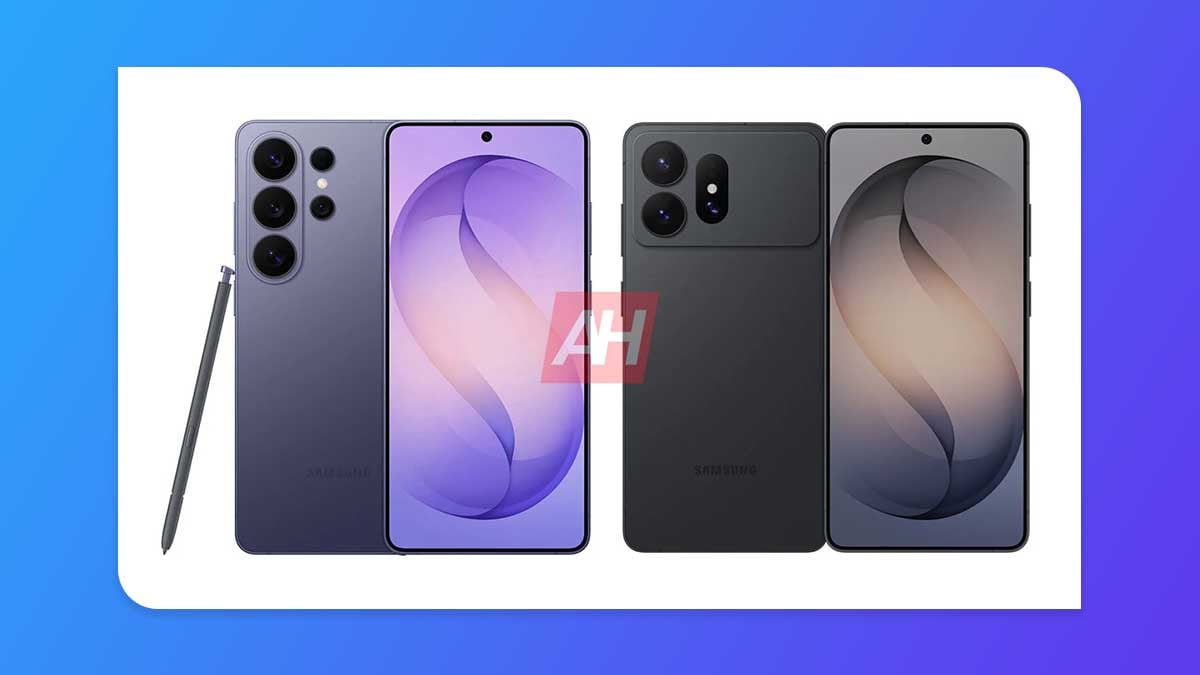
Samsung is known for making premium smartphones, and its Ultra models usually come with the best design and features. The Galaxy S26 Ultra has already introduced some design changes, while the upcoming Galaxy S27 Ultra is expected to bring a few more changes. Here you can check what design changes could come with the Galaxy S27 Ultra.
Notably, the Galaxy S26 Ultra features a slim and premium body with rounded corners and softer edges. The phone is around 7.9mm thin. The S26 Ultra also has a redesigned camera area on the back, which gives the phone a different look compared with older Galaxy Ultra models.
On the other hand, the Galaxy S27 Ultra might take a slightly different approach. Based on early leaks, Samsung could give the phone a flatter and cleaner design. The back may look simpler, while the camera area could also get a new layout. This could make the S27 Ultra look more modern without completely changing the Galaxy Ultra identity.
The main change is the new camera plateau at the top of the rear panel. Instead of placing individual cameras along the left side, Samsung appears to be putting them inside one larger camera area. There might be three rear cameras instead of four. Samsung could remove the 3x telephoto camera and use a 50MP 5x telephoto camera instead.
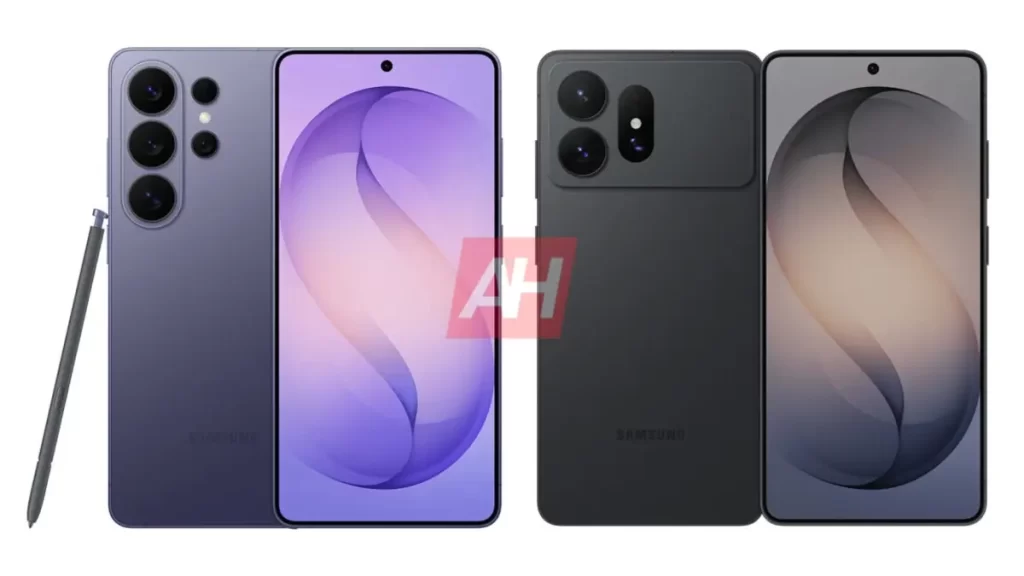
Image via Android Autority
The Galaxy S26 Ultra uses more rounded edges, while the S27 Ultra might feature flatter sides. However, the front of both phones could remain quite similar, with a large display and thin bezels.
The Galaxy S27 Ultra could have almost the same size and display size as the Galaxy S26 Ultra. This means users may not see a big change in the phone’s overall shape and size.
The S Pen is expected to stay on the left side of the phone. The speaker could also remain in the same position. Apart from some small design changes, the Galaxy S27 Ultra may look almost the same as the Galaxy S26 Ultra.
It is important to remember that the S27 Ultra details are still based on leaks and rumors. Samsung has not officially confirmed the final design, so some changes could happen before the phone is launched. For now, the S27 Ultra looks like a small but interesting design upgrade over the S26 Ultra.

Apple’s first foldable phone, the iPhone Duo, is official, but Samsung’s Galaxy Z Fold 8 beats it for being lighter and thinner.
I’m not advocating for Samsung, but telling the truth. Apple’s iPhone Duo lags behind Samsung’s Galaxy Z Fold 8 foldable phone for being lighter and thinner. Yet, no one is mocking the foldable iPhone that Apple debuted this week.
iPhone Duo
The iPhone Duo is 5.2mm unfolded and 11.3mm folded. This is far more than the iPhone 18 Pro Max slab phone that measures 8.75 mm.
Comparison of foldable with slab phone matters in 2026 as Android vendors have been introducing sleek yet featherlight foldable phones for a few years now.
Apple managed to keep the weight of its iPhone Duo identical to the latest iPhone 18 Pro Max. The foldable weighs 254 grams, making it 5 grams heavier than the 249-gram iPhone.

Galaxy Z Fold 8
Samsung’s Galaxy Z Fold 8, which features a form factor similar to iPhone Duo, measures 4.5 mm unfolded and 9.7 mm folded. It weighs 201 grams, making it one of the lightest foldable phones available on the market.
This is not a miracle, but Samsung spent years maturing the foldable segment. Apple would do even better with its next iPhone, but is unlikely to match the level Samsung is already offering in 2026.

The physics of mobile phones matters most as they become a necessity. A Galaxy Z Fold 8 user will feel the burden of holding a foldable iPhone more than anyone.
When compared side by side, the iPhone Duo may feel like a heavy brick as every mm of thickness and every gram of weight matters.
Apple’s first foldable iPhone, the iPhone Duo, is here to compete with Samsung’s Galaxy Z Fold 8. Both phones have large screens that fold in half, but there are some important differences between them.
Here, you can check the top 5 differences between the iPhone Duo and Galaxy Z Fold 8 foldable phones.
1.) Display
Both phones have a 7.6-inch main screen with a 120Hz refresh rate. The iPhone Duo has a slightly higher screen resolution. Its outer screen is 5.4 inches, while the Galaxy Z Fold 8 has a slightly larger 5.5-inch outer screen. Apple also uses a special nano-texture finish to reduce screen reflections.
2.) Camera
The Galaxy Z Fold 8 has two 50MP rear cameras: a main camera and an ultrawide camera. The iPhone Duo has two 48MP rear cameras with similar functions. Neither phone has a telephoto camera, so they may not be the best choice for taking photos of faraway objects.

3.) Processor
The iPhone Duo has Apple’s new A20 Pro chip. Samsung uses Qualcomm’s Snapdragon 8 Elite Gen 5 chip in the Galaxy Z Fold 8. Based on the specifications, the iPhone Duo should be faster, mainly for gaming and other demanding tasks. Apple’s close control over its hardware and software could also help improve performance.
4.) Battery and Durability
Samsung has a 4,800mAh battery and supports faster wired charging. However, Apple claims the iPhone Duo can provide up to 31 hours of video playback on its inner screen. The iPhone Duo has an IP68 rating and a titanium build, making it more resistant to dust and water. The Galaxy Z Fold 8 has an IP48 rating.
5.) Multitasking
Samsung clearly wins for multitasking. The Fold 8 can run three apps side by side and supports several apps in separate windows. The iPhone Duo can run two apps side by side.
The iPhone Duo offers better expected performance and durability, while the Galaxy Z Fold 8 offers better multitasking and a lower starting price.

CNET tested 33 phones over the past year to compare their charging speed. The CNET comparison included budget to flagship phones and after all of it, the Galaxy S26 Ultra walked away with one clear title: fastest-charging Android phone.
Samsung’s Galaxy S26 Ultra flagship phone has added 76% charge in 30 minutes during CNET’s wired charging test, edging out the iPhone 17 Pro’s 74%, the Moto G Stylus (2025) at 74%, and the OnePlus 15 at 72%.
The wireless charging story isn’t bad either: the S26 Ultra supports Qi2.2 at 25 watts, hitting 39% in CNET’s 30-minute wireless test.
There’s a catch, though: Apple’s iPhone 17 Pro is still the fastest overall. Faster wired charging, faster wireless charging and the fastest brand across its entire lineup.
- Apple’s average across the four iPhone 17 models and the iPhone Air landed at 54.6%.
- Samsung’s nine-phone average came in at 38.5%, dragged down by the Fold 7’s weak 29% score.
The reason the iPhone 17 Pro wins overall isn’t some technical leap. It’s a smaller battery; the eSIM-only US variant carries a 4,252-mAh cell, meaning there’s simply less to fill.
Apple’s iPhone processor and software efficiency mean that smaller battery still delivers competitive battery life. Samsung’s engineers are fighting a harder battle every time they spec in a 5,000-mAh cell.
Why doesn’t Samsung just adopt silicon-carbon batteries?
OnePlus is already selling silicon-carbon powered phones in the US. The OnePlus 15 recharged 72% of its 7,300-mAh battery in 30 minutes.
A massive battery, yet charging fast. That’s what silicon-carbon unlocks: higher capacity without the penalty on charge time. Samsung, Apple, and Google have all skipped it so far.
The broader picture from CNET’s testing is straightforward.
Faster charging is showing up everywhere now, including a $200 Samsung Galaxy A17 that supports 25-watt charging, matching the $900 Galaxy S26.
-
 News3 days ago
Samsung Galaxy S26 refurbished phones arrive in Korea
-

 One UI3 days ago
Samsung Galaxy S24 grabs 4 great AI features with One UI 9 Beta 2
-

 News2 days ago
NVIDIA CEO Jensen Huang is using Samsung Galaxy Z Fold 8
-
 One UI2 days ago
Galaxy Z Fold 6, Flip 6 grab One UI 9 Beta 2 with new AI features