
Business
Google could join Samsung in moving smartphone production away from China in 2027


Google may move its remaining Pixel phone production out of China from 2027. Reports say the company could increase production in India and Vietnam. Google has not confirmed the plan yet, but the move would follow other smartphone companies that are reducing their dependence on China.
For China, the change would not have a big financial impact because Pixel production is small compared with the country’s huge smartphone industry. However, it would still be important because it shows that another major technology company is moving production away from China.
India could benefit the most from Google’s plan. The company may use India to make more Pixel phones for the US market. India already has a growing smartphone manufacturing industry and has become an important place for Apple’s iPhone production. Google could follow a similar path.

Vietnam could also gain from the move. Samsung already has a strong manufacturing network in Vietnam. Google could use this existing supply chain to make Pixel phones more easily. This could help Vietnam become an important center for making premium smartphones.
Moving out of China may also be easier for Google than for Apple. Google does not officially sell Pixel phones in China, and many Google services are blocked there. Pixel also has a smaller customer base than Apple’s iPhone.
Google is reportedly planning to increase Pixel shipments by 8 to10% this year. It shipped about 12 million Pixel phones last year. As Google focuses more on AI features, growing Pixel production in India and Vietnam could help the company expand while reducing its dependence on China.


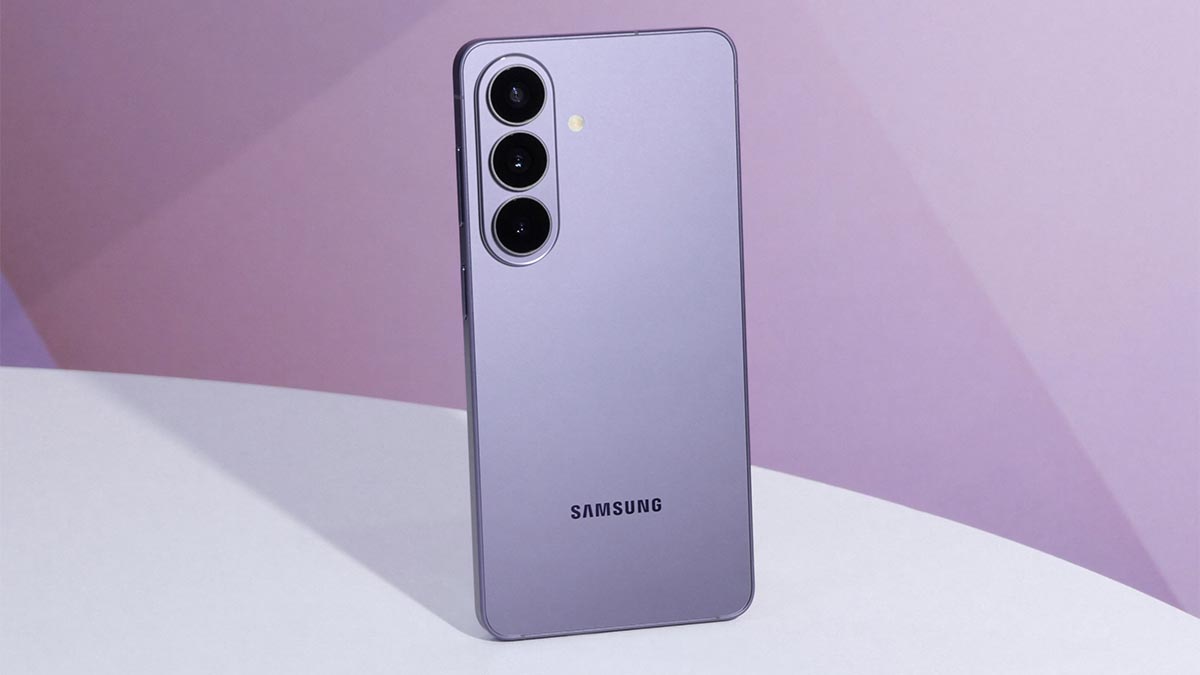

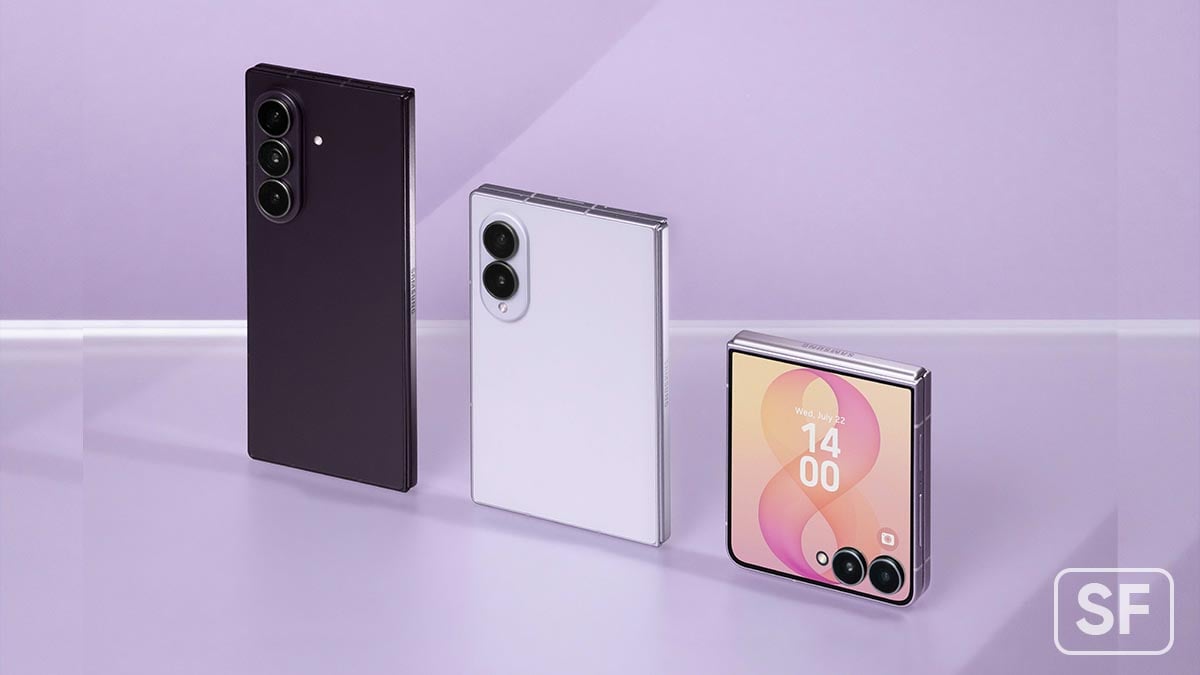


New research found that memory price hikes and geopolitical shifts have reshaped the US smartphone market, yet Samsung turned out to be a gainer.
According to Counterpoint Research’s latest US Smartphone Channel Share Tracker, sales dropped 5 percent year-over-year in Q2 2026, and the culprit isn’t just one thing but a pileup of pressures squeezing consumers and OEMs alike.
Between Middle East conflicts driving up gas and goods prices and hyperscalers consuming RAM supply, memory costs for smartphone makers have shot up fast.
That squeeze hits hardest at the low end, where margins were already razor thin. Sub-$100 phone sales collapsed 64 percent YoY, as brands either pulled these devices entirely or raised prices just to survive.
Big Four handle the situation better
Apple, Samsung, Motorola, and Google saw combined sales fall only 4 percent YoY, a modest dip compared to the rest of the market, which cratered 45 percent.
Even with overall prepaid sales down 11 percent YoY, Samsung and Motorola grew their share as smaller rivals stumbled.
The Galaxy A Series and Moto G Series became carrier go-to picks for switchers, though both brands still raised prices, with the Galaxy A17 up $50 in July.
Q3 could bring even steeper ASP increases, especially with Apple’s iPhone 18 series pricing expected to rise. Since Apple typically drives over half of Q3 sales, that shift alone could reshape the market’s average price point.

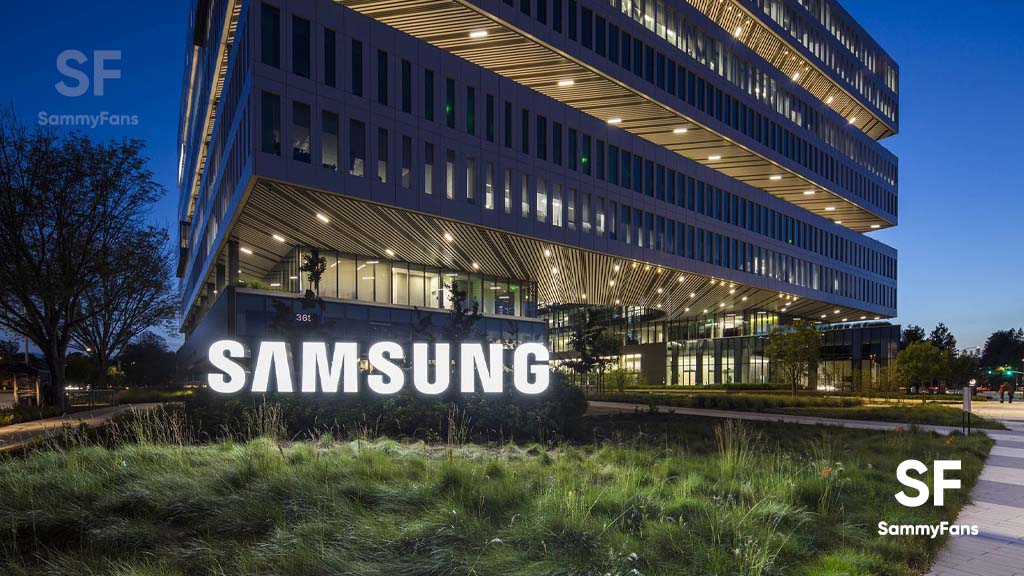
Samsung Electronics has started major construction work at its Pyeongtaek P5 semiconductor plant in South Korea. The work began last month, about six months earlier than originally planned.
The first phase of the P5 plant has already completed its main building structure. Workers are now installing important equipment inside the plant. This includes clean-room equipment, which is needed to make semiconductor chips in a dust-free environment.
Samsung has signed a 15.6 billion won contract with Shinseong ENG to supply clean-room equipment. Exy&C has also received an 89 billion won contract for interior finishing work at P5 Phase 1.
Also, Samsung is moving ahead with P5 Fab 2. The company plans to connect Fab 2 with P5 instead of building it as a completely separate plant. This design is called a “Fab Twin.” Construction of the outer structure has already started.
Samsung plans to build P5 and P5 Fab 2 at the same time. Together, the two plants could have production capacity similar to Samsung’s four existing P1 to P4 plants. The new plants are expected to mainly produce advanced DRAM memory chips for high-bandwidth memory, or HBM.
Samsung originally planned to build P5 and Fab 2 separately between 2028 and 2029. However, the company has changed its plan and is now speeding up both projects. The faster construction shows Samsung’s effort to prepare for growing demand for advanced memory chips.

Galaxy Z8 series has kicked off its global rollout with numbers that suggest Samsung may have finally cracked the code on mainstream foldable appeal. Counterpoint Research reports that the Galaxy Z Fold 8 is pulling ahead as the preferred pick across nearly every major market, except in India.
A record-setting start in South Korea
Samsung’s home turf delivered the strongest signal yet. The Fold 8, Fold 8 Ultra, and Flip 8 together crossed 1.44 million preorders in just seven days, the highest tally any Galaxy phone has ever pulled off in South Korea.
The standard Fold 8 alone accounted for roughly 70 percent of that number, and younger buyers, particularly women in their teens through 30s, played a big role in pushing the total past last year’s Fold 7 and Flip 7 figures.
US and Europe follow the same script
Across the US, early preorder data points to the best pace the Z series has ever seen, with Fold 8 and Fold 8 Ultra combined running about 30 percent ahead of the previous record holder. The Fold 8 is again the standout, making up nearly half of all preorders.
Europe tells a similar story, with overall preorders up more than 20 percent year over year and the Fold 8 capturing close to 40 percent of the mix.
Japan and China warm up to the wider form factor
In Japan, the Fold 8 reportedly sold out across most color and storage combinations on Samsung’s official store, a first for a Galaxy launch there.
China shows a similar tilt toward the Fold 8, thanks to its lighter, wider design, even though the absence of a telephoto lens and S Pen support has drawn some criticism from buyers.
India breaks the pattern
In India, the Fold 8 Ultra is leading pre-bookings with roughly a 60 percent share, while the standard Fold 8 trails at about 35 percent.
Most buyers fall in the 35 to 50 age bracket, skewing toward affluent, premium-focused customers who clearly value the Ultra’s higher-end specs over the standard model’s everyday convenience.
Related post:
Whether this early momentum holds once launch offers fade, and how Apple’s rumored foldable entry next month reshapes the competitive picture, remains the real test ahead.


A fresh report from Counterpoint Research reveals that the global smartphone revenue grew 7 percent YoY in Q2 2026. Apple topped the chart, while Samsung posted consistent growth as smartphone revenue hit a record high.
According to the report, the global smartphone revenue touched a fresh Q2 record of $109 billion in 2026, up 7 percent year-on-year. Average selling prices climbed 17 percent YoY to $400, the highest ever for a second quarter, as memory-driven cost hikes.
Apple and Samsung post growth as Q2 2026 smartphone revenue hits record
Apple leads with record share
Apple posted its best-ever Q2 revenue share at 49 percent, with revenue jumping 22 percent YoY. The iPhone 17 and iPhone 17 Pro Max reportedly did the heavy lifting here.
Samsung holds steady in second place
Samsung came in at 16 percent revenue share, with both revenue and shipments up 9 percent YoY. ASP stayed nearly flat, thanks largely to the Galaxy A-series holding demand steady while the Galaxy S26 series kept the premium numbers healthy.
Xiaomi, OPPO, vivo
Xiaomi had the roughest quarter among the top five, with shipments down 26% YoY and revenue falling 17%, despite a 13% ASP increase as it pushed upmarket.
OPPO and vivo also saw revenue declines of 10% and 11% respectively, even with ASP gains, since their price-sensitive customer base couldn’t absorb the hikes.


On July 31, SK Hynix rose nearly 30% while Samsung Electronics climbed more than 27%. In a single day, the two companies added roughly 280 trillion won and 374 trillion won to their market values. Combined, the gain exceeded $450 billion.
Both of them are the top HBM makers. The reason is very clear – Nvidia and others need large volumes of high-bandwidth memory to keep GPUs supplied with data.
Importantly, there’s a supply issue going on, and industry forecasts now point to shortages extending into 2027 and even 2028. When demand’s this high and new fabs take years, pricing power turns into stock gains fast.
This rally wasn’t just one name. Korea’s government is supporting semis, and the whole tech sector bounced. Here’s the thing. Memory isn’t just another cyclical commodity anymore. It’s the real bottleneck for the entire AI build-out.
Server DRAM and HBM are using a bigger part of total output. Regular consumer stuff is lagging hard. So you get this clear split. Memory makers get rewarded for scarcity. Phone and PC companies get squeezed by higher costs and not enough chips.
READ MORE: Five Samsung Galaxy Z projects leak, including Rollable and TriFold 2
-
 Updates17 hours ago
Google Play System August 2026 update brings new features and improvements
-
Updates3 days ago
Samsung rolled out the August 2026 update to these Galaxy devices
-

 Samsung2 days ago
Samsung Galaxy S26 FE Leaks and Rumors Roundup
-
 Updates2 days ago
Samsung users are asking where the August 2026 update is