
News
Samsung and Amazon bring interactive video ads to TV Plus


Samsung named its first wave of launch partners for a new interactive video ad format on Samsung TV Plus, built on Amazon Ads remote-enabled tech. Brands including Boiron USA, Logitech, PLAION, PMG, and Reckitt are first in line.
Watch a show, see an ad, click your remote, buy the thing. For brands selling on Amazon, viewers can add items to their Amazon cart straight from the TV. For everyone else, there are softer calls to action like “Send to Phone” or “Sign Up Today.”
Amazon Ads has its own numbers; it’s been circulating: interactive video drives six times higher brand searches, four times more add-to-cart actions, and five times higher purchase rates compared to standard formats.
Brands poured money into streaming inventory, called it full-funnel strategy, and quietly accepted that the bottom of that funnel was somewhere else entirely. Samsung and Amazon are now charging for the privilege of closing that gap.
Logitech, Reckitt, and Boiron all dropped quotes about discovery and frictionless paths to purchase. Every one of those brands is watching e-commerce fragment across screens and trying desperately not to miss the moment.
Samsung TV Plus inventory is activated through Amazon DSP, which means advertisers get Samsung’s FAST environment paired with Amazon’s shopping and browsing signals.
Additionally, Samsung announced that the TV Plus platform crossed 100 million monthly active users this year.
Related article:


Samsung has become Indonesia’s top smartphone brand, with a 33% market share in the third quarter of 2026. The company achieved this position even as the country’s smartphone market faced a major decline.
According to research firm Counterpoint Research, smartphone shipments in Indonesia fell by 43% compared to the same quarter last year. The findings were shared at the Indonesia Gadget Awards 2026 on November 12.
Samsung’s market share increased from 21% last year to 33% this year. Its smartphone shipments fell by only 5%, showing better performance than its competitors.
Xiaomi ranked second with a 21% market share, followed by Oppo with 16%, Infinix with 11%, and Vivo with 8%. Other brands faced bigger drops in shipments. Vivo saw the largest decline at 67%, followed by Oppo at 64%, Infinix at 51% and Xiaomi at 33%.
The main reason for the market decline is the global shortage of memory chips. Higher demand for memory from AI data centers has pushed up the prices of RAM and storage.
This has also made affordable smartphones more expensive. The market share of phones priced below $150 dropped from 55% to 24%. Meanwhile, phones priced between $150 and $249 increased their share from 22% to 33%.
Due to rising costs, smartphone companies are now focusing more on midrange and premium phones. Samsung’s smaller shipment decline helped it take the top position in Indonesia. However, the country’s overall smartphone market continues to face challenges.
News
Samsung shows off massive new OLED factory as BOE and TCL CSOT ramp up pressure for Apple’s business


Samsung Display just gave the industry a rare look at its mega A7 OLED production line in Asan, South Korea, according to a report by Korean outlet iNews24. Unveiled via video during an adjacent campus ceremony on November 12, the steel-framed facility is slated for mass production in the second half of 2029.
Just six days prior, China’s TCL CSOT announced core equipment move-ins for its CNY 29.5 billion t8 line in Guangzhou, targeting Q4 2027 production.
Meanwhile, BOE’s massive CNY 63 billion B16 line in Chengdu already beat Samsung’s existing A6 line to mass production by three weeks back in June, supplying 14-inch panels to Lenovo.
Samsung Display currently holds a lucrative monopoly as the sole panel supplier for Apple’s newly launched OLED MacBook Pro, a direct payoff from its KRW 4.1 trillion bet on the 8.6-generation A6 line.

TrendForce projects OLED MacBook Pro shipments to hit up to 1.5 million units in 2027, fueling a broader 40% surge in OLED laptop demand. That momentum already helped Samsung Display post KRW 1.1 trillion in Q3 operating profit.
Yet, holding onto Cupertino’s business won’t be easy. TrendForce notes that BOE, TCL CSOT, and LG Display are aggressively vying for the upcoming OLED MacBook Air expected in 2029.
CSOT is even gambling on inkjet printing tech at its t8 plant to slash material costs. Samsung’s public flex with A7 signals it won’t cede its IT panel leads without a massive capital fight, though winning Apple’s next contract will ultimately boil down to tandem OLED yields rather than sheer factory floor space.

Apple may have avoided the launch of base iPhone 18 and shipped it alongside the iPhone 18 Pro lineup if Samsung had caught up on camera sensors and ramped up its advanced semiconductor factory in Texas, the US.
A new report makes us blame Samsung for the delay in iPhone 18 launch. Earlier, it was only the memory supply shortage, but fresh reporting suggests that Apple is waiting for Samsung to catch up on camera chip demand.
Samsung is making advanced camera chips for Apple’s iPhone in the US. The two companies announced this mega collaboration last year. The transition from Sony’s monopoly to a Samsung-and-Sony duopoly is slated to start with iPhone 18.
Semiconportal reports that Apple found it difficult to source camera sensors for the iPhone 18 series in 2026 alone. Since Samsung is set to join the supply chain with iPhone 18, the base iPhone 18’s launch timeline has been postponed.
Samsung is expected to begin mass producing image sensors for Apple in Fall 2026. With the Korean tech giant beginning manufacturing, Apple would be able to source enough camera sensors for its iPhone 18 model in early 2027.
Apple and Samsung are making the former’s camera sensors with “innovative new technology for chip manufacturing” at the latter’s semiconductor plant in Austin, Texas. Apple would buy 48MP or 200MP sensors from Samsung under the agreement.
You may like: When will Apple and Samsung launch 200MP telephoto camera phones?
At present, Sony dominates the iPhone camera supply chain. Bringing Samsung in the camera supply will push Apple’s US manufacturing ambitions further, while reducing complete reliance on one supplier for a key component.

Post date: July 3, 2026

Samsung Galaxy S27 Pro might disappoint Telephoto camera lovers, as its size is reportedly a downgrade to decade-old sensor sizes. A new supply chain leak compares the sensor of the upcoming Galaxy flagship with some really old flagship phones.
Galaxy S27 Pro to feature smaller Telephoto camera
The upcoming Galaxy S27 Pro could launch with a 1/3.94” telephoto, offering 3x optical zoom. A recent revelation pointed to Samsung’s S5K3LD sensor as hardware. This image sensor features a resolution of 10 megapixels.
For context, the Galaxy Note 8 from 2017 featured a 1/3.6” telephoto sensor. Apple’s iPhone 11 Pro, which launched in 2019, had a 1/3.4″ telephoto camera. That said, Samsung’s 2027 flagship camera choice is hard to make it make sense, via Sanju Choudhary.
Flagship telephoto sensor comparison:
- Galaxy Note 8 (2017): 1/3.6” telephoto
- iPhone 11 Pro (2019): 1/3.4″ telephoto
- Galaxy S27 Pro (2027): 1/3.94” telephoto
Earlier, Samsung’s Galaxy S27 Pro was rumored to launch with a 50-megapixel telephoto camera. The sensor could have offered a 3.5x optical zoom range, which is considered a more practically useful range than 3x or 5x.
Meanwhile, Samsung’s cost-cutting measures have abandoned the 3.5x telephoto. The smartphone will now have a sensor beaten by a decade-old Galaxy flagship. The specs are hard to justify in 2027, unless there’s a technological breakthrough.
We can’t deny Samsung’s use of an innovative camera sensor. Size doesn’t matter if it’s equipped with a new, innovative solution. Camera quality will be reviewed once the retail units go on sale and reach the hands of real consumers.
Samsung is weighing heavily on the Pro and Ultra models. A recent industry report revealed that the Korean tech giant is targeting the S27 Pro and S27 Ultra to be up to 75 percent of the total production of the Galaxy S27 series.

Image via Android Headlines
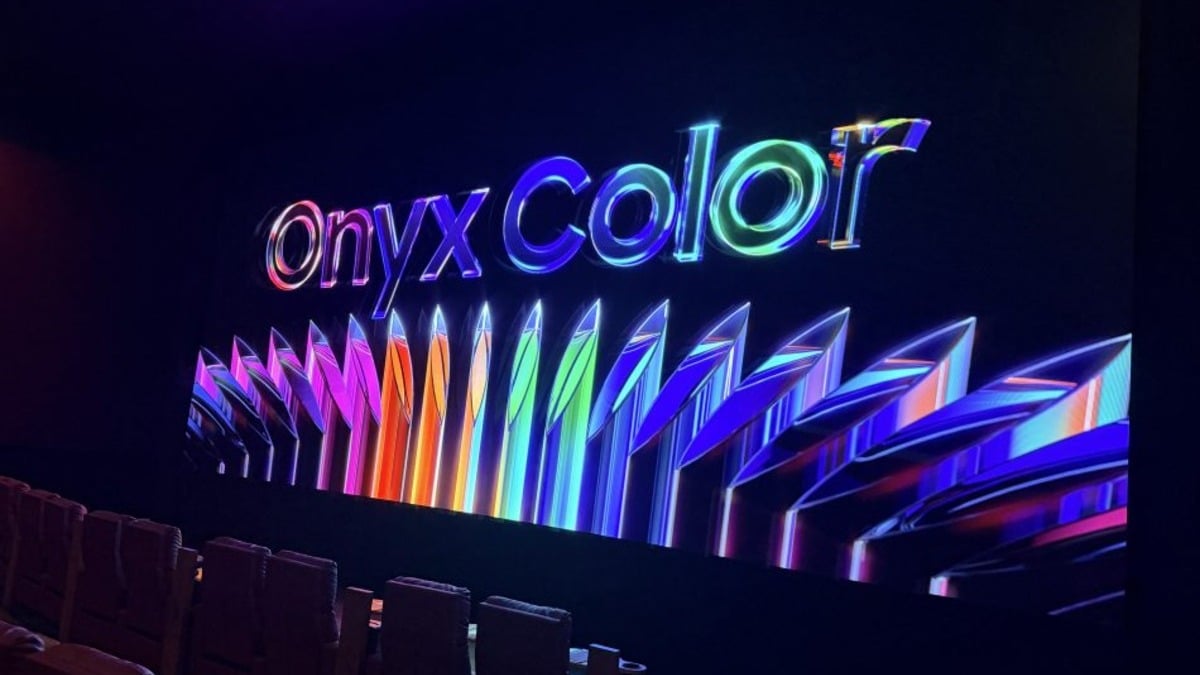
RoadHouse Cinemas in Scottsdale, Arizona, has introduced a new movie experience with the installation of the state’s first Cinema LED screen. The theatre has partnered with Samsung Electronics America to install a 12-metre Samsung Onyx LED screen in Auditorium 10.
The new screen will make movies look brighter, clearer and more colourful. Unlike traditional movie projectors, Samsung Onyx uses LED technology to show pictures directly on the screen.
It offers better picture quality, deep black colours and sharp details, making movies more enjoyable. The screen also supports 4K resolution, up to 120 frames per second and advanced HDR technology.
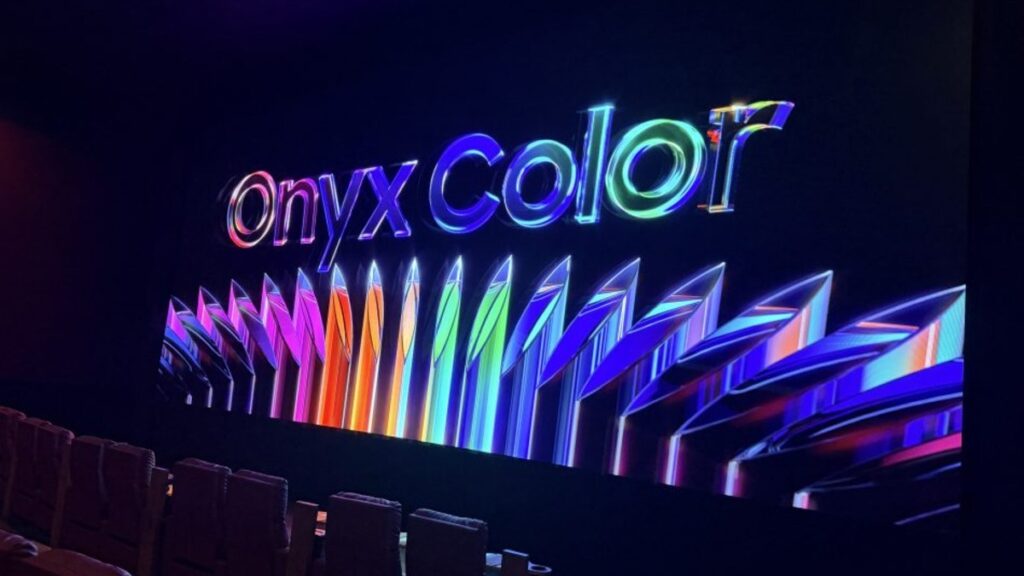
Josh Snider, President and CEO of RoadHouse Cinemas, said that the new screen is an important step towards giving audiences a better moviegoing experience. The theatre aims to attract more movie lovers by combining the latest technology with comfort and good service.
CineUnion, LLC, worked as the project’s cinema reseller and system integrator, while SoCal CINETECH handled the screen installation.
The good news for movie lovers is that RoadHouse Cinemas will not charge extra for the new premium LED screen and DTS:X sound experience during the first month of operation. Visitors can enjoy this upgraded movie experience without paying any additional amount.
With this launch, RoadHouse Cinemas hopes to give audiences more reasons to enjoy movies on the big screen.
-
 One UI11 hours ago
One UI 9.0 official update now rolling out to these Samsung phones
-

 One UI2 days ago
Fresh One UI 9.5 leaks reveal AI Rambler, Telegram and WhatsApp call recording, new widgets and UI tweaks
-
 AI2 days ago
Gmail gets new Gemini AI tools for writing and email summaries
-
 Updates1 day ago
Flagship Galaxy S26 lineup now getting November 2026 update globally