
News
Galaxy S26 matches S26 Ultra-level thermal performance, thanks to new 3D TIM cooling


New details surfacing about the Exynos 2600’s cooling tech, which delivers S26 Ultra-level thermal performance to the standard Galaxy S26 flagship.
Samsung may have finally solved one of the biggest compromises with smaller flagship phones: heat. If the latest findings hold up, this is a major win for Galaxy fans who prefer compact phones without sacrificing sustained performance.
According to a new report, the regular Galaxy S26 delivers thermal performance close to the Galaxy S26 Ultra, despite the Ultra traditionally having a much larger cooling advantage.
The credit apparently goes to Samsung’s redesigned “Tailor 3D TIM (Thermal Interface Material)” cooling solution paired with the Exynos 2600 chip.
TIM is the layer that sits between the processor and cooling hardware, helping transfer heat away from the chip as efficiently as possible. The company describes the new 3D TIM as being shaped like custom-fitted clothing for the components inside the phone.
Instead of a simple flat layer, it is molded to match the uneven heights and gaps between surrounding chips and heat-generating parts on the motherboard.
It’s said that this new design increased the effective thermal contact area by around 118% compared to the previous 2D TIM solutions. According to internal findings, the new design dramatically improved contact coverage for these hotspots.
Modern smartphone processors are no longer the only major heat source. Components like power management chips and UFS storage also generate significant heat under load.
The company says the upgraded cooling setup lowered AP temperatures by 1.18°C and reduced rear surface temperatures by 0.73°C compared to older designs.
That suggests Samsung is taking a more aggressive approach to sustained performance rather than relying purely on larger vapor chambers.


Samsung is bringing the world of Supergirl to its connected display ecosystem, giving fans new ways to experience the upcoming superhero universe across its TV lineup and digital platforms.
The company is adding themed content to its Art Store while also launching fan-focused activities tied to its latest display technology.
Supergirl lands on Samsung Art Store
Samsung’s Art Store is getting a new Supergirl collection, allowing compatible TVs to showcase artwork inspired by the character. The move expands the company’s growing catalog of digital art and entertainment partnerships.
Samsung Art Store is giving users a new way to experience DC-inspired art at home with a limited-time “Supergirl” collection, available now through March 8, 2027. Featuring 15 digital artworks from DC Comics, the collection brings the character’s comic legacy to life across Samsung’s expanded 2026 Art TV lineup.
Samsung is also teaming up with Best Buy for a Micro RGB TV-themed riddle sweepstakes. The campaign gives fans a chance to interact with Samsung’s latest display technology while engaging with the Supergirl theme.
A Supergirl-themed pop-up experience in London adds a physical element to the campaign. Visitors can explore the collaboration through an in-person setup designed around the character and Samsung’s display products.
These experiences show how Samsung is expanding its role in entertainment partnerships. The company is not only selling televisions but also building a broader ecosystem around how people interact with content.

Samsung and Alcedis are partnering to utilize the Galaxy Watch in clinical trials. This joins the expansive collaborations, which Samsung is signing with Global brands and authorities to grow the wearable’s potential.
The Samsung-Alcedis partnership aims to translate biometrics collected by Galaxy Watch into meaningful evidence for clinical trials in pharmaceutical and other research organizations.
Smart wearable devices are quite popular now, with the global market returning to growth. Samsung flagged a steep 28 percent decline in the first quarter, but its approach to advance the segment hasn’t demoralized.
While research programs struggle to translate wearable-generated signals into clinically meaningful evidence, Samsung addresses this challenge through an integrated approach that includes BIA, EDA, SaMD, OSA, and AFiB.
Samsung’s integrated approach combines its latest advancements in wearable technology with clinically validated measurements, including bioelectrical impedance analysis (BIA) and electrodermal activity (EDA), as well as Software as a Medical Device (SaMD) features such as obstructive sleep apnea (OSA) and atrial fibrillation (AFib) detection, biomarker development expertise and research-related technical infrastructure designed to support evidence generation across the research lifecycle.
Jongmin Choi, Head of Health R&D Group, Mobile eXperience (MX) Business, Samsung Electronics, said:
“Through our collaboration with Alcedis, Samsung is unlocking new opportunities for biomarker development, digital endpoint innovation, and evidence generation throughout the research lifecycle.”
Samsung’s research platform allows for faster study setup with fine-grained control of biosensors and access to participant- and device-level insights and biosensor data with respect to the study and established protocols.
The Korean tech giant is ushering in a new era of evidence generation that brings researchers closer to real-world insights and helps accelerate innovation across the healthcare ecosystem.

Samsung’s AI-powered Galaxy Glasses have not even entered the market yet, and Meta has already made its move. Starting at $299, Meta’s new AI-powered glasses are entering the market at a point where regular consumers can actually consider buying them.
The smart glasses race is getting serious, and Meta just fired the first major shot with a product that targets the biggest weakness in emerging wearable categories: price.
For Samsung, which is reportedly preparing its own Galaxy Glasses as part of its XR strategy, this is the kind of early momentum that cannot be ignored.
The new Meta Glasses lineup, developed with EssilorLuxottica, comes in multiple styles, including Adventurer, Fury, and a Kylie Jenner collaboration.
- Meta Adventurer: A clean rectangle shape for a timeless, versatile look. Available in Standard and Large.
- Meta Fury: A bold frame that makes a bold statement.
- Meta Glasses by Kylie: A unique slim oval frame designed in collaboration with Kylie Jenner and inspired by her personal style.
The company is bringing Meta AI, powered by its new Muse Spark multimodal model, giving the glasses a stronger focus on real-world interaction.
The glasses feature open-ear audio, wind noise reduction, an 8-hour battery life, and a charging case that extends usage up to 40 hours. Meta is also preparing features like pedestrian navigation and expanded live translation support with 14 new languages.
Samsung’s Galaxy Glasses could still bring something different. The company has years of experience building polished consumer hardware, displays, cameras, and mobile integrations.
If Samsung combines that expertise with Galaxy AI, it could create a strong alternative.

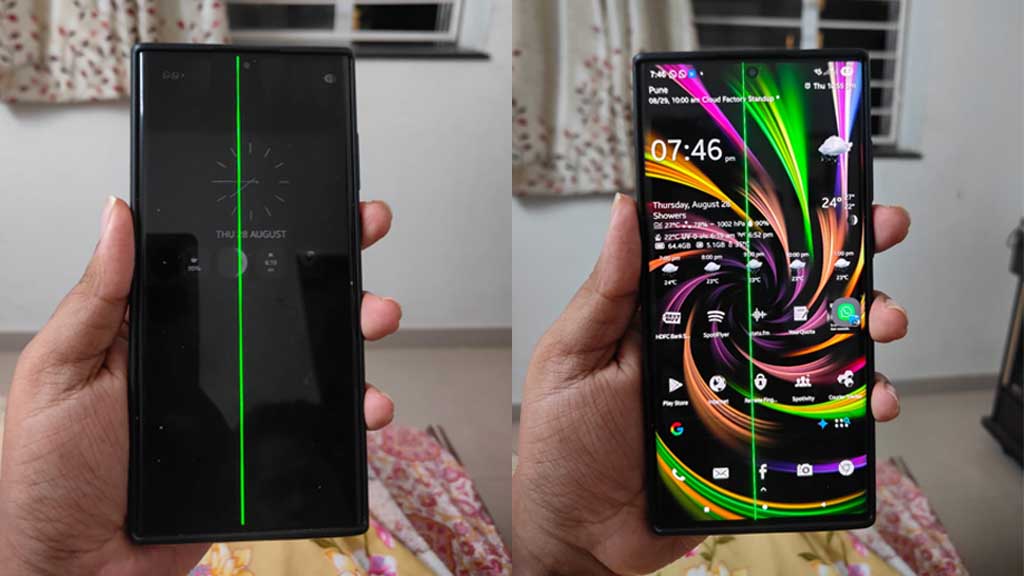
The last three generations of Galaxy S-series will receive 7 years of software support, but issues like green line raise a question of whether the flagship quality experience will remain consistent with the software lifecycle.
Hardware issues like green or pink lines have become a headache for existing users. It doesn’t take away the touch functionality, but makes the display look extremely unpleasant.
In the past couple of years, this issue has appeared in various Android devices, but the Galaxy flagships have received special attention. There are two reasons for that: the more frequent emergence and the large user base.
Take Galaxy S22 as an example; it was the first to be widely recognized for the green line issue. Though Samsung took some steps to replace the screen free of cost, that doesn’t make any difference. Why? Because the problem shouldn’t have appeared in the first place, affecting many users.
Launched in 2022, the Galaxy S22 is eligible for four OS updates and five years of security patches. So, the phone has completed its update OS cycle with Android 16 (One UI 8.0). Interestingly, the green line issue appeared around the Android 14 update.
The Galaxy S23 series is eligible for the same OS update tier, making Android 17 its last major release. Before that happens, Galaxy S23 users are also reporting the green line issue.
Many users found this occurrence after upgrading to the One UI 8.5 software update, but the root cause remains unknown.
However, theories suggest that internal heat could be the primary cause, which deteriorates pixels in a certain pattern primarily vertically. Some believe that it is the degrading display panel quality. We’ve also seen community suggestions such as keeping the phone in a cool place before updating or installing the update overnight.
What are the odds?
The Galaxy S22 Ultra and S23 Ultra use the M11 display, and the problem in both generations is also common. What about the Galaxy S24 Ultra and the S25 Ultra devices? They use M13 panels. So, there’s a chance that they may not age the pixels the same as the S23 and S22 series.
However, unlike the Galaxy S22 and S23 series, the S24 series and later flagships are eligible for 7 OS updates and 7 years of security updates. So, they have three more years than their predecessor.
If M11 can show issues like green and pink lines within three years of their launch, M13 should be showing it around 5-6 years? Maybe or maybe not. Or is this issue limited to the M11 panels featured in S22 and S23 series devices? There is no clarity surrounding its origin.
For now, the S24 series has only installed two major updates, and there are five more left to test its hardware against the very problem that is making users worry about their devices in the long term.


Apple iOS 27 Beta 2 update is improving the messaging experience between iPhone and Samsung/Android users by adding better support for RCS features.
The update introduces (via AndroidAuthority) native emoji reactions and inline replies for cross-platform conversations. Previously, reactions sent from an iPhone to an Android device often appeared as text-based descriptions.
With the latest change, supported reactions now display as actual emojis on both platforms. Apple has also expanded Photomoji support, allowing users on both sides to interact with the feature.
The new capabilities are based on the RCS 2.7 Universal Profile standard, which gives Apple and Android devices a more unified messaging foundation. This could open the door for additional features, like message editing and unsending.
It’s worth noting that Apple’s move follows the introduction of default end-to-end encryption for RCS messaging in the stable iOS 26.5 release.
The company has gradually expanded RCS support since bringing the standard to iPhone, reducing some of the long-standing differences between iMessage and Android messaging experiences.
You may like:
-

 One UI14 hours ago
These Samsung Galaxy devices received One UI 8.5 official update
-
 One UI57 minutes ago
Samsung is testing One UI 9.0 (Android 17) for these 22 Galaxy devices
-
 One UI3 days ago
Samsung Media player gets 5 new changes in One UI 9.0
-

 One UI2 days ago
Samsung Galaxy Watch 9, Ultra 2 new design, colors, buttons and UI leaked