
Comparison
ISOCELL HP5 vs HP3: How Samsung evolving 200MP smartphone camera

Samsung has officially introduced the ISOCELL HP5 200MP camera as a successor to its HP3 image sensor. The new smartphone camera brings some serious upgrades to the table, elevating photography experiences.
Back in June 2022, Samsung launched the ISOCELL HP3 image sensor with 200MP resolution. It can be utilized as the wide-angle (primary/main) camera on smartphones.
ISOCELL HP5, which debuted in October 2025, also features 200MP resolution. It can’t just be the main camera, but also be used as the telephoto sensor on smartphones.
ISOCELL HP5 vs ISOCELL HP2 200MP Camera – Specs Comparison
Here’s a spec-wise comparison of Samsung’s two capable mobile image sensors with 200-megapixel resolution.
| Feature | ISOCELL HP5 | ISOCELL HP3 |
|---|---|---|
| Effective Resolution | 16,384 x 12,288 (200MP) | 16,320 x 12,288 (200MP) |
| Pixel Size | 0.5 μm | 0.56 μm |
| Optical Format | 1/1.56″ | 1/1.4″ |
| Color Filter | Tetra²pixel RGB Bayer Pattern | Tetra²pixel RGB Bayer Pattern |
| Normal Frame Rate | 7.5 fps @full, 30 fps @50MP, 90 fps @12.5MP | 7.5 fps @full, 24 fps @50MP, 90 fps @12.5MP |
| Video Frame Rate | 30 fps @8K, 120 fps @4K, 480 fps @FHD (w/o AF) | 30 fps @8K, 120 fps @4K, 480 fps @FHD |
| Shutter Type | Electronic rolling shutter | Electronic rolling shutter |
| ADC Accuracy | 10-bit | 10-bit |
| Supply Voltage | 2.2 V for analog, 1.8 V for I/O, 1.0 V for digital core supply | 2.2 V for analog, 1.2 V or 1.8 V for I/O, 0.9 V for digital core supply |
| Operating Temperature | -20℃ to +85℃ | -20℃ to +85℃ |
| Interface | 4 lanes (4.5 Gbps per lane) D-PHY / 3 trios (4 Gsps per trio) C-PHY | 4 lanes (2.5 Gbps per lane) D-PHY / 3 trios (4 Gsps per trio) C-PHY |
| Chroma | Tetra²pixel | Tetra²pixel |
| Autofocus | Super QPD (PDAF) | Super QPD (PDAF) |
| HDR | Smart-ISO Pro (iDCG), Staggered HDR | Smart-ISO Pro (iDCG), Staggered HDR |
| Output Formats | RAW8, RAW10, RAW12, RAW14 | RAW10, RAW12, RAW14 |
| Analog Gain | 16x @full, 256x @12.5MP | 128x @12.5MP |
How does ISOCELL HP5 compare with HP3?
Samsung’s ISOCELL HP5 brings a 2x in-sensor zoom feature, while the HP3 offers 4x lossless zoom. Phone makers can achieve 6x optical quality with HP5 if paired with a 3x telephoto sensor.
The company equipped HP5 with end-to-end (E2E) AI Remosaic technology. It’s all about boosting the processing speed, readying images within just two seconds in 200MP res.
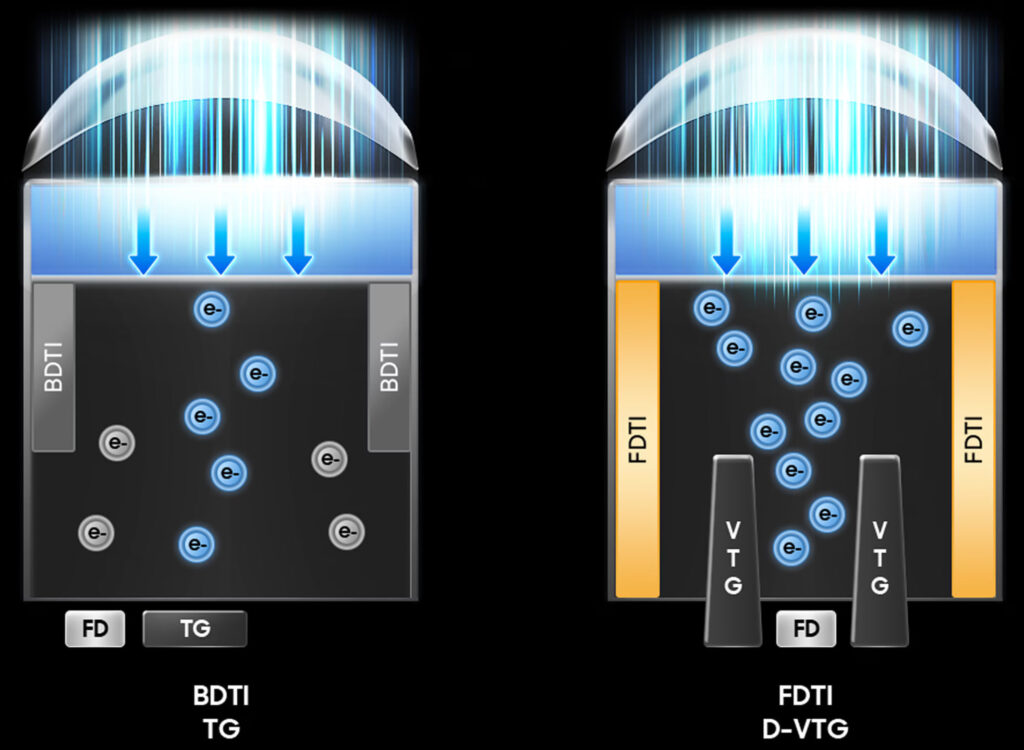
Pixel size is what makes the ISOCELL HP5 the first in the world. It has just 0.5 μm pixel size, the smallest in the world, over 0.56 μm of the ISOCELL HP3 sensor.
Source – Samsung ISOCELL HP5
Well, a smaller pixel size doesn’t translate to degraded low-light photography. Samsung has implemented advanced new technologies to avoid the quality impact.
ISOCELL HP5 features a bigger optical format (1/1.56″) over the ISOCELL HP3 (1/1.4″). A bigger optical format can usually offer a bigger, better picture!
Both, the HP5 and HP5, sensors support modern video output qualities including 30 fps @8K, 120 fps @4K, 480 fps @FHD, while the HP5 lacks autofocus functionality.

Source – Samsung ISOCELL HP5
The new HP5 camera brings power efficiency improvements over HP3. It also supports RAW8 output format along with RAW10, RAW12, RAW14, which HP3 lacks.
The analog gain of ISOCELL HP5 is 16x @full and 256x @12.5MP, while HP3’s 128x @12.5MP. This upgrade gives the picture a super boost of brightness before processing.
Samsung is unlikely to utilize HP5 camera in Galaxy devices anytime soon, continue reading…


CNET tested 33 phones over the past year to compare their charging speed. The CNET comparison included budget to flagship phones and after all of it, the Galaxy S26 Ultra walked away with one clear title: fastest-charging Android phone.
Samsung’s Galaxy S26 Ultra flagship phone has added 76% charge in 30 minutes during CNET’s wired charging test, edging out the iPhone 17 Pro’s 74%, the Moto G Stylus (2025) at 74%, and the OnePlus 15 at 72%.
The wireless charging story isn’t bad either: the S26 Ultra supports Qi2.2 at 25 watts, hitting 39% in CNET’s 30-minute wireless test.
There’s a catch, though: Apple’s iPhone 17 Pro is still the fastest overall. Faster wired charging, faster wireless charging and the fastest brand across its entire lineup.
- Apple’s average across the four iPhone 17 models and the iPhone Air landed at 54.6%.
- Samsung’s nine-phone average came in at 38.5%, dragged down by the Fold 7’s weak 29% score.
The reason the iPhone 17 Pro wins overall isn’t some technical leap. It’s a smaller battery; the eSIM-only US variant carries a 4,252-mAh cell, meaning there’s simply less to fill.
Apple’s iPhone processor and software efficiency mean that smaller battery still delivers competitive battery life. Samsung’s engineers are fighting a harder battle every time they spec in a 5,000-mAh cell.
Why doesn’t Samsung just adopt silicon-carbon batteries?
OnePlus is already selling silicon-carbon powered phones in the US. The OnePlus 15 recharged 72% of its 7,300-mAh battery in 30 minutes.
A massive battery, yet charging fast. That’s what silicon-carbon unlocks: higher capacity without the penalty on charge time. Samsung, Apple, and Google have all skipped it so far.
The broader picture from CNET’s testing is straightforward.
Faster charging is showing up everywhere now, including a $200 Samsung Galaxy A17 that supports 25-watt charging, matching the $900 Galaxy S26.
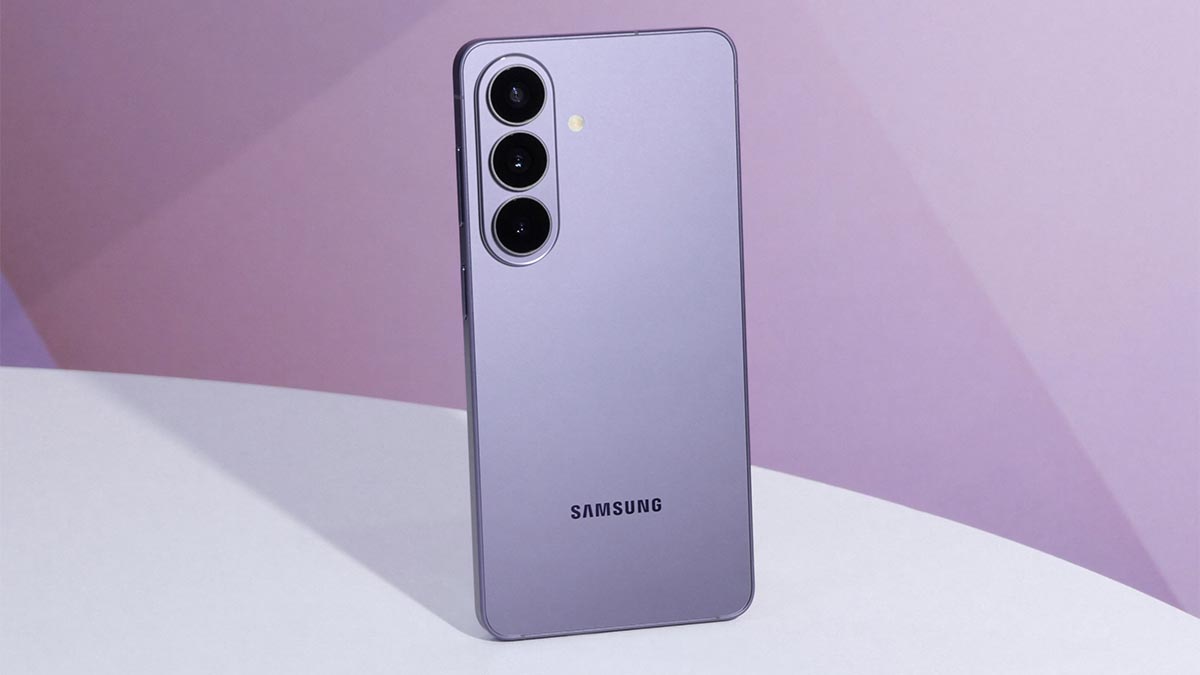
Samsung is selling Galaxy S26 and S26 Plus with Exynos and Snapdragon chips, depending on the country. A new test reveals a major gap in battery life of the Galaxy S26, and the difference in figures can’t be ignored.
A video posted on YouTube channel AndroidAddicts shows the battery test of the Galaxy S26 with Exynos and Snapdragon chips. The model Samsung is selling in the US and China turns out to be a battery beast with the same capacity.
Samsung Galaxy S26 ships with Snapdragon 8 Elite Gen 5 in the US, Canada, and China. Users in the rest of the world get Exynos 2600-powered phones. Exynos is technically superior, but the Snapdragon crushes it in practice.
The battery test video involves various stages and aspects. Majority of the test scenarios belong to everyday usage of different period such as photography, social media, and entertainment.
The test involved phone call, video recording at 4K 30fps, video encoding, navigation through Google Maps, video call, YouTube video streaming, 3D Mark gaming benchmark, TikTok, X, Amazon Prime Video, and Instagram.
The video displayed everything side-by-side, with the Exynos model dying mid-X operation. It didn’t participate in Amazon Prime Video and Instagram. The battery performance gap was a huge, nearly 28 percent.
- Exynos – 6 hours and 48 minutes
- Snapdragon – 9 hours and 26 minutes
The Snapdragon version offered a battery of 2 hours and 38 minutes more than the Exynos variant. All the factors were the same while testing, it’s just the difference due to the processors inside.
It raises serious concerns about Exynos-equipped Galaxy S26 and S26 Plus, when it comes to efficiency. A recent test showed that the Exynos chip requires more power than the Snapdragon used in the Galaxy S26 series.

Source – Android Addicts (YouTube)

An independent comparison of AI call assistants between Samsung’s Galaxy S26 Ultra and Google’s Pixel 10 Pro XL reveals a shocking winner. It feels safe to say that the S26 Ultra is trying hard, but the Pixel 10 Pro XL is still playing a different game.
Samsung finally jumped into AI call assistants with One UI 8.5, riding on the back of the Snapdragon 8 Elite Gen 5. Meanwhile, Google has been refining Call Screen for years, powered now by the Tensor G5.
Here’s how both phones handled three real-world scenarios. Courtesy of Tom’s Guide.
Package delivery
This is supposed to be simple. A delivery guy calls, leaves instructions, done.
Per John Velasco of Tom’s Guide, on the Galaxy S26 Ultra, the experience feels dated. The voice is robotic, with awkward pauses and a synthetic tone that screams first-gen. It’s not unusable, but it never convinces you it’s “human enough.”
Switch to the Pixel 10 Pro XL and the contrast is immediate. The assistant sounds natural, fluid, almost conversational. More importantly, it understands what’s happening. It suggests something like “leave it by the front door.”
- Winner – Pixel 10 Pro XL

Doctor’s appointment
A call comes in to confirm a doctor’s appointment. This is a perfect test of comprehension, not just transcription.
Google’s Pixel 10 Pro XL instantly picks up the intent and offers actionable responses: confirm, cancel, reschedule. It feels like the assistant is actually listening.
On the Galaxy S26 Ultra, nothing changes. Same generic responses. Same lack of awareness. The system transcribes well enough, but it doesn’t understand.
- Winner: Pixel 10 Pro XL

Solicitation call
The Pixel 10 Pro XL identifies the tone of the conversation almost immediately. It recognizes solicitation patterns and gives you a “Report as spam” option without hesitation.
The Galaxy S26 Ultra treats it like any other call. No spam awareness, no intelligent filtering at the response level. You can type a custom reply, sure, but that defeats the purpose of automation.
- Winner: Pixel 10 Pro XL

The Galaxy S26 Ultra has the hardware and One UI 8.5 integrates the feature neatly. But the core experience still feels like a Beta. Google’s advantage isn’t just better models. It’s years of data, refinement, and iteration.
Samsung will get there. Probably sooner than before, thanks to shared AI infrastructure.

Samsung Galaxy S26 series chip strategy is split between Exynos 2600 and Snapdragon 8 Elite Gen 5 and early GPU results are impressive. Samsung is about to impress fans with its next-gen Exynos chip in terms of graphics performance.
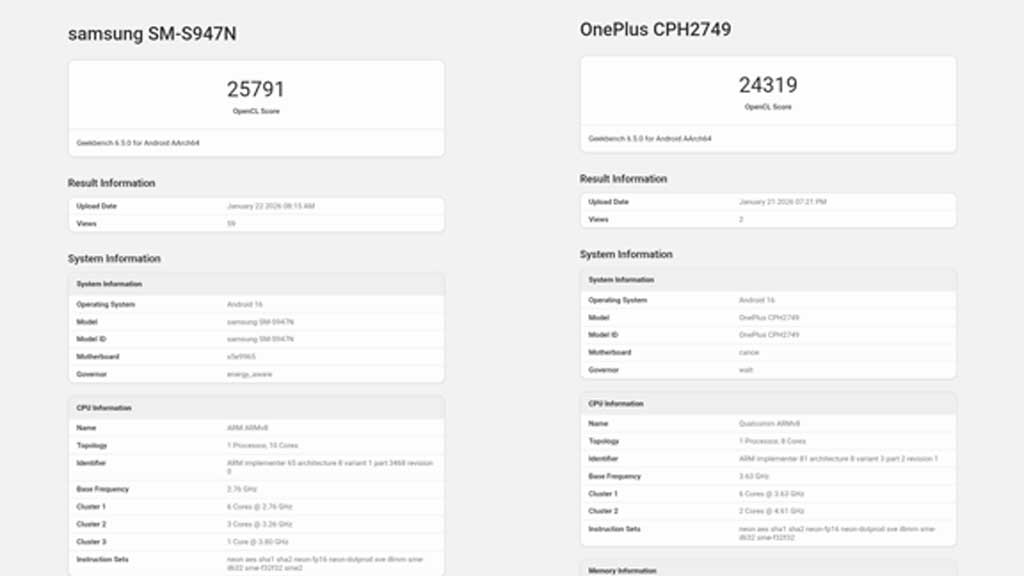
Recently, an upcoming Galaxy S26 Plus benchmarked on Geekbench, scoring 25791 points in GPU performance. For comparison, the OnePlus 15 with Snapdragon 8 Elite Gen 5 scores 24319 points in the same test on the same platform.
There’s a gap of 1472 points in the GPU scores of the chips. The difference isn’t substantial, but one can’t ignore the fact that Exynos 2600 has surpassed the Snapdragon 8 Elite Gen 5 in terms of GPU (graphics) performance.
The latest Exynos features the Xclipse 960 GPU, while Snapdragon has Adreno 840. Xclipse 960, based on AMD’s RDNA 4 architecture, is doing real work here.
The two GPUs are made on different architectures. Both are optimized specifically for chipsets, offering impressive performance.
Exynos 2600 is built on Samsung’s 2nm GAA (Gate-All-Around) process. Compared to Qualcomm’s 3nm node, it offers tighter transistor control, better density, and improved power efficiency when done right.
Heat Path Block technology deserves attention, which improves heat transfer away from the chip. That matters for real-world gaming sessions, not synthetic benchmarks run in ideal conditions.
Qualcomm’s CPU performance, modem reliability, and ecosystem tuning are not suddenly irrelevant. But as someone who remembers the Exynos 2100 days all too well, this feels like a genuine shift.
Samsung finally stopped playing it safe. If these numbers translate into shipping devices with consistent performance and sane thermals, this might be the year Exynos makes Snapdragon users pause, then quietly feel a little jealous.
You may like:
Comparison
Samsung Galaxy S26 vs Apple iPhone 18 Pro: The 2026 Smartphone War – Leaks, Price, and Specs Compared


Hey folks, 2026 is looking like a massive year for smartphones. Right now, everyone’s talking about the Samsung Galaxy S26 and the Apple iPhone 18 Pro, even though nothing’s official yet.
The rumors are everywhere, and it already feels like we have much to discuss. Samsung usually launches first, the South Korean company is expected to unveil the Galaxy S26 around late February (with sales hitting in March). Apple iPhone 18 Pro should arrive in September, the classic release date.
There’s a big twist: According to leaks, Apple might skip the regular iPhone 18 model this year entirely. That puts the standard Galaxy S26 model right up against the premium iPhone 18 Pro model. Here’s how these two devices stand together based on the latest leaks.
Design and Screen:
Both of these devices have a 6.3-inch display with that smooth 120Hz refresh rate. The Galaxy S26 will likely keep last year’s look, just with minor tweaks.
The iPhone 18 Pro could change things up. As per a strong leak, the device will feature under-display Face ID (hidden sensors) and a tiny punch-hole front camera. That means almost bezel-free screen.
Cameras:
This is the fun part. The iPhone 18 Pro is rumored to add variable aperture on its main 48MP camera, more like a pro DSLR. Better low-light shots and better natural bokeh (blurry backgrounds).
Samsung to feature a 50MP main sensor, 12MP ultrawide, and 10MP 3x zoom lens. It will take brighter pics, but as of now no mechanical aperture stuff.

Performance: Chipset and battery
Both get the latest 2nm chips. Samsung is likely to go with Snapdragon 8 Elite Gen 5 in the US. Based on early leaks, the Snapdragon could edge out the iPhone 17 Pro Max in benchmarks.
The next iPhone will feature Apple’s A20 Pro chip. The new chipset is built for super-smooth everyday use, heavy apps, videos, and browsing.
The Galaxy S26 gets a battery size of 4,300mAh, which should easily run for a full day. The iPhone 18 Pro battery size is still unknown, but Apple’s chips are insanely efficient, so it usually matches or beats the competition in real-world tests.
In the charging department, Apple rumors say 35W wired (quicker than before). Samsung sticks with 25W on the base S26.
AI:
Both are working smartly on AI. Samsung keeps expanding Galaxy AI tools, clearly winning this time. Apple is also upgrading Apple Intelligence with a smarter Siri Assistant, there’s even a confirmed multi-year deal where Google Gemini powers the next-gen Siri and other features for better smarts and personalization. Samsung already have official Gemini AI partnership.
Price:
According to rumors and previous price records, the Galaxy S26 should start around $799. The iPhone 18 Pro will likely hit $1,099 or more, like always.
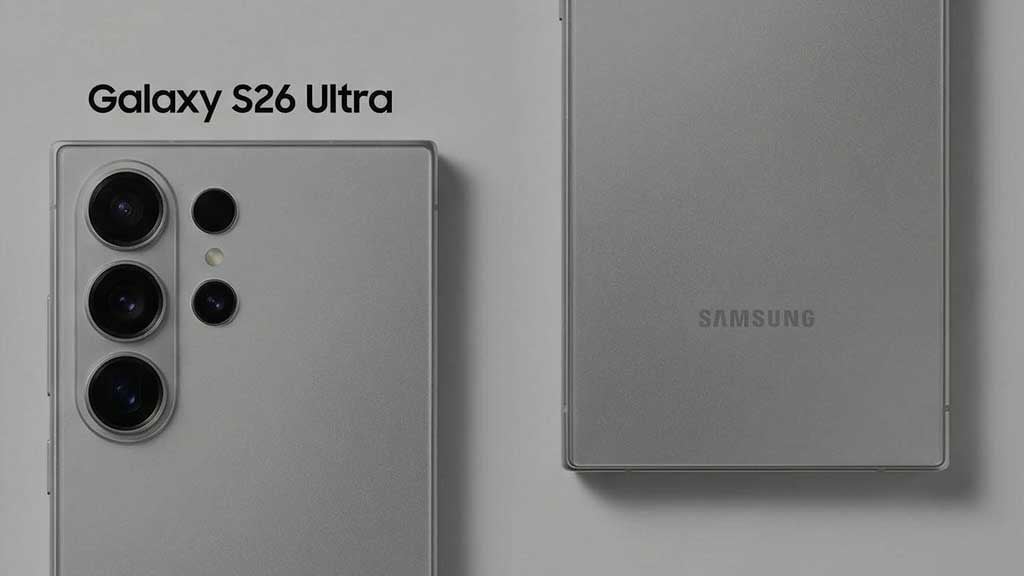
Source – Ice Universe/X
If you want speed, a bigger battery, a lower price, and a phone you can grab early in the year? Galaxy S26 looks like the smart deal for you.
Want a fresh, clean design and pro-level camera tricks? Wait for the iPhone 18 Pro.
What do you think? Team Samsung for the quick win, or team Apple for the polish? 2026 is gonna be epic either way!
-
 One UI2 days ago
Android 17-based One UI 9.0 testing on these 27 Samsung devices
-
 Phones3 days ago
Trusted source leaks Galaxy Z Fold 8 Wide colors, specifications
-

 Samsung1 day ago
Samsung Galaxy Z Fold 8 (Wide): Complete phone specifications
-

 News1 day ago
Samsung Galaxy Tab S12 tablets may launch in September 2026