
News
Samsung leans heavily on cheaper Chinese parts for flagship phones

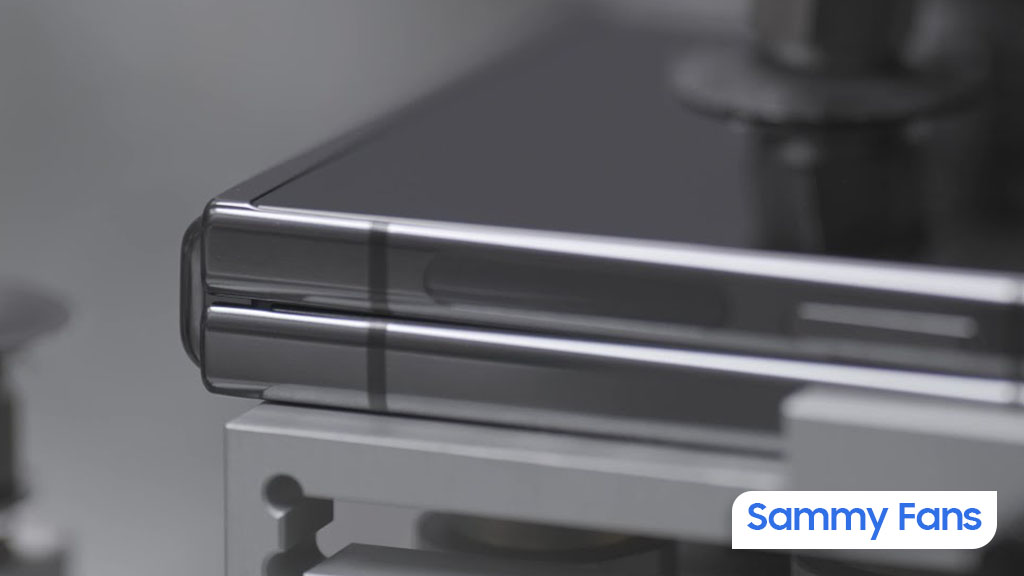
Samsung is seemingly keeping the Galaxy Z Fold 7 and Flip 7 prices unchanged. For this, the company has made some strategic changes. A new report indicates that Samsung is betting on cheaper Chinese parts for its flagship foldable phones.
TheBell reports that Samsung is stepping up its partnership with a Chinese parts maker for its flagship foldable phones, particularly hinges. The company aims to boost price competitiveness, but at a cost of sidelining legacy Korean parts.
Chinese OEM Huili has secured 60-70% of the hinge supply for Samsung’s upcoming Galaxy Z Flip 7. For six generations, KH Vatec dominated Samsung’s hinge supply. Huili’s entry with the Galaxy Z Flip 5 began changing this dynamic.
Hinges are critical for foldable phones, powering the folding and unfolding operations. Samsung’s decision seems to have been influenced by rising competition with Apple and Chinese brands like Huawei in the smartphone market.
Samsung flagships rely on Chinese parts
In the previous years, China-based component suppliers mainly handled part supplies for mid-to-low-end Galaxy devices. Now, Samsung’s premium phones lean heavily on Chinese components, which are comparatively cheaper.
With government backing, Chinese manufacturers are advancing technologically. Even at lower costs, their components meet the high standards required for flagship devices, making them appealing to Samsung and others.
Samsung’s mainstream Galaxy S flagship phones are also seeing changes. China’s Sunny Optical now supplies main camera modules, showing how Chinese firms are penetrating Samsung’s premium device supply chain.
Well, Samsung’s shift to Chinese partners like Huili highlights a balancing act. Lower costs improve market competitiveness, but they may weaken South Korea’s domestic smartphone component industry over time.





Samsung has raised the prices of the Galaxy A37 and Galaxy A57 models in India. It comes as the first blow after the unveiling of the two devices earlier this year. The price hike ranges from Rs 2,000 to Rs 5,000 in the market.
Tech enthusiast SanjuChoudhary shared a retailer document, which confirms Samsung raised prices on the Galaxy A37 and Galaxy A57 in India.
Galaxy A37 and Galaxy A57 – Current vs Revised prices:
Galaxy A37 5G:
- 8/128GB: INR 41,999 → INR 43,999
- 8/256GB: INR 47,499 → INR 50,499
- 12/256GB: INR 52,999 → INR 57,999
Galaxy A57 5G:
- 8/256GB: INR 56,999 → INR 59,999
- 12/256GB: INR 62,499 → INR 67,499
Memory crunch is not leaving any segment in consumer electronics. The industry is already facing a shortage of crucial components such as DRAM and NAND flash memory, leading Chinese vendors to shrink their targets.
Samsung is neither shrinking nor canceling its Galaxy range, but it can’t absorb the full cost burden. As a result, the company is passing a part of increased costs to its consumers by raising the prices of models already up for purchase.
Price hike before Galaxy S26 FE launch
The two mid-range phones already landed with a price bump over their predecessors. The first price hike on these models comes days before the launch of the Galaxy S26 FE.
Samsung officially confirmed that the Galaxy Event will be held on August 27. The new Galaxy S26 Fan Edition smartphone will be unveiled, which could go on sale in the first week of September.
Inputs from European and Asian retailers revealed that the Galaxy S26 FE may also be pricier than the Galaxy S25 FE at launch. The price bump may range from 50 euros to 150 euros, depending on the memory configuration.
Price hike alert 🚨
Samsung increases the price of their smartphones by upto ₹5k:A57:
8/256GB: ₹56,999 → ₹59,999
12/256GB: ₹62,499 → ₹67,499A37:
8/128GB: ₹41,999 → ₹43,999
8/256GB: ₹47,499 → ₹50,499
12/256GB: ₹52,999 → ₹57,999Q4 2026 will be the most… pic.twitter.com/YQflgWzNn8
— Sanju Choudhary (@saaaanjjjuuu) August 22, 2026

Samsung is showing unusual resilience in the South Africa smartphone market, growing shipments by 15 percent in Q2 2026 even as the overall market entered a downturn.
The contrast is particularly striking against Xiaomi and OPPO, which recorded shipment declines of 30 percent and 25 percent, respectively, according to Omdia.
Africa’s shipments fell 7 percent year over year in 2Q26, marking the market’s first annual decline in three years. Rising memory and component costs have pushed mobile prices higher, hitting the entry-level segment hard.
Samsung shipped around 3.9 million smartphones in Africa during the quarter, giving it a 22 percent market share and placing it comfortably behind TRANSSION, which includes TECNO, Infinix and iTel. Devices such as the Galaxy A07 and Galaxy A17 have helped the company remain competitive.
For Xiaomi and OPPO, the sharper declines underline the difficulty of relying heavily on price-sensitive segments when component costs are rising.
“Average selling prices increased by $41 YoY to $202, reversing the aggressive price –reduction seen in 2Q25,” notes Pravinkumar. “This reflects both a shift towards higher-priced devices and price increases within individual segment, reshaping the African vendor rankings.”
This trend is not unique to Africa; Omdia’s global data shows Samsung gaining share during the broader memory-cost crisis, helped by its supply-chain scale and ability to manage component pressures.


Galaxy Watch 9 is now available at Free Mobile, bringing Samsung shoppers in France another way to buy the latest smartwatch. It follows a recent development when Galaxy Watches gained Free Mobile eSIM support.
The availability gives Free Mobile subscribers another way to enter Samsung’s connected device ecosystem, particularly those looking to pair a smartwatch with their mobile service.
With the Galaxy Watch 9 now available through Free, customers can purchase the smartwatch directly from the operator and use cellular connectivity without relying solely on a smartphone.
For Free subscribers, the combination of Galaxy Watch9 and eSIM Watch makes the LTE model particularly useful for workouts, commutes or other situations where carrying a phone is inconvenient.
Free says its eSIM Watch option is included with eligible plans, including Free Max, Free 5G+ and Série Free, with no commitment. Free customers can now order the Galaxy Watch 9 online or through Free stores across France.
Galaxy Watch 9
On July 22, Samsung launched the Galaxy Watch 9, which is going on sale from August 7. It comes in 40mm and 44mm sizes and features a lightweight aluminum design.
Galaxy Watch 9 uses Samsung’s BioActive Sensor to collect health data and introduces features such as Energy Score, Heart Score, Cardio Load and Fitness Index.
It also supports ECG, blood pressure monitoring and sleep apnea detection, although availability of medical features can vary by market and regulatory approval.

Samsung smartphone supply chain is facing a new patent dispute in the US, this time involving the small LED modules used for camera flashes.
Seoul Semiconductor and its affiliate Seoul Viosys have filed a lawsuit against South Korean component maker Partron, alleging that it used patented LED technologies without authorization in modules supplied for Samsung smartphone models.
The lawsuit was filed in the US District Court for the Eastern District of Texas and covers 10 US patents. The technologies broadly relate to how an LED generates, shapes, reflects and distributes light.
TheBiz reports that Seoul Semiconductor examined LED flash modules used in Galaxy S26 series smartphones supplied by Partron.
Seoul Semiconductor states that it used optical microscopy, scanning electron microscopy (SEM) and focused ion beam (FIB) analysis to inspect their internal construction and identify similarities with its patented designs.
Without naming Samsung, Seoul Semiconductor alleges that Partron contributed to infringement by supplying the flash modules, specifications and technical information that enabled their use in Galaxy devices.
The company says it had previously asked Partron to address the infringement but received no corrective action. It is now seeking damages, an injunction against further infringement and damages over willful infringement.
For Galaxy users, the lawsuit does not currently mean that Samsung smartphones are being recalled or that camera flash functionality is affected.
The immediate dispute is between the patent holders and Partron, while any impact on Samsung’s component sourcing will depend on how the US case develops.
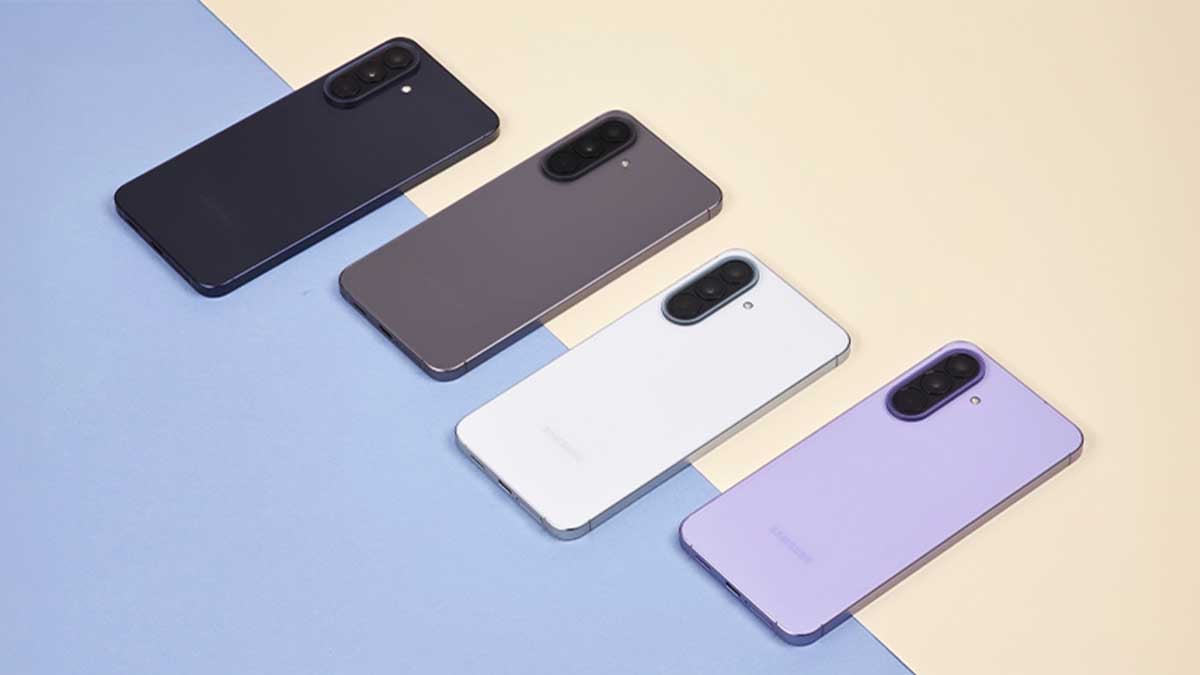
Samsung Galaxy Quantum 7 smartphone will be released in South Korea next week. This device is built atop the Galaxy A57 5G, which is available globally. SK Telecom is expected to begin selling the device on August 25, 2026.
The description of Samsung’s Galaxy Quantum 7 reveals almost the same specs and features as the Galaxy A57 5G. It will be available in an 8GB RAM and 128GB storage version, with MSRP set at 717,200 won (~ $515).
Galaxy Quantum 7 will have a major privacy-centric upgrade over its base model. The hardware-level Quantum solution offers enhanced privacy. Remaining features are just the same as the base model, including the screen and camera.
Galaxy A57 key specs and features
The device was released globally in April 2026. It weighs just 179 grams and measures 6.9mm thick despite getting a 5000mAh battery. It supports 45W wired fast-charging to fill up its battery for all-day battery life.
Samsung’s phone features a 6.7-inch Super AMOLED display with FHD+ resolution and a 120Hz refresh rate. In high brightness mode, it offers 1200-nit brightness, which can peak at 1800 nits outdoors.
Under the hood, the phone is equipped with Exynos 1680 chip. Fabricated using Samsung’s 4nm process, it has an octa-core CPU (1×2.9 GHz Cortex-720 & 4×2.6 GHz Cortex-720 & 3×1.95 GHz Cortex-520) and Xclipse 550.
Camera setup includes a 50-megapixel primary, a 12-megapixel ultrawide, and a 5-megapixel macro sensor. On the front, the device gets a 12-megapixel camera, bringing features like Best Face, 10-bit HDR, and 4K videos at 30 fps.
Samsung also offers basic AI features as part of the Awesome Intelligence suite. It includes Circle to Search and the Best Face camera tool. You are guaranteed to receive six years of major OS and monthly security updates.

-
 One UI2 days ago
One UI 9.0 (Android 17) testing on these 68 Samsung devices
-
 One UI21 hours ago
Which Samsung phones will not get One UI 9.0 (Android 17)
-
 One UI2 days ago
One UI 9.5 Eligible Devices: These Samsung devices could receive the next major update
-
 Updates2 days ago
Samsung running too late with August 2026 update rollout