
Opinion
Samsung’s One UI 8 should be called One UI 7.1: A minor upgrade

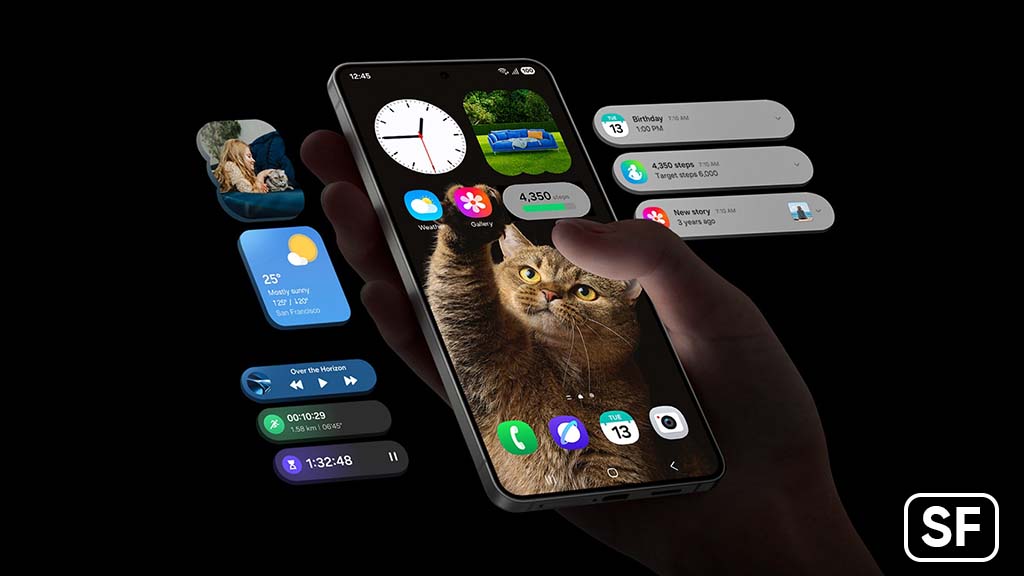
Samsung’s One UI is one of the most polished and feature-rich Android skins. With each major release, it brings significant changes to the Galaxy smartphones. However, recent leaks and reports about the Android 16-based One UI 8 version suggest that it may not be considered a major release. Instead, it looks like an incremental update, better name it One UI 7.1. In this article, I will explore the reasons why One UI 8 should be considered a minor upgrade over One UI 7, based on concrete evidence from leaks, internal beta testing, and industry analysis to justify this claim.
Samsung’s Major vs Minor One UI Releases:
Samsung’s One UI version typically follows a pattern where major releases (e.g., One UI 6, One UI 7) align with significant Android OS updates and introduce substantial design overhauls, new features, or performance enhancements. Minor updates focus on refinements, bug fixes, and smaller feature additions, often linked to specific device launches like the Galaxy S or Z series (such as One UI 6.1 or 6.1.1).
The last version, Android 15-based One UI 7, brought a major redesign with a revamped user interface, new icons, and AI-driven features like Call Transcripts and Sketch to Image. Based on this historical pattern, the One UI 8 would be a similarly transformative update. However, Samsung may be taking a more conservative approach this time, based on leaked images.
Why One UI 8 feels like a minor version?
Several key points from leaked internal beta builds and credible reports highlight why One UI 8 feels more like a refinement of One UI 7 than a groundbreaking new version.
1. Minimal Visual Changes
One of the key features of a major One UI release is a significant visual overhaul. For example, we have One UI 7’s redesigned app icons, split notification and Quick Settings panels, and rounded UI elements. In our first evidence, a One UI 8 leak build for the Galaxy Z Fold6 and Flip6 didn’t reveal anything new, even the user interface was nearly identical to One UI 7.
Based on the leaked builds, there are no major UI changes; the early One UI 8 firmware looks the same as One UI 7. You can see minor changes to apps like My Files and Gallery. These changes are incremental, the same we saw in a minor update like One UI 7.1.
2. Feature Expansion Rather Than Innovation
A major One UI releases typically introduce bold new features, but One UI 8 appears to focus on expanding existing features to more devices rather than introducing new features.
The Galaxy S25’s exclusive Now Brief feature from One UI 7 will be available to older flagships like the Galaxy Z Fold 6, Flip 6, and S24 series with One UI 8. This should not be considered as a major new addition but rather a broader rollout of an existing exclusive feature. These smaller additions indicate Samsung is merely rebranding a smaller One UI 7.1 and promoting it as One UI 8.
3. Development Timeline Constraints
There’s another strong reason why I am calling it a minor upgrade: Samsung’s development timeline. The stable rollout of One UI 7, based on Android 15, faced significant delays due to a prolonged beta phase and critical bugs, including a severe issue that caused some Galaxy S24 devices to be unusable. As a result, Samsung was forced to pause the rollout in April 2025. The ongoing One UI 7 update rollout is still keeping Samsung developers busy, which suggests Samsung may not have had the time to implement noticeable changes.
4. App-Specific Tweaks Only
The leaked One UI 8 builds highlight tweaks to specific apps rather than system-wide changes. For example, the Samsung Reminder app is reportedly getting a redesigned UI with a modernized layout and updated color scheme, while the My Files app features a more organized Categories section. The Gallery app’s settings menu has been slightly redesigned to align with One UI 7’s aesthetic. These app-specific changes do not indicate a major shift in the overall One UI experience.
Samsung has a history of bringing app refinements in minor One UI upgrades. For example, One UI 6.1 introduced Galaxy AI features like Circle to Search and enhanced existing functionalities without changing the core UI design of One UI 6. Similarly, One UI 6.1.1 focused on specific enhancements for foldable devices.
A major release would typically include broader changes, such as new system animations, a restructured settings menu, or significant performance optimizations, none of which are spotted in current leaks.
Why Samsung still calls it One UI 8:
Samsung’s choice to name it One UI 8 might be to keep up with Android 16’s release and stay competitive, especially since Google is speeding up its updates. But this could be a mistake for Galaxy users, especially after the messy One UI 7 rollout.
As we know, One UI is based on Android OS, and the latest Android 16 is bringing major design changes for Pixel phone users. However, many of these features are already present in One UI 7, which reduces the need for significant changes in One UI 8.

Image By – Chanakya Shrutam/Sammyfans
Based on leaks, One UI 8’s scope is limited, with no major UI or feature overhauls on the horizon. Even if Samsung adds something new, it likely won’t be as game-changing as One UI 7. With small UI tweaks, expanded features instead of new ones, a rushed schedule, and minor app updates, One UI 8 doesn’t feel like a major release.
By branding it as One UI 7.1, Samsung could set realistic expectations and focus on delivering a stable, polished experience to Galaxy users. As the One UI 8 beta program approaches, Samsung has a chance to improve its approach and rebuild trust after One UI 7’s issues. Until then, the evidence suggests One UI 8 is just a small update pretending to be a big one.
If you agree with this take on One UI 8 or have thoughts to share about Samsung’s software updates, let’s connect! Reach out to me on X at @SamsungSWupdate.


Samsung has improved One UI a lot over the years. It offers many useful features and gives Galaxy users more freedom to customise their phones. But some features are still available only through Good Lock and its separate modules. This raises questions among users.
Obviously, Good Lock has been one of the best things about Samsung phones, mainly flagships and A-series phones. It allows users to customise their lock screen, home screen, Quick Settings panel, keyboard, sound controls, and much more. However, as One UI continues to improve, it may be time for Samsung to bring its most useful Good Lock features directly into the system.
It doesn’t mean removing Good Lock completely. Instead, Samsung should make its best features easier to find and use by bringing them into the core One UI experience. Even make these amazing features available to more Galaxy devices with the One UI system.
Samsung is already moving in the right direction with One UI
Samsung has already started adding some Good Lock-style features to its regular Settings app and stock applications. This is a good move because users can access more customisation options without needing an extra app.
With the integration of the Good Lock features with regular settings, Samsung aims to allow more users to easily explore and take advantage of the features that are hidden under the Good Lock app.
However, there is still room for improvement. Sometimes, users can find basic options in One UI but need to download a separate Good Lock module to access more features. This makes the experience a little confusing.
Good Lock was useful because One UI did not offer all these options before. But Samsung’s software has improved a lot since then. Now, bringing more of these features into One UI seems like the next logical step.

Amazing features should not be hidden behind extra downloads
Samsung’s Good Lock offers many useful tools through modules such as Home Up, LockStar, QuickStar, Theme Park, and Sound Assistant. These modules give users more control over how their phones look and work.
But not everyone knows about Good Lock. Many Galaxy users are happy with the default settings because they do not know that more options are available. Others may know about a feature but find it inconvenient to download another app and install a separate module to use it.
Of course, not everyone wants advanced customisation. Some users prefer to keep their phones simple, while others enjoy changing every little detail. But this is where Samsung can improve the experience. By adding the most useful Good Lock features directly to One UI, Samsung could make them available to more users, even in a separate section.
Good Lock does not need to disappear completely. It has built a strong identity among Samsung users, mainly those who enjoy trying new features and customising their devices. Instead, Samsung could move the most useful Good Lock features into One UI.
Next One UI could offer a glimpse of this
Samsung has already started moving in this direction by adding more options to its standard settings and applications. The company should continue bringing its best Good Lock features into One UI so that more users can enjoy them easily.
The next version of One UI, One UI 9.5 or One UI 10, could take another step towards this idea by bringing more Good Lock features directly into the system. Samsung has already started preparing One UI 9.5 for Galaxy devices. However, the exact details or date haven’t been confirmed yet.

So, it is time for Good Lock to retire as a separate destination for essential customisation and become part of the core One UI experience. What do you think about this idea? Share your thoughts in the comments on our social media handles.


Samsung literally needs the Galaxy Z Fold 8 to avoid controversy as Apple entered the foldable smartphone market with the iPhone Duo, and even a small mistake can destroy consumer retention built on years of trust.
When Samsung pioneered the foldable segment, it held an almost monopolistic grip on the market. But as the form factor matures, the hardware stakes have escalated from novel experimentation to razor-thin margins of execution.
Why and how Galaxy Z Fold 8 can avoid controversy
With the launch of the Galaxy Z Fold 8, Samsung attempted to answer years of consumer feedback by widening the device.
However, early market feedback and hardware scrutiny have surfaced conflict points that Samsung must swiftly address, especially now that its biggest competitive threat has officially landed.
Competitive price
Pricing in the ultra-premium foldable landscape has become a direct battleground for market share, with Samsung maintaining a slight price advantage over Apple’s newly debuted hardware.
Apple iPhone Duo starts at $1,999 in the U.S.
Apple’s official entry into the foldable space establishes a strict premium price floor across all tier levels, with pre-orders having officially kicked off on October 16, 2026.
U.S. Pricing by Storage Tier
- 256GB: $1,999
- 512GB: $2,199
- 1TB: $2,599
- 2TB: $3,199
Samsung Galaxy Z Fold 8 starts at $1,899.99
Samsung positions the Fold 8 just below the $2,000 mark, undercutting Apple’s entry price by $100 across equivalent storage tiers:
- 256GB: $1,899.99
- 512GB: $2,099.99
- 1TB: $2,499.99
- 2TB: Not available

While this price undercut provides Samsung with a tactical value argument, hardware flaws and customer service issues risk neutralizing that pricing edge right as buyers make their choices.
Manufacturing defects
Transitioning to a wider canvas has introduced new structural engineering challenges.
Online communities recently raised concerns over inner-display build quality after users discovered that the corners of the flexible screen can be pressed inward below the level of the frame.
While minor physical flex can occur in flexible polymer layers, noticeable gaps or structural drop-offs beneath the bezel raise build-quality questions for a device commanding an $1,899+ price point.
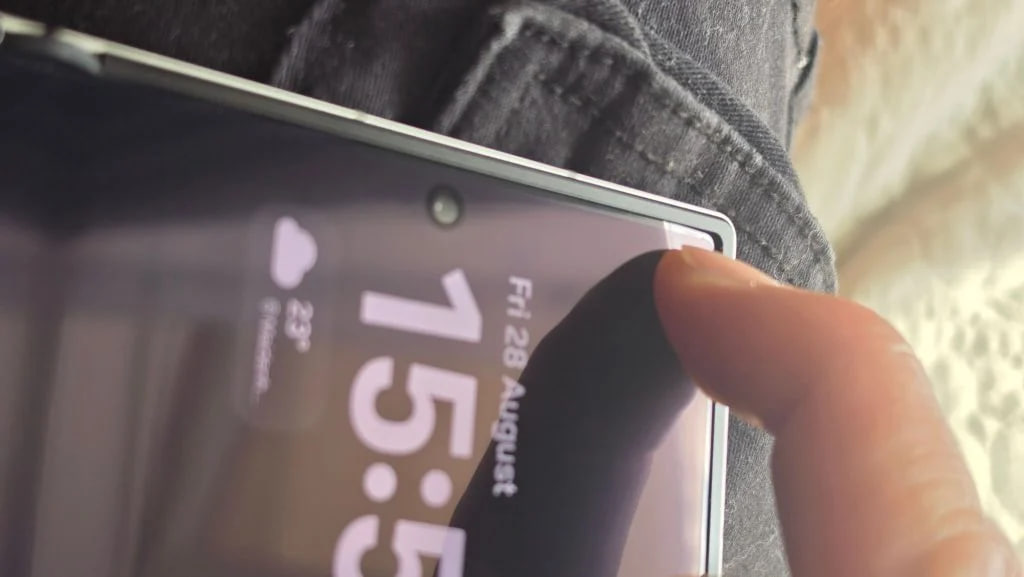
Image via Samsung community
Durability concerns
Beyond corner tolerances, broader structural reliability remains under scrutiny. High-profile reports emerged involving users experiencing unexplained inner-screen crease cracking without drops or liquid ingress.
Crease stress remains the primary point of failure for foldable panels, and spontaneous cracking under normal thermal or mechanical folding cycles directly threatens consumer confidence in product longevity.

After-sales support
The disagreement around screen integrity has been compounded by early handling at authorized service centers. High-profile reports emerged involving users experiencing unexplained inner-screen crease cracking without drops or liquid ingress.
An early clash arose when service centers classified these incidents as “physical damage” and initially declined free warranty coverage, reigniting consumer trust debates regarding foldable longevity and repair terms.
When early adopters who paid top-tier pricing face out-of-pocket repair demands for non-impact display failures, it creates significant reputational risk for the ecosystem.
With Apple’s iPhone Duo pre-orders already live, these complaints are driving buyers away. Samsung’s early-mover advantage in foldables is no longer a safety net.
That said, the Korean tech giant must move beyond defensive public relations and implement a three-fold triage plan: transparent, no-questions-asked warranty coverage for non-impact inner display failures to rebuild trust.
The software lifeline and the path forward
Beyond hardware compromises and service desk complaints, Samsung faces an even greater ticking clock: software optimization and reliability.
When a consumer drops nearly two thousand dollars on a cutting-edge foldable device, they expect the operating system to effortlessly handle the expanded canvas.
If software patches lag behind hardware rollouts, the user experience begins to fray at the edges precisely when competitors like Apple are putting their best foot forward with deeply integrated iOS features on the iPhone Duo.
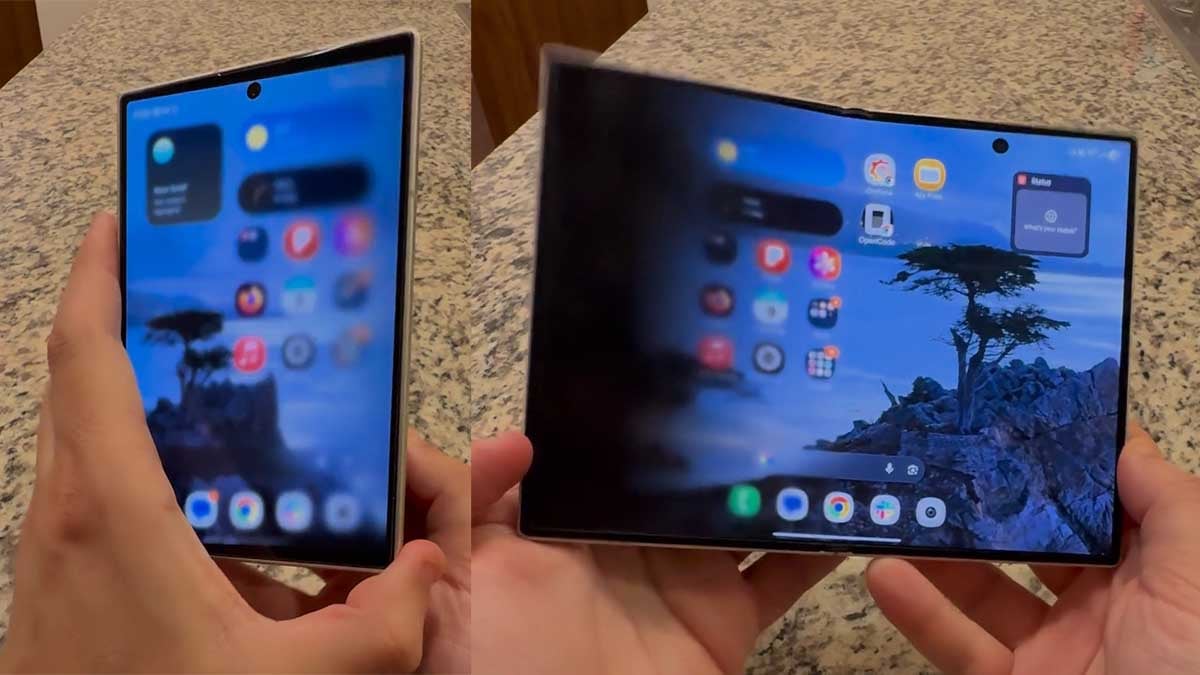
Again, Samsung’s early-mover advantage in the foldable segment is no longer a permanent lead. With Apple’s iPhone Duo pre-orders officially open as of mid-October, prospective buyers no longer have to wait or compromise.
The iPhone Duo, despite carrying a $100 premium at the entry level, is pulling heavy interest from power users worldwide. US buyers, specifically, paying near $2,000, expect absolute hardware refinement and seamless support.
If Samsung leaves manufacturing inconsistencies, display durability concerns, and stringent warranty policies unresolved, it hands fence-sitting enthusiasts straight to Apple while delivery windows slip.
Samsung‘s major One UI updates always get a lot of attention. One UI 9.0 will bring new features and changes, but I’m actually more excited about One UI 9.5. And the reason is simple: Samsung’s One UI x.5 updates are usually (or we can say nowadays) better than the first version.
We saw this with One UI 8.0 and One UI 8.5. One UI 8.0 introduced new features and design changes, but One UI 8.5 made everything feel smoother. It improved battery life, fixed bugs, and made many features work better. For many users, One UI 8.5 was a better experience than One UI 8.0.
The same could happen with One UI 9.0 and One UI 9.5. One UI 9.0 is expected to bring Android 17 features and Samsung’s latest AI improvements. Then, One UI 9.5 can make those features even better, along with adding new features. It could make the software faster, more stable, and more reliable.
There are also some exciting reports about One UI 9.5. Early leaks say Samsung may finally add a built-in App Lock feature, so users can lock individual apps without using Secure Folder or third-party apps. This is something Galaxy users have been asking for over the years.
Another piece of information says Samsung has already started developing One UI 9.5 for the Galaxy S27 Ultra. This shows the company is already working on the next version, even before One UI 9.0 reaches all devices.
One UI 9.5 is still under development, so Samsung could add many more features before it is released. As time goes on, more leaks and reports will likely reveal what the update has to offer.


Samsung has recently won a design award for a “Fluid AI Design System,” and we explored its UI for its interesting visuals and its potential to mainstream in future mobile software.
Samsung’s mobile UI revolves around One UI, the software skin that sits on top of Android. Over the past 2-3 years, the company has been investing heavily in generative AI and agentic operating systems.
As a result, Galaxy AI has become a suite of applications and services that covers interactive tasks such as background audio removal, call transcripts, agentic voice assistant, call screening, and more.
Moving on, the phone maker has envisioned its consistent advancement in AI in the years to come, calling it Fluid AI. According to its description, this UI goes beyond static screens and predefined interaction rules. Instead, its agentic AI creates UIs in real-time and visualizes them according to the task through generative UI.

The concept shows the fluid creation of UI elements, such as glass design for backgrounds, round corners, better outlines, vibrant color schemes, and among these is the AI agent, which remains active to take user instructions.
It’s being said that this generative UI completes the agentic AI system, which requires such a fluid visual experience.
To reiterate, this is an official concept, but it might come to future mobiles or other devices. However, concepts are improved over time, all the way to their launch, to make them more practical and applicable on devices.
For now, Samsung hasn’t said anything about the release of this fluid AI design system, and we don’t see this coming any time soon either.

Samsung’s next foldable, the Galaxy Z Fold 8 or possibly the Fold 8 Ultra, already has a lot of hype around it. But honestly, there are a few things it really needs to get right if it wants to feel like a true upgrade and not just another yearly refresh.
Let’s talk about 4 important upgrades for Galaxy Z Fold 8. If Samsung misses these, the phone might feel incomplete compared to what users are expecting.
Less Visible Crease
Even though Samsung has improved foldables a lot, the Fold line in the middle of the screen is still noticeable. For a premium device like this, it really should be much less visible. It should almost disappear so the screen feels smooth and more like a small tablet. Like Chinese foldables (such as the OPPO Find N6), Galaxy Z Fold 8 phones should have a zero-feel display crease.
Stronger Hinge
Hinge is one of the most important parts of any foldable phone. The Galaxy Z Fold 8 needs a stronger and more durable hinge that feels solid even after thousands of folds.
Some people are hesitant to buy foldable phones because they are concerned about hinge durability and potential damage. If Samsung can make it smoother and more reliable, it would instantly improve trust in the device.
Better Dust and Water Resistance
Samsung Galaxy Z Fold 7 already offers water protection with an IP48 rating, which is good, but foldable phones still feel a bit fragile in real-world use. People expect the Galaxy Z Fold 8 to handle more dust and daily rough use without worry. Even a small improvement here would make a big difference.
Optimized Software for the big screen
A foldable is only as good as how well it uses its display. The Galaxy Z Fold 8 needs better multitasking, smoother app resizing, and smarter layouts so the large screen actually feels useful, not just bigger. This new phone will reportedly arrive with the One UI 9 stable version and could bring exclusive foldable features.

Source – Samsung Mobile Press
Aside from this, Galaxy Z Fold 8 could be Samsung’s lightest foldable yet, with better battery efficiency and possibly improved charging. The Galaxy Unpacked summer launch event is expected around July 22 in London.
-
 One UI3 days ago
One UI 9.5 Eligible Devices: These Samsung devices could receive the next major update
-
 Wearables2 days ago
Samsung confirms Galaxy Watch 9 features for older models, including Watch 4!
-

 News2 days ago
Galaxy S25 could be banned in the US as Samsung loses camera patent case
-
 One UI2 days ago
Samsung Galaxy S23 FE gets a new update but that’s not One UI 9