
News
Samsung Galaxy S21 receiving latest One UI 4 Beta (Android 12) in India, includes several bug fixes

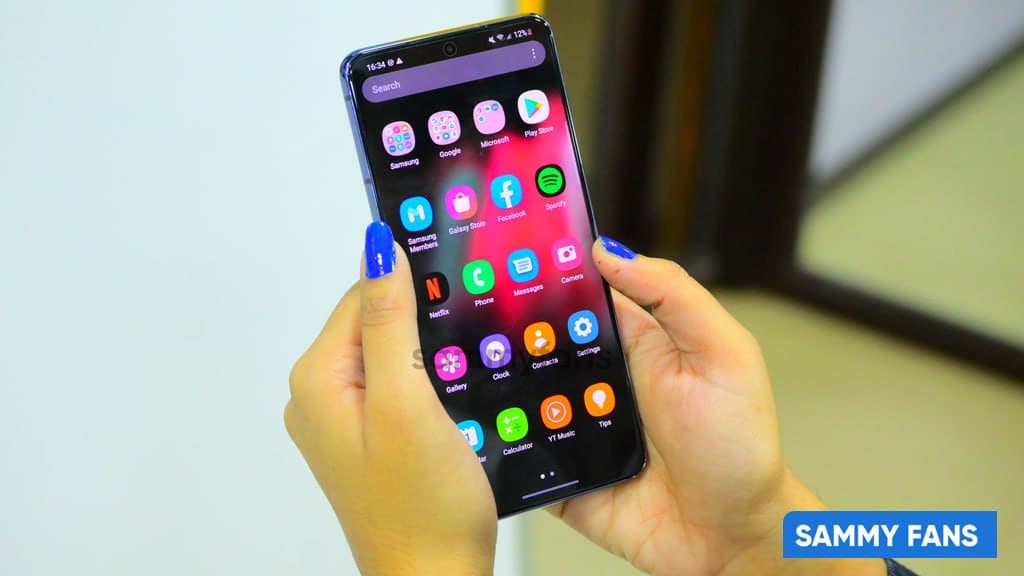
The Galaxy S21 series devices are now getting a new One UI 4 Beta update in India. The latest Samsung Android 12 Beta update brings a lot of bug fixes for the Galaxy S21 line phones. In addition, the update has also included the November 2021 security patch, which was detailed recently.
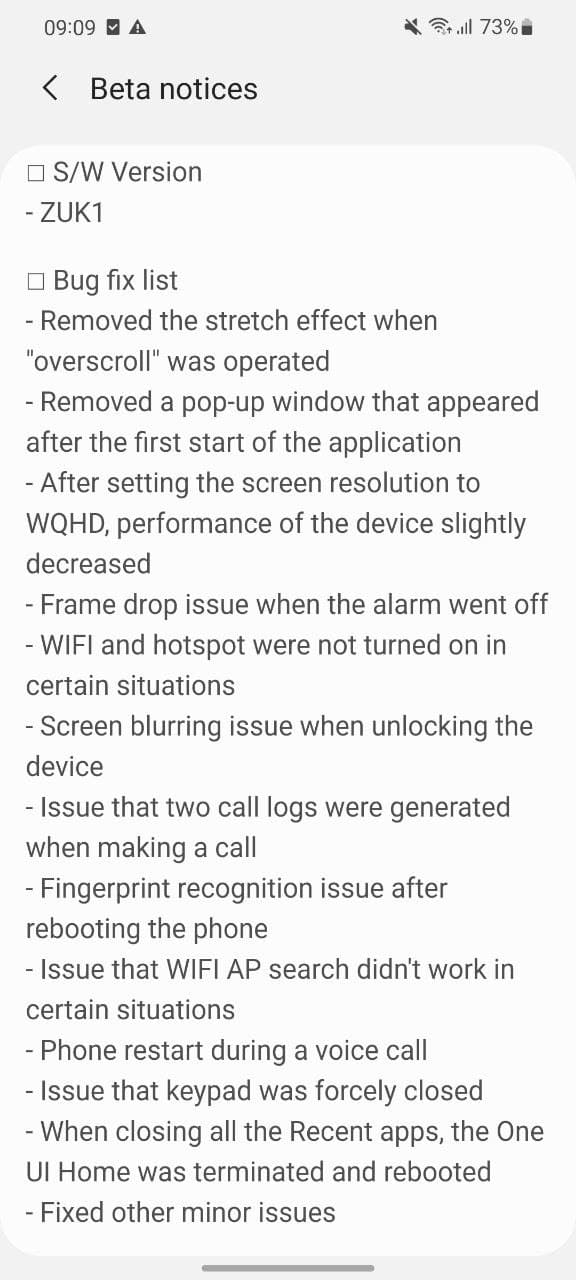
According to the changelog, the latest One UI 4 Beta update for the Galaxy S21 series removes the stretch effect during “overscroll” and pop-up window appearance after opening the application for the first time. Also, it improves the performance, which was getting decreased after turning the screen resolution to WQHD.
Adding to this, the changelog mentions fixes for the frame drop issue while the alarm went off and the occasional crashes of WIFI and hotspot. In addition to these fixes, the latest One UI 4 Beta update solves several problems that were reported by the consumers. You can check the changelog below.
- S/W Version: ZUK1
Changelog
- Removed the stretch effect when “overscroll” was operated
- Removed a pop-up window that appeared after the first start of the application
- After setting the screen resolution to WQHD, performance of the device slightly decreased
- Frame drop issue when the alarm went off
- WIFI and hotspot were not turned on in certain situations
- Screen blurring issue when unlocking the device
- Issue that two call logs were generated when making a call
- Fingerprint recognition issue after rebooting the phone
- Issue that WIFI AP search didn’t work in certain situations
- Phone restart during a voice call
- Issue that keypad was forcely closed
- When closing all the Recent apps, the One UI Home was terminated and rebooted
- Fixed other minor issues
If you want to check for the latest update manually, head to your device Settings tap on Software updates and finally hit the Download and install button.
Get notified-
Aside from SammyFans’ official Twitter and Facebook page, you can also join our Telegram channel and subscribe to our YouTube channel to get notified of every latest development in Samsung and One UI ecosystem. Also, you can follow us on Google News for regular updates.


Meta has reportedly selected Samsung Foundry to manufacture the next generation of its in-house AI accelerator MTIA chip.
The report claims Meta is working with Samsung on a project valued roughly at $7.3 billion, with the company’s third-gen Meta Training and Inference Accelerator (MTIA) expected to be mass-produced using Samsung’s 2nm process.
Production is planned on the scale of hundreds of thousands of wafers. System LSI division has been collaborating with Meta from the early architecture design stage, supplementing the company’s own chip development team.
Meta may not be Samsung’s only major AI customer, either. The report reiterates that AI startup Anthropic is considering Samsung’s 2nm process for its own custom AI chips.
Samsung’s broad semiconductor portfolio could work in its favor here. Unlike many competitors, the company offers memory, foundry manufacturing, and advanced packaging under one roof.
These reported wins come on the heels of Samsung’s massive AI chip agreement with Tesla, suggesting the company’s foundry business is finally building meaningful traction in a market that has long been dominated by TSMC.

Samsung may have finally entered Apple iPhone camera supply chain with its CMOS sensors. The information is coming from the massive Tata data breach, which revealed a hefty chunk of component data and devices.
Apple has been using Sony-made CMOS camera sensors for years, but Samsung has finally decoded the requirement and entered the supply chain. The Tata leak has reportedly mentioned Samsung as a supplier for CMOS sensors.
CMOS is a crucial part of camera sensors, and Samsung’s entry itself a big development. iPhones won’t be using ISOCELL sensors like Galaxies, but the technology behind image sensors will be offered from the same source.
Samsung and Apple had reached an agreement for the same. The two companies have signed a multi-year partnership, in which the former will be utilizing its semiconductor fab in the US to craft CMOS for iPhone.
Apple is diversifying its component supply rather than relying entirely on a single supplier. It’s a clever move seeing the uncertain geopolitics. Apple couldn’t afford a supply bar in any situation given its scale of mobile business.
iPhone 18 lineup is said to be the first to adopt Samsung-made CMOS sensors. Sony is also in the supply chain, but a slice has been cut and given to Samsung.
Based on performance, efficiency, and pricing, Apple would continue to revise the share of Samsung. It has also given Apple strong negotiation power with Sony, as Samsung will be ready to offer a better deal.
A Weibo leaker also revealed that Apple could produce its iPhone 18 chips using Intel 18A process. This information was also mentioned in the Tata data leak, and makes sense given recent rumors claiming the same deal.


Samsung seeks to hike DRAM price by up to 20 percent in Q3 2026, and it will directly impact future phones. A new industry report has just revealed a sharp move in the components supply chain ahead of major flagship launches.
According to ZDNet, Samsung wants to raise the DRAM price in Q3 2026, 20 percent up over Q2 2026. Chinese vendors are already trimming their targets, and this move would make the situation only worsen further.
Samsung Electronics is currently negotiating with clients with the goal of raising its DRAM ASP by up to 20% in the third quarter compared to the second quarter.
Notably, Samsung saw its DRAM ASP rise by over 90 percent in Q1 2026. Costs increased further in the second quarter, around 50 to 60 percent. Now, another hike of 20 percent is being planned for the third quarter of the year.
A semiconductor industry official stated, “Samsung Electronics is taking a very aggressive stance in price negotiations for the third quarter of this year. We understand they plan to raise prices by more than 20 percent.”
Future phone shoppers will pay the price
Samsung’s DRAM move came amid the market’s set to welcome the year’s biggest flagship releases. Three foldable phones from Samsung and two high-selling iPhones, along with the first foldable iPhone from Apple, are coming.
Apple and Samsung (Mobile) have already secured DRAM for their Q3 flagships. However, future mobile devices, coming in Q4 and Q1 2027, such as the Galaxy S27 series, would face difficulties handling component cost pressure.
If Samsung’s seeking a 20% hike, South Korea’s SK Hynix may also be considering a similar move. Micron won’t leave this opportunity behind to print more money from the DRAM supplies, which were not that beneficial before.
AI boom has brought HBM to the mainstream, and memory makers are maximizing their profits through DRAM as well. The supply is already tight, and things won’t settle anytime soon, until at least the latter half of 2027.

South Korea is welcoming SK Telecom’s Samsung Galaxy Wide 9 smartphone. It follows the recent debut of the Galaxy Jump 5 by KT. Both phones are now available for purchase in South Korea from the telecom carriers’ sites and stores.
On July 3, South Korea’s SK Telecom launched the Samsung Galaxy Wide 9. This is a 5G smartphone that comes at an entry-level price tag. It costs 400,000 KRW in the market, which is approximately $260.
Samsung Galaxy Wide 9 comes with a 6.7-inch Super AMOLED display. It has a triple camera setup, which is dominated by a 50MP primary sensor.
The company also worked on the phone’s overall design and aesthetics. Despite packing a 5000mAh battery, the phone weighs around 192 grams and measures 7.5mm thick.
The battery can be charged through 25W wired charging. It is available in two colors: Black and Silver; customers can buy the phone starting today at SK Telecom’s online and offline stores.
Yoon Myeong-won, head of SKT Channel & Device, said, “The Galaxy Wide series is a representative value-for-money lineup that has been proven over the past 10 years with steady support from customers,” adding, “We will continue to broaden customer choice by launching a variety of devices with solid specs at reasonable prices.”


Google is dropping clues that the One UI 9.5 update may finally bring the App Lock feature to Samsung phones in 2027. Stable Android 17 is available on Pixel phones, and it doesn’t carry the feature, but a future update would do.
New findings suggest Google is working on an App Lock feature for Pixel phones. The recent Android 17 QPR1 Beta 6 update has strings related to App Lock. However, it will take a few more weeks for public availability.
Google quietly installed the tool in Android Canary 2603, but newer builds don’t retain App Lock. However, the company hasn’t completely dumped its plans to add App Lock on devices, but it’s going to take more time.
<code><string name=”app_lock_settings_promo_dialog_title”>You can now add app lock to multiple apps at once in Settings</string></code>
Samsung’s One UI 9.5 is expected to be based on Android 17 QPR2. This update will be available to Pixel users by the end of the year. Galaxy S27 series may debut it as part of One UI 9.5, just like the way S26 series did with One UI 8.5.
At the current stage, Google couldn’t roll out App Lock with the next Feature Drop (via AndroidAuthority). Well, the development signals the feature will be well-tuned to actually serve its purpose of safeguarding locked apps.
<code><string name=”app_lock_settings_promo_dialog_description”>Quickly add and manage app lock anytime. For extra security, you can also limit access to your apps by requiring only biometrics.</string></code>
Recent strings indicate that PIN-based App Lock can be disabled. Users could be able to opt for biometrics to unlock apps. That said, the feature is taking time for refinements, and the final version will be worth looking for.
-
 One UI5 minutes ago
One UI 9.0 (Android 17) testing on these 37 Samsung devices
-
 Phones4 hours ago
Samsung Galaxy Z Flip 8, Fold 8 and Ultra design revealed in cases; reservations open in China
-

 Samsung2 days ago
Samsung Galaxy Z Fold 8 (Wide): Complete phone specifications
-

 News2 days ago
Samsung Galaxy Tab S12 tablets may launch in September 2026